


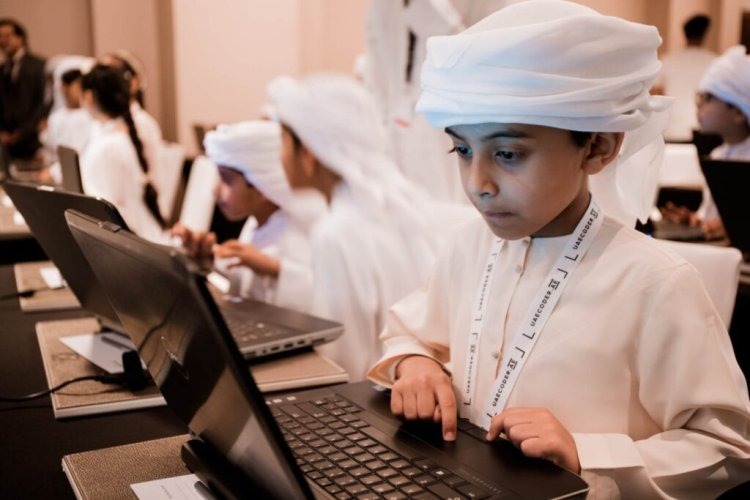
As over one million students returned to schools for the 2025–26 academic year on August 25, the United Arab Emirates reinforced its commitment to digital education by distributing 46,888 laptops to public school students from Grade 5 onward. The initiative is part of a broader strategy to modernize learning, bridge the digital divide, and prepare students for a technology-driven future.
Students receiving laptops are required to sign a pledge committing to responsible and safe usage. The program aims to improve engagement, enhance learning outcomes, and foster digital literacy from an early age. Alongside device distribution, the UAE has invested in new schools, staff recruitment, textbooks, and transportation, reflecting a holistic approach to education.
Strict guidelines govern laptop use to protect students and ensure that devices support learning objectives. Prohibited activities include accessing inappropriate content such as pornography, violent media, hate speech, or material promoting discrimination or illegal activities. Violations are considered breaches of school policies and UAE cyber laws.
Installing unauthorized software, including games, entertainment apps, virtual private networks (VPNs), or pirated programs, is forbidden. Students must not bypass security measures, disable antivirus software, or modify device settings, as doing so exposes laptops and school networks to potential threats.
Cyberbullying, harassment, impersonation, or sharing private information without consent is strictly prohibited. Students are also required to use laptops solely for educational purposes; browsing social media, shopping online, or streaming unrelated content is considered misuse. Engagement in illegal online activities such as hacking, spreading false information, or online fraud carries legal consequences under UAE Federal Decree Law No. 34 of 2021, including fines, imprisonment, device confiscation, or permanent educational blacklisting.
The Ministry of Education has implemented monitoring systems to track laptop usage and ensure compliance with these rules. Violations can result in temporary device suspension, mandatory counseling sessions, or disciplinary actions, including potential expulsion. Parents and guardians are encouraged to actively oversee their child’s laptop use and report concerns to school authorities, supporting the UAE’s focus on digital safety and ethical online behavior.
The laptop distribution is part of a comprehensive back-to-school preparation plan. The UAE opened nine new public schools, expanded existing facilities with maintenance upgrades across 465 schools, recruited 830 new teaching staff, printed over 10 million textbooks, and deployed 5,560 school buses nationwide. These measures ensure operational efficiency, accessibility, and high-quality learning experiences for students across the country.
Minister of Education Sarah Al Amiri confirmed that the UAE is fully prepared for the academic year, emphasizing that technology, infrastructure, and staffing investments are designed to meet 21st-century educational standards. The laptop program reinforces the country’s vision of combining traditional learning with digital tools, fostering a generation of students capable of thriving in a modern, technologically advanced world.
By integrating strict guidelines with digital access, the UAE aims to cultivate responsible, tech-savvy students while maintaining cyber safety. The initiative highlights the government’s commitment to innovation, public accountability, and the ethical use of technology in education. As the academic year progresses, UAE student laptops will play a central role in ensuring inclusive, engaging, and secure learning opportunities for all.

