


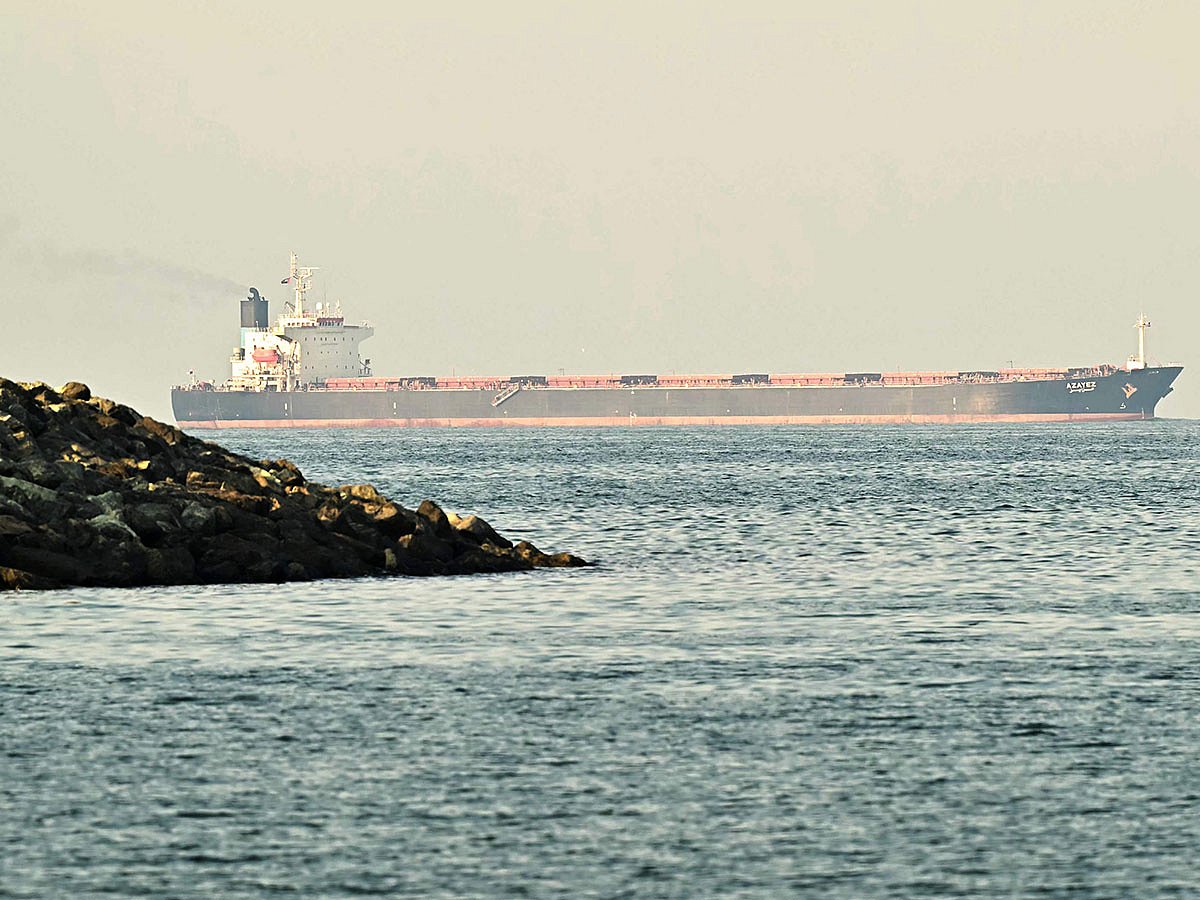
Maritime tracking data on Tuesday indicated that at least three ships originating from Iranian ports successfully navigated the Hormuz Strait, despite a US military blockade. These vessels were among at least seven Iran-linked ships observed transiting the critical waterway after Washington’s enforcement took effect at 1400 GMT on Monday. The blockade, announced by the US on Sunday following the collapse of peace talks with Iran and rising tensions from recent US and Israeli strikes on Iran, aimed to halt all maritime traffic to and from Iranian ports. This development marks a significant escalation in the ongoing conflict, challenging the efficacy and reach of US naval operations in one of the world’s most vital oil transit chokepoints.
Among the vessels reported to have crossed was the Liberia-flagged bulk carrier Christianna, which passed Iran’s Larak Island around 1600 GMT on Monday after unloading 74,000 tonnes of corn at Bandar Imam Khomeini. Similarly, the Comoros-flagged tanker Elpis, carrying 31,000 tonnes of methanol from Bushehr, cleared the strait around the same time. The Argo Maris was also identified as having sailed from Iran and successfully transited. However, maritime analysts have concurrently issued warnings about potential disruptions and manipulations of ship signals within the strait, casting a shadow of doubt over the absolute precision of tracking data and complicating comprehensive oversight of movements in the volatile region.
Conversely, the US military’s regional command, CENTCOM, asserted on Tuesday that its blockade had held firm, claiming it had prevented six vessels from sailing out of Iranian ports located outside the Gulf in the initial 24 hours. CENTCOM stated that “No ships made it past the US blockade and six merchant vessels complied with direction from US forces to turn around to re-enter an Iranian port on the Gulf of Oman.” They emphasized the impartial enforcement against vessels of all nations. Interestingly, the Chinese tanker Rich Starry and the Christianna, initially tracked as crossing, later turned around in the Gulf of Oman with unknown new destinations. The Elpis’s AIS transponder also went offline, making its current location untraceable.
Other vessels involved in the strait’s movements included the bulk carrier Manali, which has a history of trade with Iran, and two Iran-flagged ships: the US-sanctioned container carrier Kashan and the cargo ship Moshtari, which proceeded to an Iranian port on the strait. Both the Rich Starry and Elpis are listed by the US Office of Foreign Assets Control for their ties to Iran, adding another layer of complexity to their movements and the enforcement challenges. The situation highlights the strategic importance of the Hormuz Strait and the difficulties in maintaining a comprehensive blockade in a region characterized by advanced maritime tracking disruptions and geopolitical complexities.

