


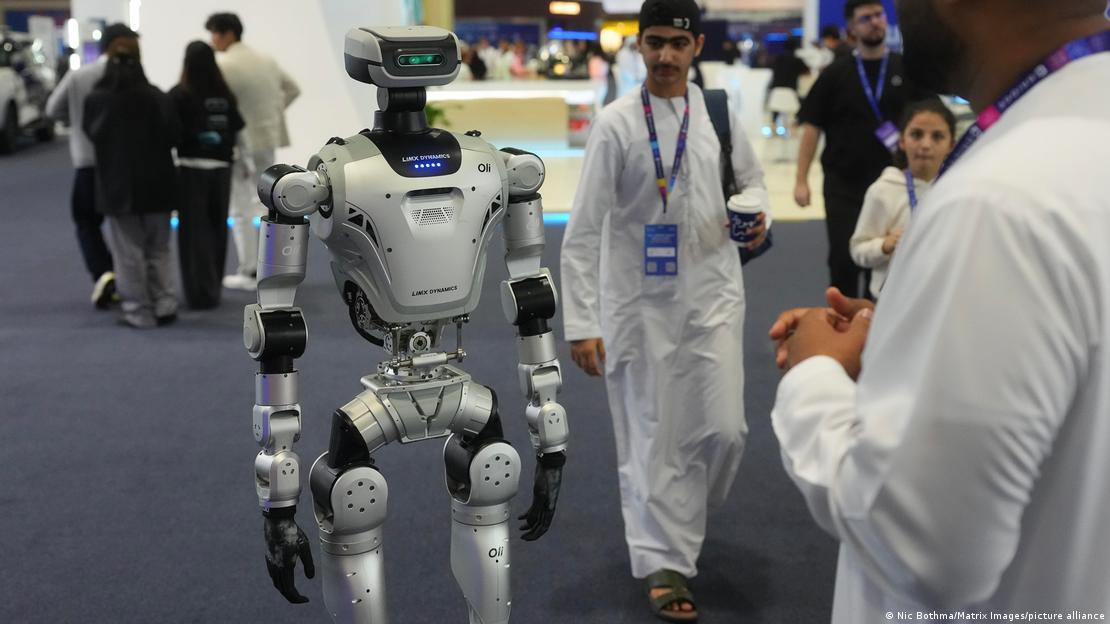
The UAE AI Strategy is facing new pressure after the recent Iran war created fresh risks for the country’s fast-growing technology sector. The conflict has raised concerns about digital security, supply chains, and the future of major artificial intelligence projects across the United Arab Emirates.
The UAE has spent years building its position as a global AI leader. In 2017, the country became the first in the world to appoint a minister responsible for artificial intelligence. The government also introduced the UAE AI Strategy 2031. The long-term plan aims to make AI a key part of the economy and public services.
Since then, Abu Dhabi has invested billions of dollars in AI research, cloud computing, and digital infrastructure. These investments helped attract global technology companies and major international partners.
The recent conflict changed the security picture. During the fighting, Iranian missile and drone attacks targeted locations linked to global technology firms operating in the UAE. Reports said that offices and data centers connected to companies such as Amazon, Google, Microsoft, and Nvidia were among the targets.
Experts say these attacks showed that data centers are now as important as power plants, ports, and water facilities. Modern AI systems depend on secure data centers to store information and process large amounts of data. Any damage or disruption can slow digital services and business operations.
The conflict also raised concerns about undersea internet cables. These cables carry huge amounts of global internet traffic and connect countries across the region. Any threat to these links could affect communication, cloud services, and AI operations.
Another challenge came from shipping delays. The Strait of Hormuz is one of the world’s busiest trade routes. Temporary disruptions in the area slowed the delivery of computer chips, servers, and other equipment needed for AI projects. Delays like these can affect the construction of new data centers and slow technology expansion.
Even with these problems, many experts believe the UAE remains in a strong position. They say the country’s business environment, financial strength, and long-term planning continue to support its AI goals.
The UAE has overcome several major crises during the past two decades. These include the global financial crisis, the COVID-19 pandemic, and earlier regional conflicts. Each event tested the country’s economy, but officials responded by adjusting policies and continuing investment.
Industry analysts believe lasting damage would depend on how long regional tensions continue. If security risks remain high for a long period, some international companies may delay new projects or review investment plans.
One project already affected is a planned one-billion-dollar data center investment in Kenya. Reports say the project was canceled during the recent period of uncertainty. The decision has raised questions about how regional risks may influence future overseas AI investments connected to Abu Dhabi.
The UAE has also built a strong academic base for artificial intelligence. In 2019, it opened the Mohamed Bin Zayed University of Artificial Intelligence. The university focuses only on AI education and research. It continues to train experts and develop new technology.
Another key part of the national strategy is G42, an Abu Dhabi technology company that works in artificial intelligence and cloud computing. The company plays an important role in expanding the country’s digital capabilities and supporting large AI projects.
The UAE also changed its international partnerships in recent years. After facing growing pressure from the United States, the country reduced its AI cooperation with China. Today, it is working more closely with American technology companies.
One of the biggest projects under development is the Stargate UAE initiative. The project is expected to become one of the world’s largest AI data center hubs outside the United States. Industry estimates suggest that dozens of data centers are already operating across the UAE, with more planned in the coming years.
Despite these achievements, experts say the country still faces challenges. Much of its AI technology depends on research, software, and talent developed in other countries. Some researchers have also questioned the performance of locally developed Arabic AI language models.
Even so, analysts believe the UAE has already invested too much to slow its AI ambitions. They expect the country to continue expanding its technology sector while improving security and protecting critical digital infrastructure. As regional tensions continue, the UAE AI Strategy is likely to remain one of the country’s highest national priorities.

