


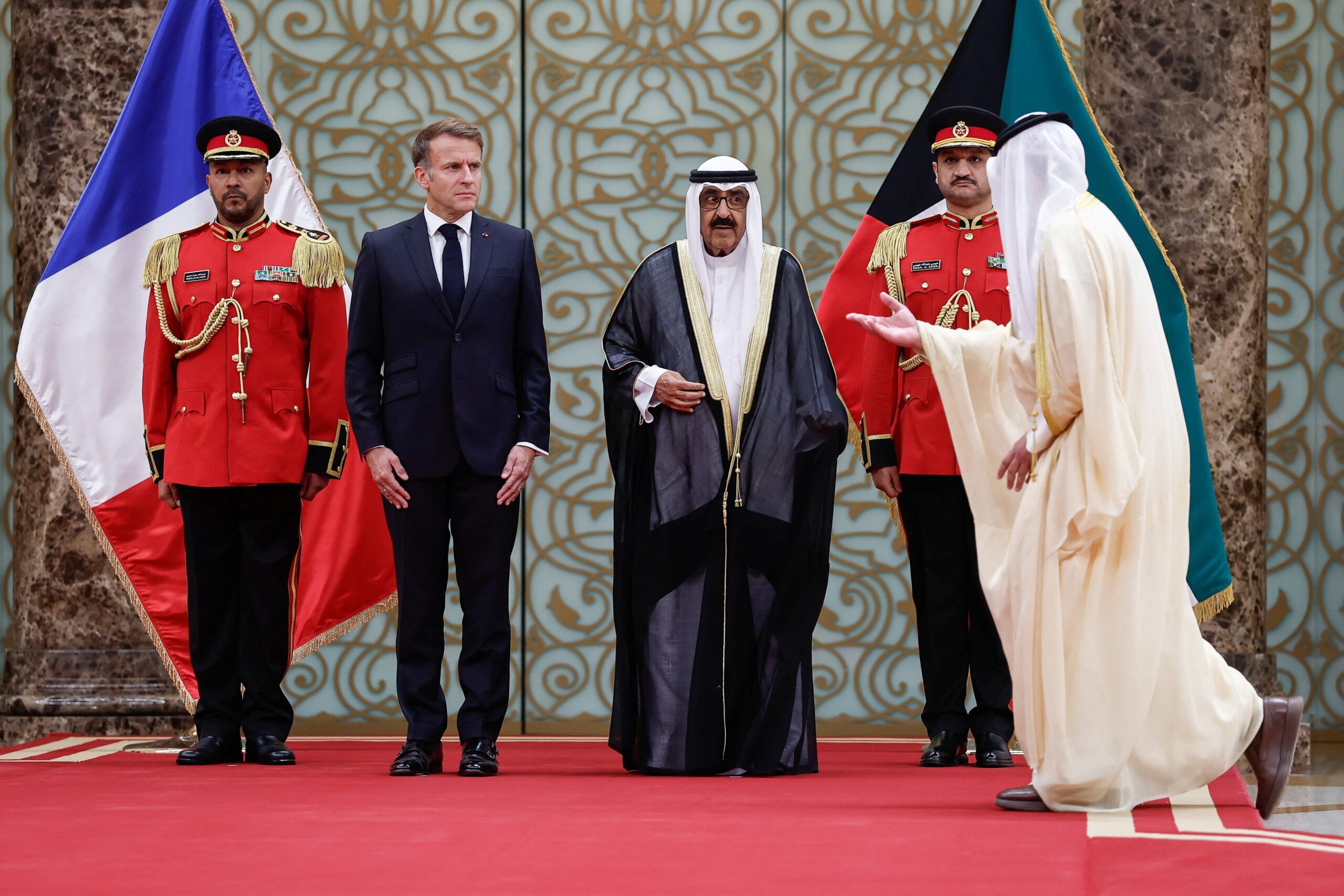
French President Emmanuel Macron is seeking closer energy and defence ties with Gulf states during a three-day visit to Kuwait and the United Arab Emirates. The trip began on Monday as France faces a cost-of-living crisis linked to high energy prices.
Macron’s talks in Abu Dhabi focused on energy, artificial intelligence and the impact of the war involving Iran. France and other European countries are seeking to strengthen their role as partners for Gulf states as the conflict threatens maritime security and global energy supplies.
The visit comes as European governments face pressure to protect energy supplies while dealing with a conflict they have limited power to control. France is presenting itself as a partner for Gulf nations, including the UAE, as leaders seek ways to reduce the wider effects of the war.
The UAE’s state news agency, Wam, said discussions covered developments in the Middle East and efforts to limit their impact on maritime security and global energy supplies.
Before arriving in the UAE, Macron held a private meeting with Kuwait’s Emir, Sheikh Meshal, on Monday. The meeting lasted about an hour and a half.
Macron travelled to Kuwait City only hours after delivering a televised address to the French public. In that speech, he said his Gulf tour would help France secure energy supplies at a time of high prices and economic pressure.
His message reflects the importance of energy security for France and other European countries. Conflict in the Middle East can disrupt shipping routes, increase oil and gas prices and add to costs for households and businesses.
In Abu Dhabi, the French president was received by senior Emirati officials. Those present included Sheikh Khaled bin Mohamed, Crown Prince of Abu Dhabi; Sheikh Hamdan bin Mohamed, Deputy Chairman of the Presidential Court for Special Affairs; and Sheikh Mohammed bin Hamad, an adviser to the UAE president.
The talks covered several areas in which France and Gulf states may seek closer cooperation, including defence, artificial intelligence and energy. The discussions also took place against the backdrop of concerns over shipping through the Strait of Hormuz, a key route for global oil and gas trade.
Macron and the United Kingdom previously proposed an international maritime coalition in April to help protect ships passing through the strait. However, the plan remains dependent on a political agreement between the United States and Iran.
The proposal highlights the limits facing European governments as they try to support Gulf security without being direct parties to the war. A maritime effort would require political coordination as well as agreement on its role and scope.
The Gulf trip is also likely to be among Macron’s final major visits to the region before France’s next presidential election in about six months. He is constitutionally ineligible to run for another term, making the remaining period of his presidency important for efforts to advance his foreign policy priorities.
Macron’s visit to Kuwait also produced agreements focused on defence and artificial intelligence. No public statements were issued in Kuwait City, but one deal involved Airbus and the Kuwait Investment Authority.
Benoit de Saint Exupery, Airbus’s executive vice-president for sales, and Sheikh Saud Salem Abdulaziz Al Sabah, executive director of the Kuwait Investment Authority, signed a partnership that includes the renewal of Kuwait Airways’ fleet.
The agreement links aviation investment with the broader effort to deepen economic ties between France and Kuwait. Fleet renewal can also create opportunities for cooperation in aircraft supply and related services.
The focus on artificial intelligence reflects another area of interest for France and Gulf governments, which are investing in new technology and seeking wider economic partnerships. The talks in Abu Dhabi placed AI alongside energy and defence as key subjects for cooperation.
For France, the visit carries both diplomatic and domestic importance. Stronger ties with Gulf producers could help Paris address energy concerns, while defence cooperation may support wider regional security efforts.
Yet the Iran war remains a major uncertainty. European proposals to protect shipping have not secured the political agreement needed to move forward, and the conflict continues to pose risks to energy supplies.
Macron’s meetings in Kuwait and the UAE show France’s effort to maintain close ties with Gulf partners during a period of regional instability. Whether the discussions lead to further agreements will depend on negotiations between governments and the course of the wider conflict.

