


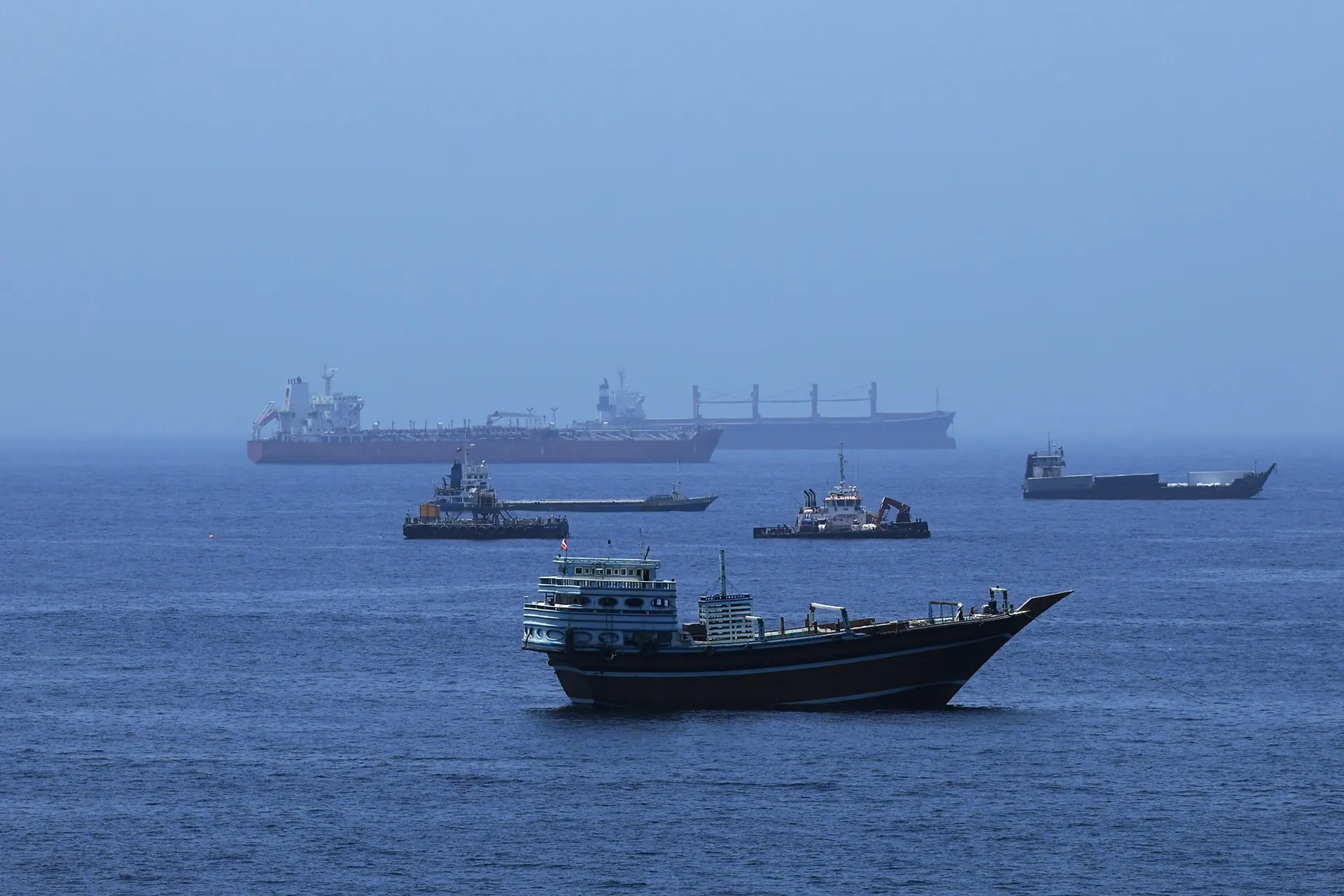
Retailers in Dubai are facing growing pressure from higher transport costs and longer delivery times as disruptions to shipping routes affect the United Arab Emirates’ food supply. The closure of the Strait of Hormuz following the US-Iran conflict has forced companies to reconsider how they bring essential products into the country. Goods that previously travelled directly by sea are now taking longer and more complicated routes through Europe, the Mediterranean, the Suez Canal and Saudi Arabia. The changes have increased expenses for importers and created new challenges for supermarkets that depend on regular deliveries of fresh and packaged food.
An example highlighted by the Financial Times is the journey of Irish cheese destined for Dubai supermarket chain Spinneys. Before the disruption, the product could be transported directly from the British Isles to the UAE. It now travels through several European countries before crossing the Mediterranean and continuing through the Suez Canal and Red Sea. After reaching Saudi Arabia, it must be transported by road across the desert before finally arriving in Dubai. The entire journey takes around 20 days, demonstrating how dramatically the logistics process has changed.
The additional costs are affecting retailers and consumers. Spinneys reported that transport expenses per unit increased by 68 percent during 2026, while air freight now accounts for 85 percent of its fresh food shipments. The increased dependence on air cargo helps businesses maintain supplies, but it is considerably more expensive than ordinary maritime transport. Higher import and distribution costs are also contributing to inflation. Food and beverage prices in Dubai rose by 9.1 percent year-on-year in October, adding pressure to household budgets.
The disruption has renewed interest in expanding domestic food production across the UAE. The country imports approximately 90 percent of its food requirements, making it vulnerable to international transport problems and geopolitical tensions. Indoor farming, hydroponics and investment in food-processing facilities are receiving greater attention as businesses and authorities look for ways to improve supply security. Government plans include increasing the number of productive farms by 20 percent by 2030, while Abu Dhabi aims to raise basic-food self-sufficiency to 70 percent by 2040.
However, expanding local agriculture is not simple. Extreme temperatures, limited freshwater resources and high energy requirements make large-scale production expensive. Experts also caution that domestic farming cannot replace all imported food. Retailers are therefore exploring a combination of alternative shipping routes, air freight, local suppliers and food-processing investments. The situation shows how international conflict can affect everyday shopping and highlights the importance of building more resilient food supply chains.

