


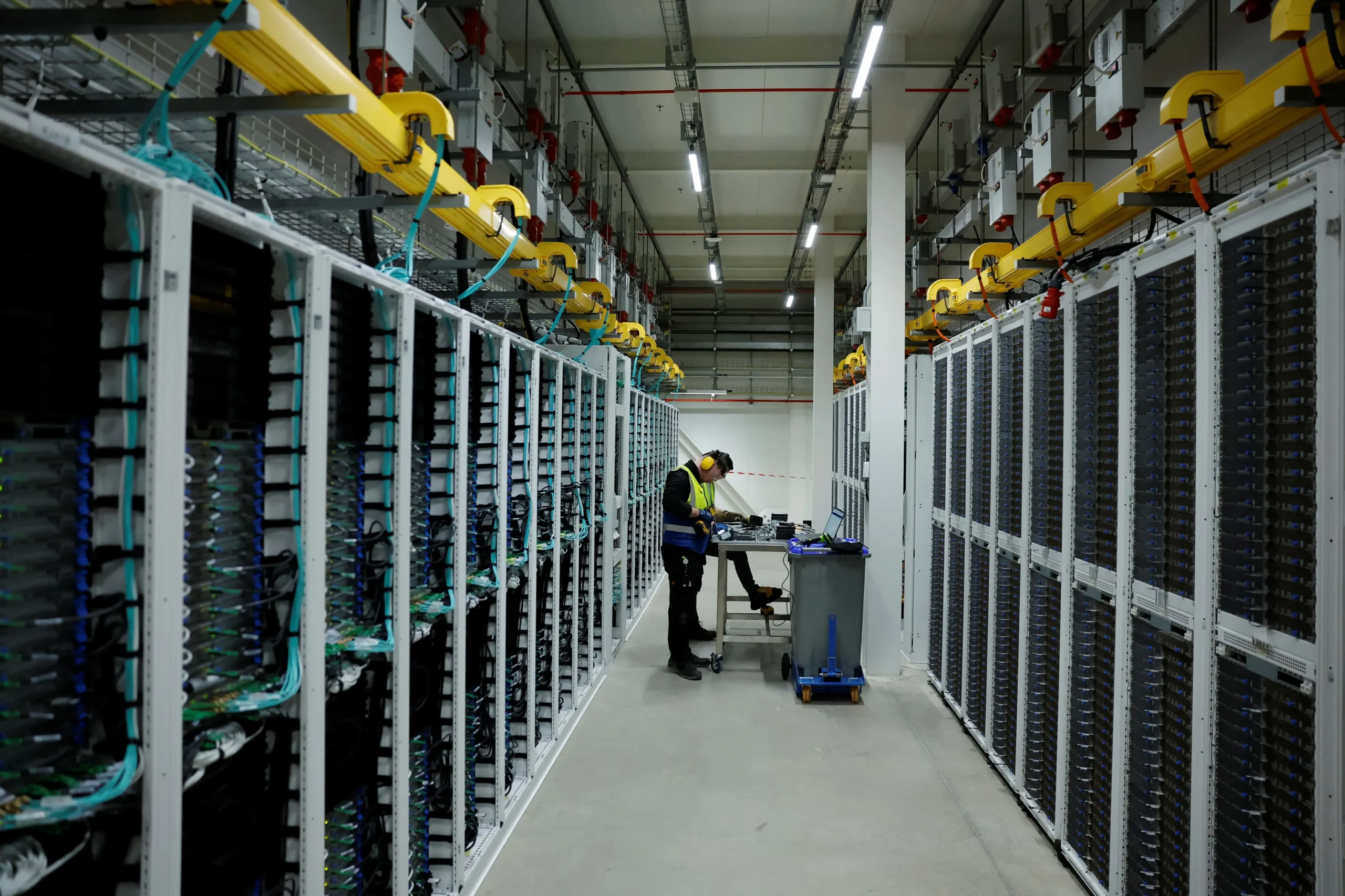
The United Arab Emirates is becoming an increasingly important market for data centre investment as businesses and governments expand their use of artificial intelligence. Demand for computing power has grown rapidly as companies develop AI models, cloud services and digital platforms that require large amounts of processing capacity. Industry estimates suggest that worldwide data centre capacity could almost double by 2030, rising from roughly 103 gigawatts to around 200 gigawatts. The expansion is creating opportunities for investors, technology companies and infrastructure developers, while also raising questions about the energy and water needed to operate these facilities.
The UAE has positioned itself as an attractive destination for major technology infrastructure projects. Plans for a large data centre campus in Abu Dhabi, alongside investment by international companies such as Oracle, reflect the country’s ambition to become a regional centre for advanced computing. Abu Dhabi-based investors are also exploring projects outside the country, showing that Emirati capital is becoming part of the wider international data centre market. These developments are supported by the UAE’s digital economy strategy and its efforts to attract technology businesses, specialised workers and international investment.
However, the rapid growth of data centres could create pressure on national energy and environmental targets. Facilities require reliable electricity around the clock, while cooling systems can consume significant amounts of water. Researchers and industry experts say that the UAE will need to make sure new computing capacity is supported by additional clean-energy production rather than simply taking electricity away from existing users. Solar and nuclear power could help meet some of the demand, but the overall impact will depend on how quickly new energy projects are developed and how efficiently data centres operate.
Some specialists believe the market may eventually become more efficient as AI technology changes. Smaller and more specialised models could reduce the need for enormous computing facilities, while improved processors may deliver stronger performance using less electricity. Experts have also discussed decentralised computing, where some tasks are handled by individual devices rather than large data centres. For the UAE, the challenge will be to balance its ambition to lead in AI infrastructure with responsible energy and water management. The country’s investment decisions over the next decade could help determine whether its data centre industry becomes both commercially successful and environmentally sustainable.

