


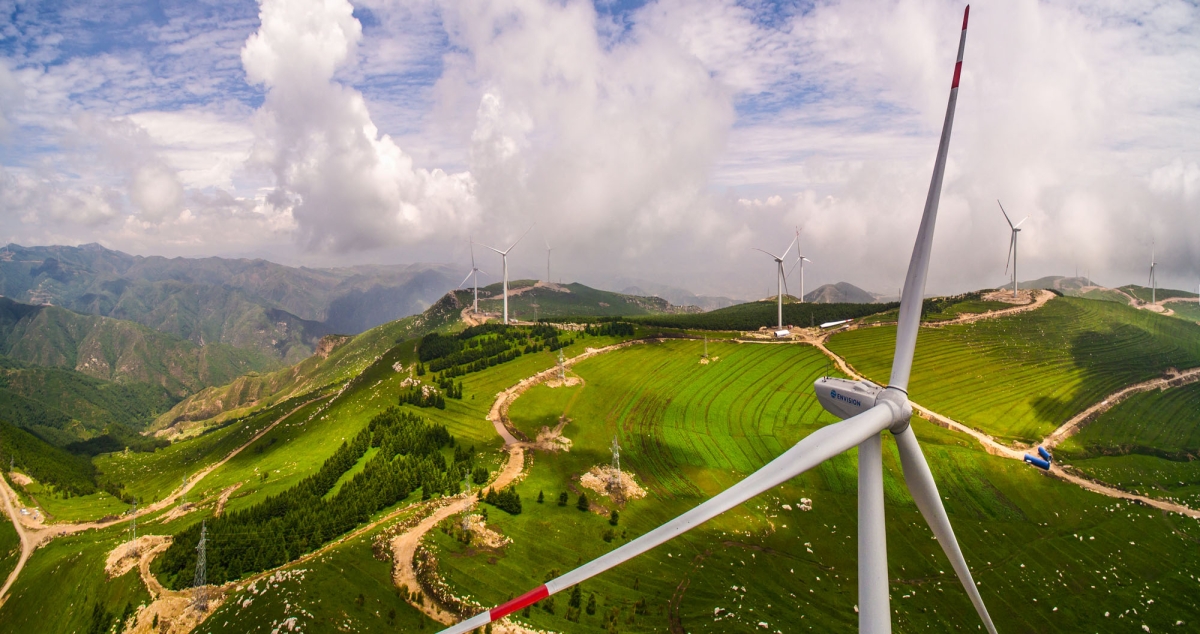
China has passed its first Ecological and Environmental Code, a landmark law creating a unified framework for pollution control, ecosystem protection, and sustainable development. Experts say the law sets a global standard in environmental governance and strengthens China’s green transition.
The Ecological and Environmental Code integrates rules on air, water, soil, biodiversity, and climate action into a single system. It enforces stricter pollution standards, clarifies responsibilities for industries and local governments, and imposes tougher penalties for violations. This consolidated approach is expected to guide sustainable economic growth while protecting natural resources.
Alongside the law, China’s Ministry of Ecology and Environment reported major green technology breakthroughs. These include advanced solutions for controlling air and soil pollution, groundwater cleanup, ecosystem protection, and national environmental restoration projects. Officials say these innovations boost China’s ability to achieve its vision of a “Beautiful China.”
Local governments will play a key role in implementing the code. They are tasked with ensuring industries meet higher pollution standards, protecting natural resources, and reporting environmental data accurately. Transparency measures allow citizens and watchdog organizations to monitor compliance, helping enforce accountability.
Industries are encouraged to adopt cleaner technologies and sustainable practices. Clear rules give businesses certainty for green investments. Companies complying with the law may receive incentives, while violators face stricter penalties. Experts highlight that this approach balances economic growth with environmental responsibility.
International observers note that China’s Ecological and Environmental Code could serve as a model for other countries. By consolidating decades of legislation into one legal framework, China demonstrates how large economies can address complex environmental challenges while promoting sustainability.
The law also promotes climate action by encouraging energy efficiency, low-carbon development, and better resource management. These measures support China’s efforts to reduce emissions, expand renewable energy, and protect ecosystems. Combining legal frameworks with technology innovation strengthens the country’s capacity to manage environmental and climate risks.
Public awareness is expected to rise under the new law. Citizens gain clearer rights and responsibilities, enabling communities to monitor pollution, conserve resources, and report violations. This participatory approach is intended to build strong societal support for environmental protection.
Meanwhile, the United Arab Emirates is advancing climate action through several initiatives. Residents are encouraged to participate in Earth Hour 2026 by switching off lights and taking small collective actions to promote climate awareness. The UAE’s continued engagement in global environmental movements demonstrates the importance of citizen participation in climate solutions.
In addition, the UAE Ministry of Climate Change and Environment, in partnership with the Global Green Growth Institute, launched a new climate adaptation finance readiness report during Abu Dhabi Sustainability Week 2026. The report aims to guide both public and private sectors in investing in climate resilience. Officials said the initiative helps identify funding gaps and opportunities, encouraging sustainable finance for climate adaptation projects.
These UAE initiatives complement China’s environmental code by combining policy, technology, and citizen engagement to address climate and ecological challenges. Together, these actions reflect a growing global focus on sustainability, showing how nations can enforce laws, promote innovation, and foster community participation to create cleaner, greener futures.

