


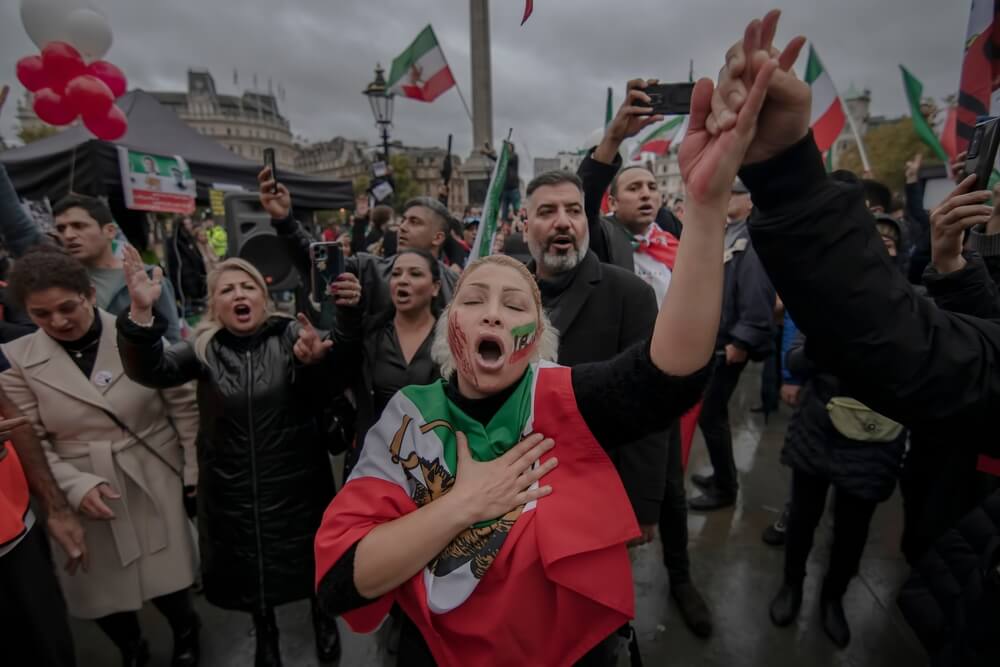
Iran was shaken by a fresh surge of unrest on Thursday night as protesters poured into the streets of Tehran and shouted from rooftops after a call for mass demonstrations by exiled crown prince Reza Pahlavi. The latest protests mark a sharp escalation in a movement that began over economic hardship and has since spread across the country.
Streets Erupt, Internet Goes Dark
As the clock struck 8pm local time, neighbourhoods across the capital rang out with chants of “Death to the dictator!” and “Death to the Islamic Republic!” Witnesses said thousands gathered in the streets, while others joined in from their homes. Some demonstrators openly praised the former monarchy, shouting slogans such as, “This is the last battle! Pahlavi will return!”
Almost immediately after the protests began, internet access and phone services across Iran were cut. Internet monitoring groups Cloudflare and NetBlocks reported widespread outages, attributing them to government interference. Calls into Iran from abroad, including from Dubai, failed to connect — a pattern that has previously preceded forceful crackdowns by authorities.
According to the Norway-based Iran Human Rights NGO, at least 45 demonstrators have been killed by security forces since protests began in late December. A separate US-based group, Human Rights Activists News Agency, reported more than 2,260 arrests and at least 39 deaths so far.
Pahlavi’s Call Tests Protest Movement
The demonstrations were widely seen as the first major test of whether Reza Pahlavi — whose father fled Iran ahead of the 1979 Islamic Revolution — could influence events on the ground. In a statement, Pahlavi urged Iranians to unite and make their demands heard, warning Iran’s leadership and the Revolutionary Guard that the world was watching.
“Great nation of Iran, the eyes of the world are upon you,” he said. “Take to the streets and shout your demands as one.”
While chants in support of the former shah were once unthinkable — and even punishable by death — their re-emergence now underscores the depth of anger driving the protests. Markets and bazaars closed in several cities in solidarity, adding economic pressure to the political unrest.
Despite the scale of the demonstrations, analysts note the movement remains largely leaderless. Experts warn that the lack of a clear alternative leadership has weakened past uprisings, even as frustration with Iran’s ruling system deepens.
International Warnings and Rising Pressure
Iranian authorities have offered little public acknowledgment of the protests’ scale, but signs suggest they are taking the situation seriously. State-aligned media warned that security forces could use drones to identify protesters, while officials remained silent on the growing unrest.
International attention has intensified. US President Donald Trump warned last week that Washington would respond if peaceful protesters were violently suppressed, drawing a sharp rebuke from Iran’s Foreign Ministry, which accused the US of hypocrisy and interference.
European leaders have also spoken out. European Parliament President Roberta Metsola said the world was once again witnessing Iranians “stand up for freedom, dignity and the right to choose how they are governed.”
As demonstrations continue to spread and casualties mount, pressure is building on Iran’s leadership — and questions remain over how long authorities can contain a movement driven by economic despair, political anger and a growing sense that change may finally be possible.

