


The United Arab Emirates is facing a sharp rise in regional tension. New missile and drone attacks have raised fear and forced leaders to act fast. The events highlight the country’s push for UAE Strategic Autonomy as it seeks safety and control over its future.
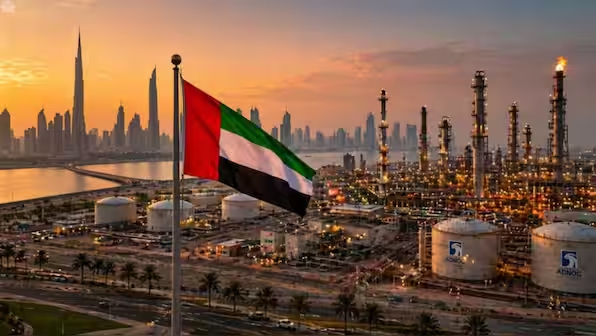
On Monday, Iranian missile and drone strikes targeted key energy sites in Fujairah and Abu Dhabi. The attacks came after earlier US strikes on Iranian assets. Air defence systems in the UAE stopped many threats, including ballistic and cruise missiles. Still, one drone strike caused a fire at the Fujairah Oil Industry Zone, a major hub for energy exports.
Officials said the attacks caused disruption, injuries, and fear. Emergency alerts were sent across cities like Dubai and Abu Dhabi. Authorities called the strikes a dangerous escalation and a direct threat to national security. They also said the country has the full right to respond if needed.
Reports suggest Iran shared details of the attacks with Saudi Arabia and Oman. This move may have aimed to use existing divisions in the Gulf region. Experts say this shows rising tension and a fast-changing security landscape that demands quick action.
Before the attacks, the UAE had already taken a bold step. It left the Organization of the Petroleum Exporting Countries on May 1. The decision reflects a clear push for UAE Strategic Autonomy in energy policy and long-term planning.
Leaders said the move allows more control over oil production. It also gives the country freedom to respond to global price changes. Oil prices have been unstable due to the Iran conflict. Brent crude rose sharply in recent weeks, reaching high levels compared to last year.
The UAE wants to expand its production and act based on national interest. This shift shows a long-term plan to reduce reliance on group decisions. It also signals a move toward greater independence in global energy markets.
The country is also shaping a unique role in global affairs. President Sheikh Mohamed bin Zayed Al Nahyan has focused on growth, stability, and global cooperation. His vision promotes better living standards and strong international ties with many nations.
Unlike some regional powers, the UAE does not rely on religious or symbolic leadership. Instead, it uses trade, investment, and diplomacy to build influence. This approach supports UAE Strategic Autonomy and helps the country act as a modern middle power.
The UAE has built strong ties with many countries. It joined the Abraham Accords, improving relations with Israel. It also deepened partnerships with India and the United States. At the same time, it keeps links with China and Russia, showing a balanced foreign policy.
This strategy spreads risk and avoids dependence on one power. It allows the UAE to stay flexible in a changing world. Many experts say this approach is key in a time of global uncertainty.
The recent conflict has raised serious questions about regional security. There was no unified response to the Iranian strikes, which shows limits to regional unity. This has pushed countries to rely more on their own strength.
The events also highlight concerns about foreign security guarantees. Some experts believe reliance on external military support may not be enough during crises. This has encouraged the UAE to strengthen its own defence systems and partnerships.
The UAE has already taken steps in this direction. It has invested in advanced defence tools and built new alliances based on shared interests. Its choices reflect a practical approach focused on real needs instead of ideology.
The country is also growing its role as a global mediator. It hosted talks between Russia, Ukraine, and the United States in early 2026. These talks showed trust in the UAE as a neutral and reliable partner in global diplomacy.
At the same time, high oil prices give the UAE more opportunity. Increased production can help global markets and support economic growth. It also gives the country more influence in energy supply during a time of need.
The UAE’s actions show a clear and careful plan. It aims to balance security, growth, and independence in a complex world. UAE Strategic Autonomy is at the center of this strategy and guides many key decisions.
The recent attacks highlight the risks in the region. They also show why the UAE is moving toward greater independence. With careful planning and strong leadership, the country aims to secure both safety and long-term prosperity in the years ahead.

