


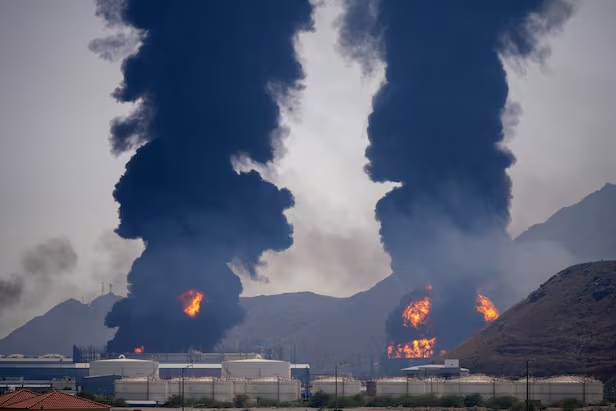
The UAE Iran Oil Attack has pushed tensions higher in the Gulf region. The United Arab Emirates said Iran launched missiles and drones at its territory on Monday. The attack caused a large fire at an oil refinery in Fujairah. It also left three Indian nationals injured.
Officials in the UAE said their air defense systems responded fast. They reported intercepting many threats during the attack. According to the Ministry of Defence, forces engaged 12 ballistic missiles, three cruise missiles, and four drones. These were said to be launched from Iran.
The strike marks the first major incident since a ceasefire deal between the United States and Iran on April 8. That agreement had brought some hope for calm in the region. But the UAE Iran Oil Attack now raises fresh concerns about stability.
Fujairah is a key oil hub on the eastern coast of the UAE. It sits outside the Strait of Hormuz. This location makes it very important for global oil supply routes. Any attack on this area can impact energy markets and trade flows.
The UAE’s Ministry of Foreign Affairs strongly condemned the incident. It called the attack “terrorist” and “unprovoked.” Officials said civilian sites were targeted. They also stressed that the country will protect its security and sovereignty.
The ministry added that the UAE has the full right to respond. It warned that any threat to the country will not be tolerated. These strong words show how serious the UAE sees the situation.
There has been no official response from Iran’s government. However, Iran’s state broadcaster shared a different view. A military source told the channel that Iran had no plan to attack oil facilities in the UAE.
The same source blamed the United States for the incident. It claimed that US actions in the region are raising tensions. The source said these moves aim to open routes in the Strait of Hormuz for ships. Iran had earlier warned that it would act against foreign forces entering the area.
The Strait of Hormuz is one of the world’s most important energy routes. A large share of global oil passes through this narrow waterway. Any conflict here can disrupt supply and push up oil prices.
Tensions in the area have been rising for weeks. The United States has been working to escort stranded tankers through the strait. This move came after earlier clashes linked to a wider conflict that began on February 28.
Iran had warned commercial ships not to join US escort plans. It also warned that US forces could face attacks if they enter the strait. These warnings now add to the uncertainty after the UAE Iran Oil Attack.
The latest incident shows how fragile the current ceasefire is. Even small clashes can lead to bigger risks in such a tense region. Global markets and governments are watching closely.
Energy experts say any disruption near Fujairah or the Strait of Hormuz can have wide effects. Oil prices could rise if supply routes are blocked or unsafe. This can impact economies around the world.
For now, the UAE is assessing the damage and ensuring safety at the refinery site. Emergency teams worked to control the fire and secure the area. Officials have not shared the full extent of the damage yet.
The UAE Iran Oil Attack highlights the ongoing risks in the Gulf. While some leaders call for calm, tensions remain high. The coming days will be key in shaping what happens next in this sensitive region.

