


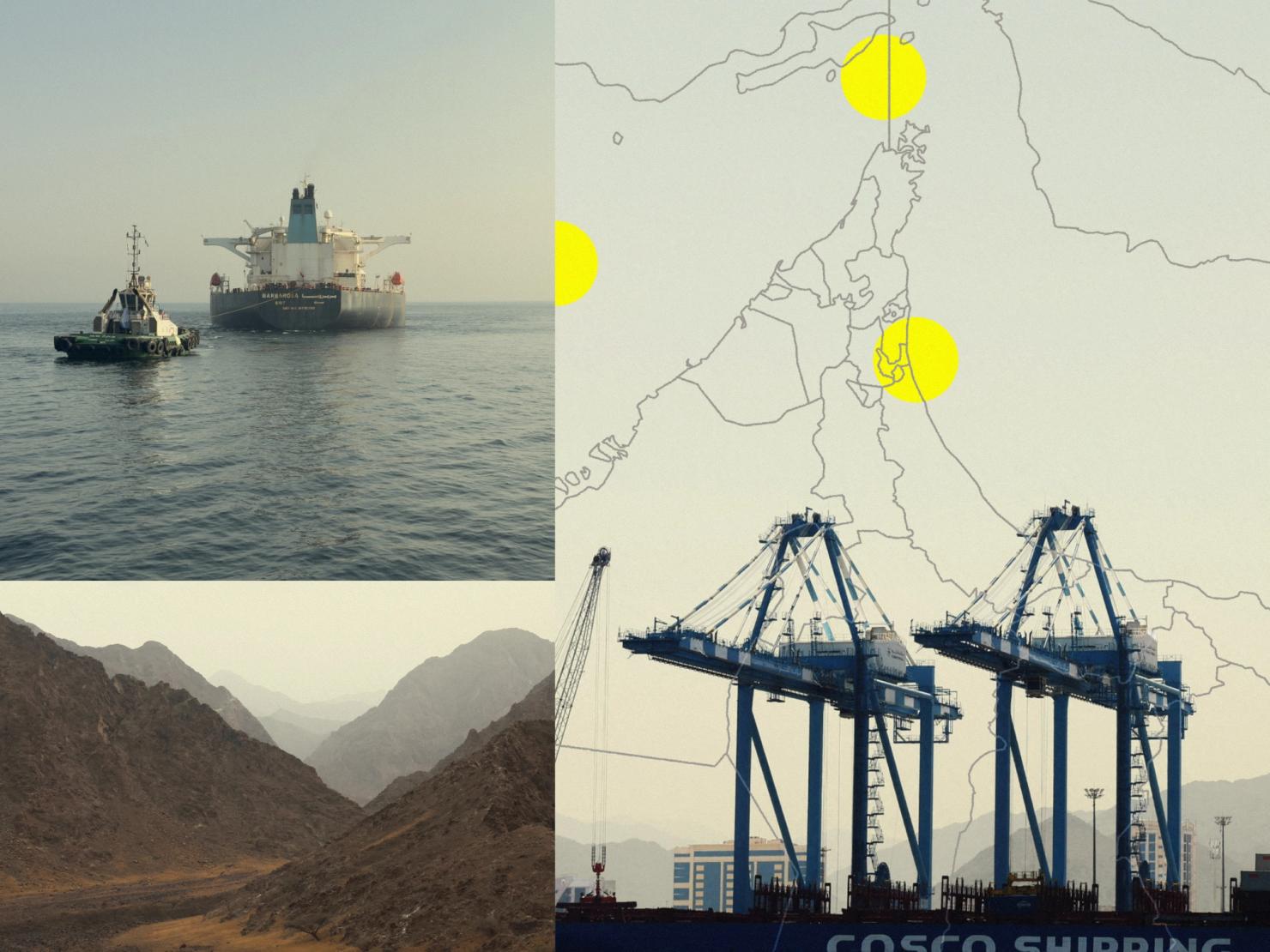
The United Arab Emirates is moving to reduce its reliance on the Strait of Hormuz, with the port of Fujairah playing a key role in the plan. The port is becoming more important as Gulf states seek safer ways to move oil and gas to global markets.
At Fujairah, the scale of the effort is clear. Large tugboats guide giant crude tankers into port, where ships load oil for delivery to customers around the world.
One tanker able to carry two million barrels of oil was loading at the port’s only jetty built to handle vessels of that size. Smaller ships used other berths, while another tanker loaded oil at an offshore mooring.
A UAE naval corvette stood guard nearby. Farther out at sea, more tankers sat at anchor and took part in ship-to-ship transfers. The oil had been moved through the Strait of Hormuz under US protection before being prepared for export.
These operations show how important Fujairah has become to the UAE’s efforts to protect its energy trade from disruption.
Fujairah Gains Strategic Importance
Fujairah is one of the UAE’s smaller and less wealthy emirates. It has long attracted visitors with its affordable resorts, beaches and mountain scenery. Yet its location outside the Strait of Hormuz has given it a new role in regional energy plans.
The strait is a vital route for global oil and gas shipments. It links the Persian Gulf with the Gulf of Oman and the wider Indian Ocean. Much of the energy exported by Gulf producers passes through this narrow waterway.
Any disruption can affect oil supplies, shipping costs and energy prices. The risk has pushed Gulf countries to look for routes that allow them to export fuel without depending entirely on the strait.
The UAE’s plan, often described as its “Zero Hormuz” strategy, aims to reduce that dependence. Fujairah is central to the effort because ships can reach the port from the Gulf of Oman without passing through the strait.
The location gives the emirate a major advantage as regional governments rethink how they move energy to international buyers.
Gulf States Seek Alternative Oil Routes
The UAE is not alone in trying to reduce the risks linked to the Strait of Hormuz. Saudi Arabia is expanding its pipeline network to provide more options for moving crude oil to export terminals beyond the strait.
Kuwait is also discussing possible oil export pipelines with Saudi Arabia and the UAE. Such links could allow Kuwaiti crude to travel through neighboring countries before reaching ports with access to open waters.
Oman may also benefit from the disruption. Plans to develop pipeline routes to its ports could offer another way to move oil and other fuels from the Gulf to global markets.
These projects would require major investment, careful planning and cooperation between governments. Pipelines must connect oil fields and storage facilities with export terminals. Ports must also have enough capacity to handle large tankers and rising shipment volumes.
Even so, the plans reflect a wider shift in regional energy policy. Gulf producers want more choices when shipping routes face military threats or other disruptions.
New Projects Could Transform Fujairah
The growing demand for alternative export routes could bring major industrial projects to Fujairah.
Fereidun Fesharaki, chairman emeritus of energy consultancy FGE NexantEC, said the crisis could create an unusual opportunity for the emirate. He told Semafor that Fujairah could see a new liquefied natural gas plant, a refinery and a much larger port.
Such projects could increase the volume and range of energy products handled in the emirate. A refinery would allow crude oil to be processed into fuels and other products. A liquefied natural gas facility could support the handling and export of gas in liquid form.
Port expansion could also make room for more ships, larger cargoes and additional storage facilities. This would strengthen Fujairah’s role in regional energy trade.
However, large projects take time to plan and build. They also depend on investment, market demand, security conditions and access to reliable supplies.
Energy Security Becomes a Regional Priority
The push to bypass Hormuz shows how security concerns can reshape energy infrastructure. For years, Gulf trade has relied heavily on the strait because of its location between major producers and international shipping routes.
The current disruption has increased the pressure to develop alternatives. More pipelines and stronger ports could help Gulf states keep exports moving during future crises.
Still, alternative routes cannot remove every risk. Ports, pipelines and shipping lanes all need protection. New infrastructure also carries high costs and may take years to deliver its full benefits.
For Fujairah, the opportunity is significant. Its position outside the strait could attract new investment and make it a larger hub for oil and gas exports.
The wider goal is to give Gulf producers greater control over how their energy reaches the world. As the UAE and its neighbors develop new routes, Fujairah is emerging as a key part of their effort to reduce the strategic power of the Strait of Hormuz.

