


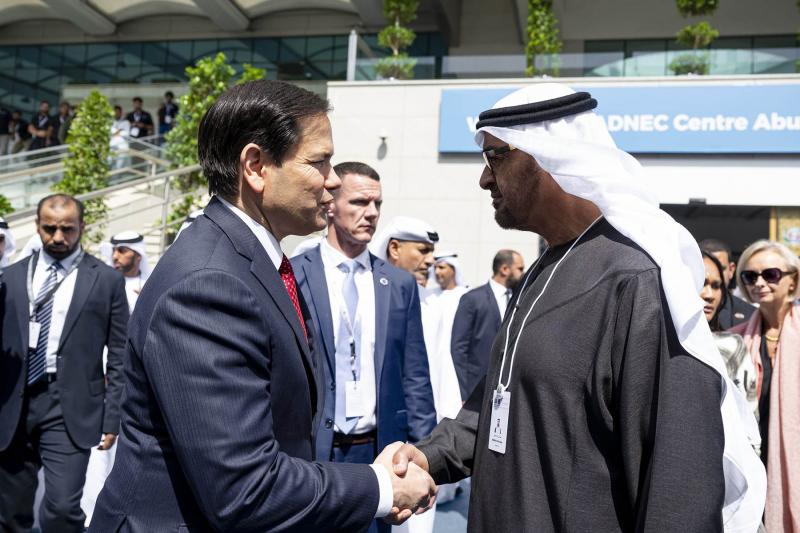
US Secretary of State Marco Rubio met UAE President Sheikh Mohamed bin Zayed Al Nahyan in Abu Dhabi on Wednesday to discuss regional security, the recent US-Iran agreement, and the safety of shipping routes through the Strait of Hormuz.
The meeting took place during Rubio’s Gulf tour as Washington works to strengthen a new understanding with Iran and reduce tensions that have affected trade and energy markets across the region. The discussions focused on maintaining stability and ensuring the safe movement of ships through one of the world’s most important waterways.
The Iran Hormuz Security Talks have become a major focus of regional diplomacy following months of tension involving the United States, Iran, and Israel.
According to the US State Department, Rubio and the UAE president discussed the memorandum of understanding recently signed between Washington and Tehran. The talks also covered efforts to protect maritime traffic in the Strait of Hormuz and broader measures aimed at promoting peace across the Middle East.
US officials said Rubio thanked the UAE for its support and leadership during recent regional challenges. He also reaffirmed America’s commitment to the security of the UAE and its Gulf partners.
Senior UAE officials attended the working lunch, including National Security Adviser Sheikh Tahnoon bin Zayed Al Nahyan and Foreign Minister Sheikh Abdullah bin Zayed Al Nahyan. The leaders reviewed bilateral relations and explored opportunities for greater cooperation in several sectors.
The Strait of Hormuz remains one of the most important shipping routes in the world. A large share of global oil and liquefied natural gas exports passes through the narrow waterway each day. Any disruption can affect global energy prices and international trade.
Speaking after arriving in Abu Dhabi, Rubio rejected suggestions that countries bordering the strait could impose fees on commercial shipping. He said international law protects free navigation through international waterways and does not allow individual countries to charge tolls.
His comments followed reports of discussions between Iran and Oman regarding future navigation arrangements in the Strait of Hormuz. The issue has attracted international attention because of the waterway’s importance to global energy supplies.
The Iran Hormuz Security Talks come at a time when regional governments are seeking ways to reduce tensions and prevent future disruptions. Several countries have expressed concern about the impact of instability on trade, investment, and economic growth.
Rubio’s visit also reflects growing efforts by the United States to reassure its Gulf allies about the recent agreement with Iran. Some regional governments remain cautious about the deal and want further details on how it will affect security across the Middle East.
The US-Iran memorandum of understanding was signed last week and outlines broad principles aimed at reducing tensions. The agreement created a framework for 60 days of negotiations on more difficult issues, including questions surrounding Iran’s nuclear programme.
One of the most important topics remains Iran’s stockpile of highly enriched uranium. Some material has reportedly been enriched to levels close to weapons-grade purity. Iran continues to insist that its nuclear activities are intended only for peaceful purposes.
Regional governments are also monitoring concerns about Iran’s missile programme. While the memorandum addresses several areas of conflict, it does not directly deal with Tehran’s ballistic missile capabilities, which remain a major concern for many Gulf states.
Another issue attracting attention is a proposed reconstruction fund worth hundreds of billions of dollars. Some US allies worry that financial resources could strengthen Iran’s military capabilities if safeguards are not put in place.
The UAE has faced economic challenges linked to regional instability. As a major financial and business hub, the country depends heavily on investor confidence and stable trade routes. Disruptions in shipping and energy markets can have significant economic effects across the Gulf region.
Rubio is expected to continue discussions on these issues during upcoming visits to Kuwait and Bahrain. Both countries host important US military facilities and play key roles in regional security efforts.
Analysts say the Iran Hormuz Security Talks will remain a central issue in Middle East diplomacy over the coming months. As negotiations between Washington and Tehran continue, Gulf nations are expected to seek assurances that any future agreement protects regional security, supports economic stability, and keeps vital shipping lanes open for international trade.

