


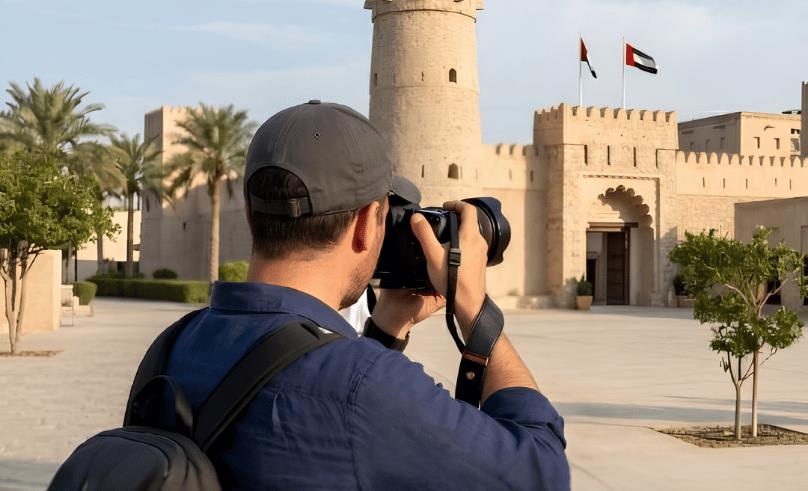
A new Abu Dhabi photo program has been launched to record the growth of the city through photography. The project aims to build a long-term visual record of cultural, social, and urban change. It will use exhibitions, competitions, books, and public events. The goal is to preserve memory and show how Abu Dhabi has changed over time in a simple and visual way.
The initiative is titled The Image as Witness. It is led by the Abu Dhabi Arabic Language Centre. The programme includes photography exhibitions, contests, seminars, panel talks, and printed books. It focuses on growing the role of photography in cultural life in the UAE. It also aims to bring more people into cultural activities. Young people are a main focus group. The programme also links with the Year of the Family, which highlights family unity and social values in the country.
A key part of the Abu Dhabi photo program is a photography competition centered on Qasr Al Hosn. Participants are invited to photograph the historic site using four themes. These include architecture, black and white photography, light and shadow, and creative editing with artificial intelligence tools. The goal is to connect heritage with modern creativity. It also encourages new ways of viewing historic places in Abu Dhabi.
The programme will also include digital question and answer sessions during the Qasr Al Hosn Festival. These sessions aim to promote reading and cultural learning. Organisers want to involve all parts of society in the project. Young people are a key focus for participation. The sessions are designed to support cultural identity and encourage learning in simple and engaging ways. The plan also supports national efforts tied to the Year of the Family initiative.
One of the main features is an exhibition called Layers of Memory. It brings together old and new photographs of Abu Dhabi. The display shows how the city has grown over time. It combines still images with visual projections to create a stronger viewing experience. A documentary book will also present selected images. The aim is to create a detailed record of the city’s transformation across decades.
The results of the Abu Dhabi photo program will be shown at the Abu Dhabi International Book Fair. The Arts Corner will display photography works from the project. Workshops will also be held for students, young creators, and researchers. These sessions will focus on photography skills and research methods. The goal is to support learning, creativity, and cultural growth in a practical way.
The programme also builds on earlier work from the Abu Dhabi Arabic Language Centre. This includes the Illustrated Story section of the Sard Al Thahab Award. It also connects with the Emirati Art series Pioneers Among Us. Earlier publications highlighted photographers like Jassim Rabee Al Awadhi and Karim Sahib. More editions are planned for the future to expand this cultural record.
Organisers say the Abu Dhabi photo program is part of a wider effort to protect cultural memory. It aims to connect the past and present through photography. It also encourages research and creative work across the community. The project is expected to grow in future editions with more events and wider participation. This helps build a stronger cultural record of the city in simple visual form.
This type of initiative reflects a growing focus on cultural preservation in the United Arab Emirates. Photography is used as both art and record. It helps show how society changes over time. Many cultural groups in Abu Dhabi are building visual archives. These archives support education, research, and creative industries. They also help young people connect with their heritage in a clear and modern way.
Organisers believe the programme will help create a lasting visual history of Abu Dhabi. It may also inspire more young photographers and creators in the future. The archive is expected to grow with each new edition. Officials say this effort supports national identity through simple, powerful images and strengthens understanding of the city’s development over time.

