


Formula One has confirmed that the Qatar and Abu Dhabi Grands Prix remain on the 2026 calendar. The sport has also prepared contingency plans in case regional tensions affect the final two races of the season.
Formula One President and Chief Executive Officer Stefano Domenicali said both races are still scheduled as planned. The Qatar Grand Prix is set for 29 November, while the Abu Dhabi Grand Prix at Yas Marina Circuit will take place on 6 December.
Domenicali said Formula One will continue to monitor developments before making any decision. He explained that officials want to give the situation as much time as possible before deciding on any changes. A final decision is expected by mid-September.
At present, the Qatar and Abu Dhabi races remain confirmed. However, Formula One has created backup plans to ensure the championship can finish smoothly if circumstances change.
If the races cannot take place in the Middle East, the final part of the season could move to Europe. Domenicali said Europe would be the preferred option because there are limited alternatives available at that stage of the calendar.
Italy’s Imola circuit is one of the venues being considered as a possible replacement. The track has a strong Formula One history and has successfully hosted races in recent years. Its experience and infrastructure make it a practical option if a change becomes necessary.
Domenicali also ruled out the possibility of holding a second race in Las Vegas. While the city was considered during discussions, Formula One has decided not to use Las Vegas as a replacement venue.
The Qatar and Abu Dhabi Grands Prix have become two of the most important events on the Formula One calendar. Both races attract large crowds and strong international interest every year.
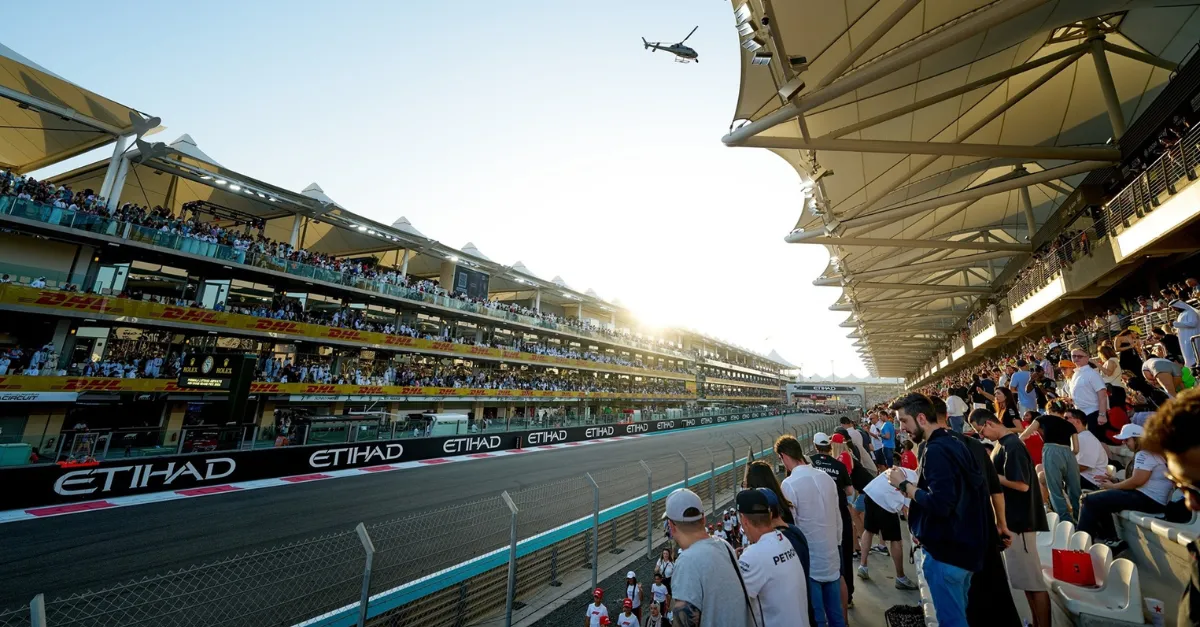
The 2025 Abu Dhabi Grand Prix welcomed a record 203,000 spectators across the race weekend. The event has grown into one of the sport’s biggest gatherings and continues to attract fans from around the world.
The Qatar Grand Prix also recorded impressive attendance figures. Nearly 163,000 spectators attended the race weekend at Lusail International Circuit in 2025. The event has quickly established itself as a major stop on the Formula One schedule.
Domenicali said demand remains extremely strong for both races. Tickets for the 2026 editions of the Qatar and Abu Dhabi Grands Prix have already sold out, showing the continued popularity of the events.
The Middle East remains an important region for Formula One. The success of races in Qatar and Abu Dhabi has helped the sport expand its global audience and strengthen its commercial position.
Formula One has already faced challenges while preparing the 2026 season. Earlier this year, the Bahrain and Saudi Arabian Grands Prix were cancelled from their original April dates because of the Iran conflict.
The cancellation forced officials to revise the race calendar and identify replacement options. Malaysia’s Sepang International Circuit was later selected to replace the Bahrain Grand Prix.
The revised schedule, agreed with the FIA and the governments involved, will see the Malaysian event take place from 2 to 4 October. Aside from that adjustment, the rest of the Formula One calendar remains largely unchanged.
The effects of regional tensions have also been felt across other international motorsport series. Several championships have modified their schedules in response to ongoing uncertainty.
The FIA World Endurance Championship postponed its Qatar 1812km season opener. The event is now scheduled for 22 to 24 October.
MotoGP also changed its plans for Qatar. The championship moved the Qatar Grand Prix from its original April slot to 6 to 8 November at Lusail International Circuit.
Despite these disruptions, Formula One remains committed to completing its season in the Middle East. Officials continue to work closely with stakeholders while monitoring the situation.
For now, the Qatar and Abu Dhabi Grands Prix remain part of the 2026 calendar. With both races sold out and fan interest at record levels, Formula One hopes to conclude the season as planned while keeping contingency measures ready if conditions require a different approach.

