


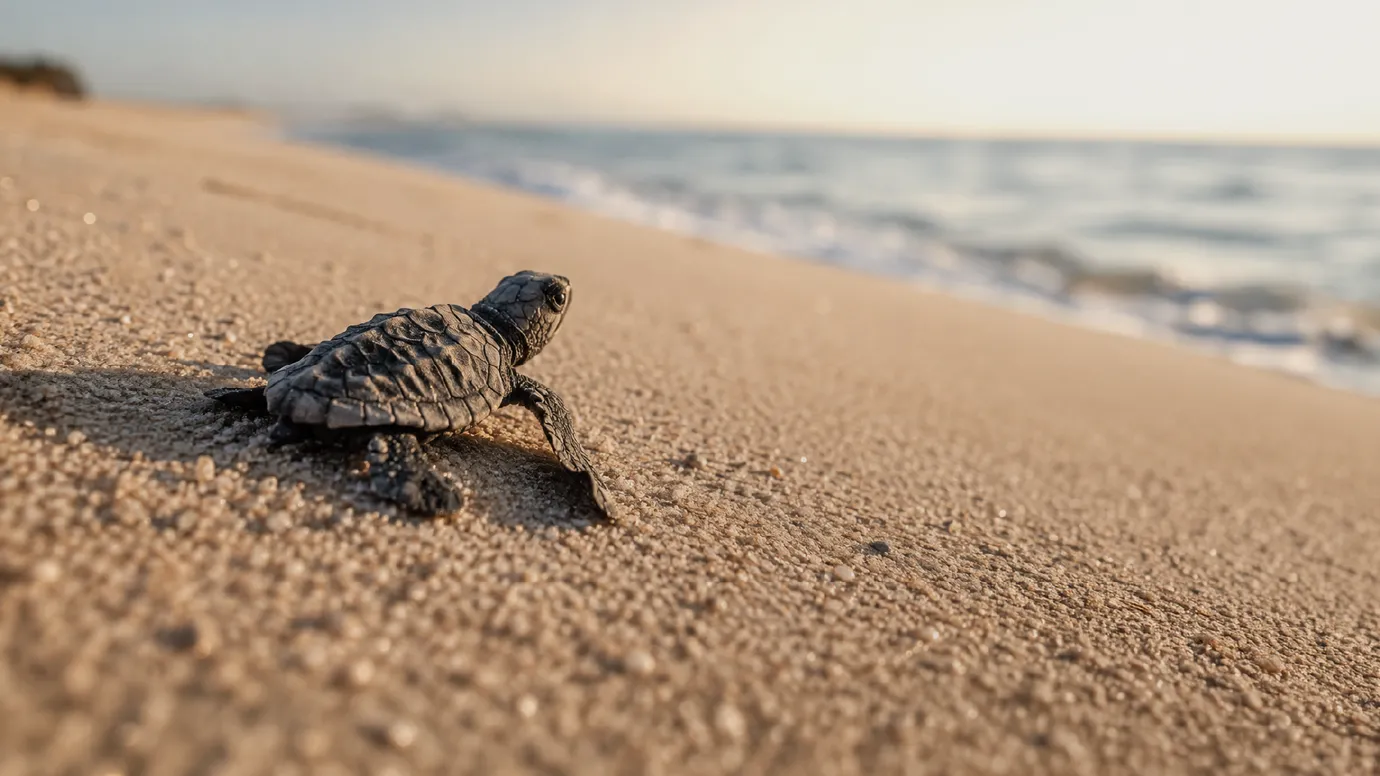
Abu Dhabi has recorded its first known Olive Ridley turtle nest, marking a rare moment for marine life in the emirate. The nest was found along the coast and is now being watched by local teams. They are working to keep the eggs safe while also studying the site to learn more about the turtle and its nesting habits.
Olive Ridley turtles are among the smallest sea turtles in the world. They live in warm seas and can travel long distances during their lives. The species is best known for large nesting events in some parts of the world. However, Olive Ridley turtles are not often seen nesting in the United Arab Emirates. That makes the Abu Dhabi discovery important for both science and conservation.
The discovery may also provide clues about the condition of Abu Dhabi’s coastal waters. Sea turtles need safe beaches, clean water and healthy food sources to survive. A turtle choosing a beach to lay its eggs can therefore offer useful information about the local marine environment. Researchers may now have a chance to learn whether the species is starting to use parts of Abu Dhabi’s coast more often.
The nest is being handled with care. Teams need to protect the eggs from people, animals and other risks. They must also limit noise and bright light near the nesting area. Light can be a serious problem for young turtles because hatchlings often move toward the brightest open area when they leave the nest. Strong lights from roads and buildings can lead them away from the sea.
Sea turtles face many threats around the world. Plastic waste is one of the biggest dangers because turtles can mistake plastic for food. Fishing gear can also trap turtles and cause serious injury. Boats can create more risks in areas where turtles feed or travel. Climate change adds another challenge. Warmer seas and higher sand temperatures can affect turtle eggs and the survival of young turtles.
The Abu Dhabi discovery comes as the emirate continues to invest in marine conservation. Abu Dhabi has a long coastline and many important coastal habitats. These areas support turtles, fish, birds and many other forms of wildlife. The emirate has also created protected areas to preserve important parts of its natural environment. The new nest gives scientists another reason to study and protect these coastal areas.
Researchers can record the nesting time, beach conditions and other details from the site. If the eggs hatch, they may also gain more information about young Olive Ridley turtles in the region. A single nest cannot show whether the species is becoming more common in Abu Dhabi. But it can provide useful evidence and create a starting point for future research.
The discovery may also increase public interest in sea turtle protection. Residents and visitors can help by keeping beaches clean and avoiding damage to nests. People should keep their distance if they see a turtle coming onto the beach. They should also avoid touching turtles or their eggs. The same care is needed when hatchlings appear, as young turtles need a clear and safe path to the sea.
The new nest is more than a rare wildlife event. It is a reminder that Abu Dhabi’s coast supports a wider range of marine life than many people may realize. For conservation teams, the nest brings a new duty to protect the site. For scientists, it offers a chance to study a species that is not a common nesting visitor to the emirate.
The next step is to continue monitoring the nest and wait for the eggs to develop. If hatchlings emerge, the event could provide even more information about Olive Ridley turtles in the region. The discovery may be small in size, but its value could be much larger. It gives researchers another reason to protect Abu Dhabi’s beaches and seas and shows that the emirate’s coastline can still offer new surprises for science and conservation.

