


Saudi Arabia faces renewed security concerns as Yemen’s Houthi movement continues to threaten regional stability and international shipping. The group has targeted key interests in the region and raised questions about the kingdom’s ability to protect its energy infrastructure and strategic routes.
The Houthis are backed by Iran and remain a major force in Yemen. Their position near the Bab el-Mandeb Strait gives them the ability to threaten one of the world’s important maritime routes. The waterway connects the Red Sea to the Gulf of Aden and plays a key role in global trade.
Concerns also extend to Saudi energy facilities, military sites and other critical assets. The kingdom has invested heavily in defense over many years. However, the threat from a well-armed militia continues to test its security plans.
Saudi Arabia’s East-West pipeline is another strategic concern. It allows the country to move oil toward the Red Sea, offering an alternative route when shipping through the Strait of Hormuz faces disruption. Any threat to this infrastructure could affect Saudi oil exports and wider energy markets.
The situation has renewed debate over how much responsibility the United States should carry for protecting wealthy Gulf partners. Critics argue that regional governments should do more to coordinate their defenses and respond to threats near their own borders.
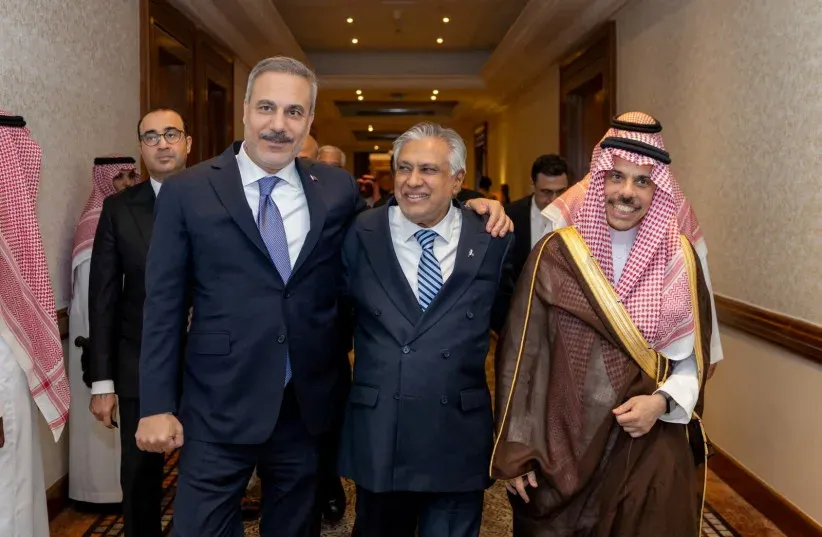
One possible response is the Mecca Joint Defense Agreement, signed by Saudi Arabia, Turkey and Pakistan. The agreement states that an armed attack against one member will be treated as an attack against all.
The pact could create a basis for stronger military cooperation. Turkey has significant armed forces, while Pakistan has a large military and nuclear weapons. Saudi Arabia also has substantial resources and a major role in regional security.
Yet the agreement’s practical value will depend on whether its members are willing to act when a real threat emerges. The Houthi challenge presents an early test of whether the pact can move beyond diplomatic commitments.
A coordinated response could increase pressure on the group and its Iranian supporters. However, the three countries have different foreign policy priorities, and their willingness to take part in military operations remains uncertain.
Iran provides the Houthis with support, but the group also has its own leadership and interests. This means Tehran may influence Houthi actions without controlling every decision. That distinction could create room for diplomacy, as well as opportunities to discourage further attacks.
US President Donald Trump has maintained relations with Turkish President Recep Tayyip Erdogan and has praised Pakistan’s role in efforts to facilitate negotiations with Iran. Washington could use these ties to encourage both countries to work more closely with Riyadh.
Turkey’s relationship with NATO has also faced questions over its purchase of Russia’s S-400 air-defense system. Pakistan, meanwhile, has its own regional priorities and security interests. These factors could complicate efforts to build a joint response.
Another proposal is closer security cooperation between Saudi Arabia, the United Arab Emirates and Israel. All three have reasons to oppose Houthi attacks that threaten energy supplies, trade routes and regional stability.
Saudi-UAE tensions have made coordination more difficult in recent years. Still, greater cooperation could improve intelligence sharing and help the countries prepare for future attacks. Israel has experience in operations against Iranian-backed groups, while the UAE has developed its own military capabilities.
The United States could support such cooperation with intelligence, logistics and diplomatic pressure. Supporters of the approach argue that stronger regional partnerships would reduce the need for a larger American military role.
However, building trust between these governments would require political decisions and practical security agreements. Cooperation against a shared threat would not remove their wider disagreements.
The conflict also raises questions about earlier US policy toward Yemen. In 2021, the Biden administration ended American support for Saudi-led offensive operations in Yemen and removed the Houthis from the US list of foreign terrorist organizations at the time. Officials cited humanitarian concerns and efforts to support a political settlement.
Those decisions remain part of the debate over how Washington should balance civilian protection with regional security. The humanitarian crisis in Yemen has been severe, while continued attacks by the Houthis have added to wider instability.
Iran’s own position has also changed under military and economic pressure. Its regional partners, including Hamas and Hezbollah, have suffered major losses during recent conflicts. Even so, Iran’s Revolutionary Guard, missile forces and nuclear program remain central concerns for Washington and its allies.
The Iranian government also faces domestic opposition from people who challenge its political system. Some policy advocates want the United States to support civil society, access to communications and peaceful organization inside Iran. Other proposals involving weapons or efforts to destabilize the government carry major risks and could increase the danger of a wider conflict.
For Washington, the challenge is to combine deterrence with diplomacy while avoiding an open-ended military commitment. A lasting response to Houthi threats will depend not only on American support but also on whether regional governments can work together.
The defense pact between Saudi Arabia, Turkey and Pakistan, along with possible Saudi, Emirati and Israeli cooperation, offers several paths for discussion. Whether any of them produces lasting security will depend on concrete action, shared goals and a willingness to bear the costs of collective defense.

