


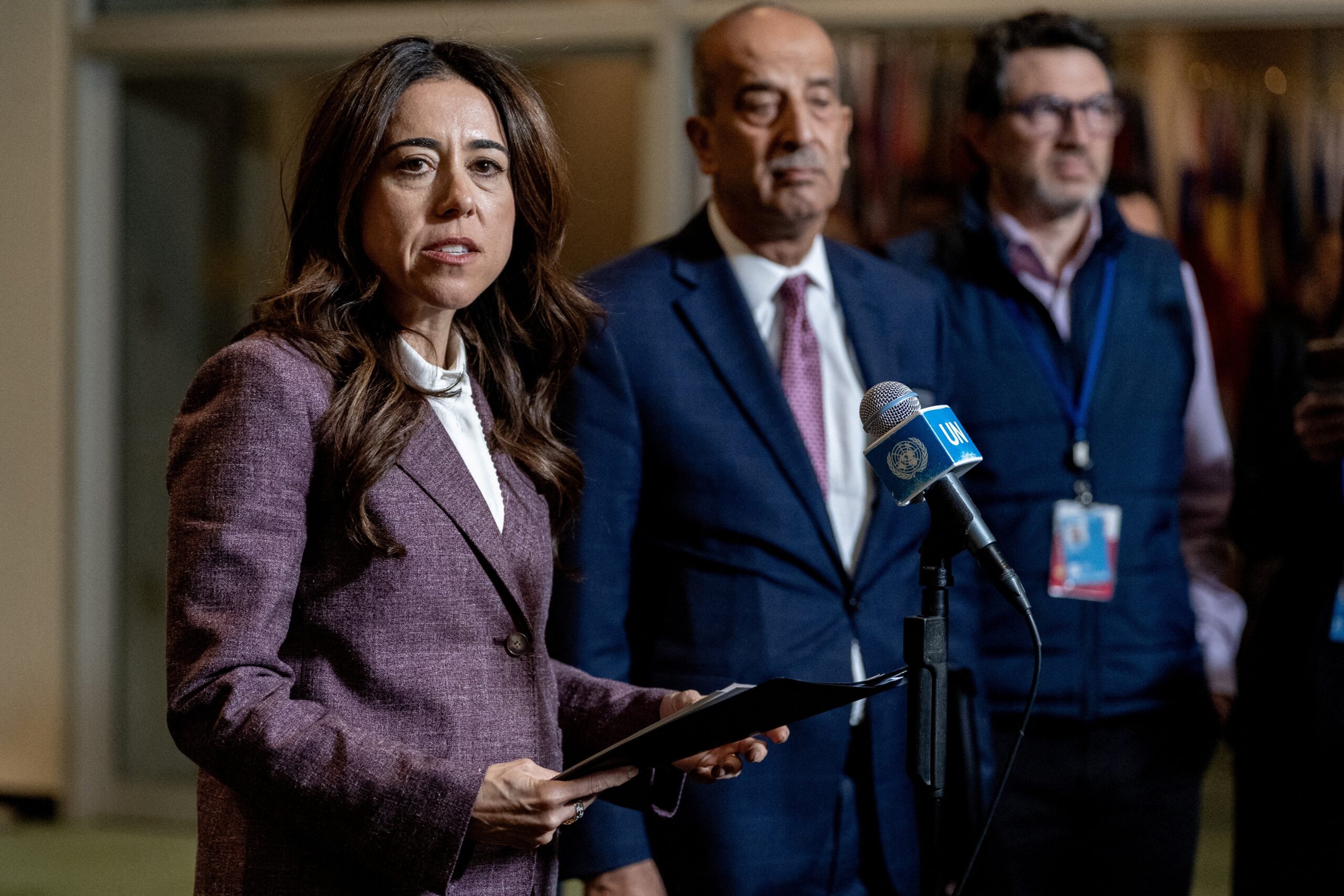
The contest to choose the next United Nations secretary-general has taken an unexpected turn after UAE candidate Lana Nusseibeh finished fourth in a secret Security Council poll. Her result has raised questions about the strength of her campaign and increased attention on China, which could play a major role in deciding the outcome.
Until Friday morning, October 30, many diplomats in New York believed Nusseibeh had a strong chance of securing the top UN post. The senior United Arab Emirates diplomat was seen as having support from several powerful countries. Diplomats familiar with the discussions said the United States and Russia had agreed to back her candidacy. France and the United Kingdom were also seen as offering little resistance.
China, however, had not committed to supporting Nusseibeh. Beijing had already stated that it would support a candidate from Latin America. Even so, some diplomats believed the UAE could persuade China to change its position through further diplomatic efforts.
Officials close to the race also said UAE representatives had been confident they had enough support to secure the position. The latest poll, however, delivered a different result.
The UN Security Council held a secret straw poll on October 30 to measure support for Nusseibeh and six other candidates. She received seven votes encouraging her to remain in the race, six discouraging her candidacy and two expressing no opinion. The result placed her fourth among the seven candidates.
Costa Rica’s Rebeca Grynspan led the poll with 11 encouraging votes and four discouraging votes. Argentina’s Rafael Grossi came second with nine encouraging votes, while Guyana’s Carolyn Rodrigues-Birkett finished third with eight.
Grynspan’s result improved from the previous poll, where she received nine encouraging votes. However, her campaign also faces challenges. Two permanent members of the Security Council reportedly cast discouraging votes against her. Since the ballots were not colour-coded, the identities of those countries remain unknown.
The five permanent members of the council are China, France, Russia, the United Kingdom and the United States. Each has the power to block a candidate through a veto. This means that even a candidate with broad support must avoid opposition from any of these five countries.
China’s position could therefore become central to the selection process. Latin American governments are hoping Beijing will stand by its public commitment to support a candidate from their region. A diplomat from Latin America said the region was now looking to China for support as it seeks the top UN job.
The regional argument is based on an informal understanding about rotation in senior UN leadership. Latin American countries say the region deserves another opportunity to provide a secretary-general. The last leader from the region was Peruvian diplomat Javier Pérez de Cuéllar, who left office in December 1991.
A group of 33 Latin American and Caribbean diplomats made their position clear on October 27. They issued a statement outside the Security Council, urging members to support a candidate from their region.
Nusseibeh has also faced criticism from human rights organisations over her record as a senior UAE official. Human Rights Watch has accused her of defending her government’s actions in Sudan and Yemen. The organisation says she denied or diverted attention from allegations of serious abuses linked to the UAE.
One major issue concerns Sudan’s conflict and the Rapid Support Forces, or RSF. Human rights advocates have criticised Nusseibeh for publicly rejecting claims that the UAE provided military support to the group. The UAE has faced allegations of backing the RSF, which has been accused of widespread abuses. Abu Dhabi has denied supporting the armed group.
During a meeting with the UN General Assembly on October 27, Nusseibeh addressed questions about her record. She said she had taken leave from her position as a UAE minister and directed questions about the country’s policies to its UN representation.
She also argued that a secretary-general must serve the entire international community rather than any single government. Nusseibeh said she would act independently under the UN flag if appointed.
She acknowledged the serious abuses committed by the RSF and described ending the Sudan conflict as a key test for the next secretary-general. She also promised to take political risks to support peace efforts and make greater use of private diplomatic talks.
Her campaign has received support from some former US diplomats and international figures. Supporters argue that her diplomatic experience, communication skills and regional contacts could help the UN play a stronger role in resolving conflicts. Critics, however, question whether her long service to the UAE could affect her independence.
The selection process remains open. The Security Council must recommend a candidate before the 193-member General Assembly can make the formal appointment. In practice, the council’s recommendation carries decisive weight.
Nusseibeh’s fourth-place result has also encouraged other governments to consider entering the contest. Turkey nominated its candidate, Feridun Sinirlioğlu, just hours after the poll. The move added another name to an already competitive race.
Although Nusseibeh faces new pressure, diplomats say it is too early to rule her out. The next rounds of voting will show whether China maintains its position and whether the major powers can agree on a candidate. For now, the contest has become a wider test of regional influence, human rights concerns and the balance of power inside the United Nations.

