


The United Arab Emirates is working to strengthen its position as a global centre for securities finance. Industry leaders say the country has made major progress over the past decade, but further changes are needed to attract more international investors and support market growth.
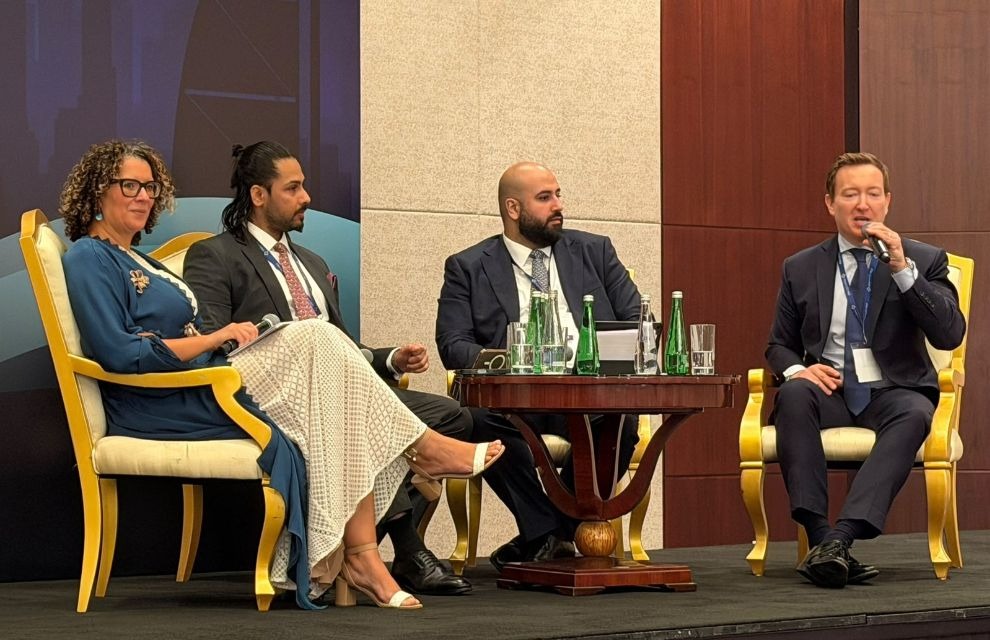
The issue was discussed during a panel session featuring senior banking, legal and financial services experts. The speakers examined the UAE’s progress, the role of regulation and the need for better market access. They also discussed how technology could change the way financial assets move across the market.
The session began with moderator Sanaa Clausse BenAbdelhadi asking whether the UAE had become a global securities finance centre. She noted the market’s major changes over the past 10 years and asked what more was needed to support its next stage of growth.
Muneeb Azhar, director of the funding centre at Mashreq, said securities finance now plays an important role in managing liquidity. He described repurchase agreements, known as repo transactions, as a key source of funding for the financial sector.
Azhar said repo markets had helped keep the system running during periods of uncertainty. He pointed to the Covid-19 pandemic and recent regional tensions as examples of the market’s ability to remain stable under pressure.
He said the next stage of development would depend on how quickly financial institutions could move cash and collateral between market participants. The UAE already has banks, investors and assets available, but real-time movement remains a major challenge.
Matthew Rodwell, senior associate in regulatory, fintech and payments at Latham & Watkins, said the UAE’s regulatory system had become far more advanced. He explained that the purpose of regulation should be to make business easier while reducing unclear rules and uncertainty.
Rodwell said exchanges now have greater responsibility for setting detailed market rules. This approach allows them to respond more quickly to changes in market needs.
He also pointed to the growth in the rules covering securities lending. Comparing the current framework with the system in place when he entered the market nearly 14 years ago, he said the difference was substantial. He noted that the Dubai Financial Market’s current framework was about 10 times larger.
Yasser Alsaadi, HSBC’s head of securities services for the Middle East and North Africa, excluding Saudi Arabia, said easier access and efficient operations would be essential to attracting more international investors.
He argued that the market needs to follow standards that global investors already understand. This would make it easier for overseas institutions to enter the UAE and take part in financial transactions.
Alsaadi said the wider market had become stronger and more stable. He also pointed to the arrival of hedge funds, the growth of exchange-traded funds and closer work with regulators as signs of increasing market complexity.
Although the speakers viewed repo markets as relatively mature, they said securities lending still had significant room to grow. Securities finance covers more than lending cash through repo deals. It also includes transactions where securities themselves are borrowed and transferred.
Azhar said the market should give greater attention to these transactions. Alsaadi described securities lending as an untapped opportunity across the region. He said reducing operational barriers and making more assets available would help unlock that potential.
The panel also discussed the need for common standards in Islamic finance. Azhar said different views on Shariah-compliant structures across countries had made it harder for institutions to trade and share liquidity.
He argued that common documents and wider acceptance of Islamic financial structures would help more participants enter the market. Greater consistency could also make cross-border transactions easier.
Digital assets and tokenisation formed another key part of the discussion. Azhar said banks needed to adapt as financial markets moved towards digital systems. He warned that institutions that failed to develop in this area could fall behind their competitors.
Alsaadi said financial firms wanted to move money when demand arose rather than wait for fixed settlement times. He added that real-world uses for digital assets were becoming clearer and more effective.
Rodwell said regulators had already introduced frameworks for stablecoins and tokenised securities. However, questions remain about how tokenised assets should be treated as collateral and how different platforms can work together.
He said the long-term goal should be to give tokenised collateral treatment equal to that of traditional money. Achieving this would require clear rules and better links between financial systems.
Transparency was another issue raised by the speakers. Azhar said market information existed but was not fully accessible to participants. Alsaadi added that international clients increasingly expect clear and reliable market data before investing.
The panel ended with a shared view that the UAE has made strong progress but must continue improving its systems. Faster settlement, common standards, better data access and cross-border links will be important to its ambitions.
The speakers said these changes could help the country attract more global institutions and support a deeper securities finance market in the years ahead.

