


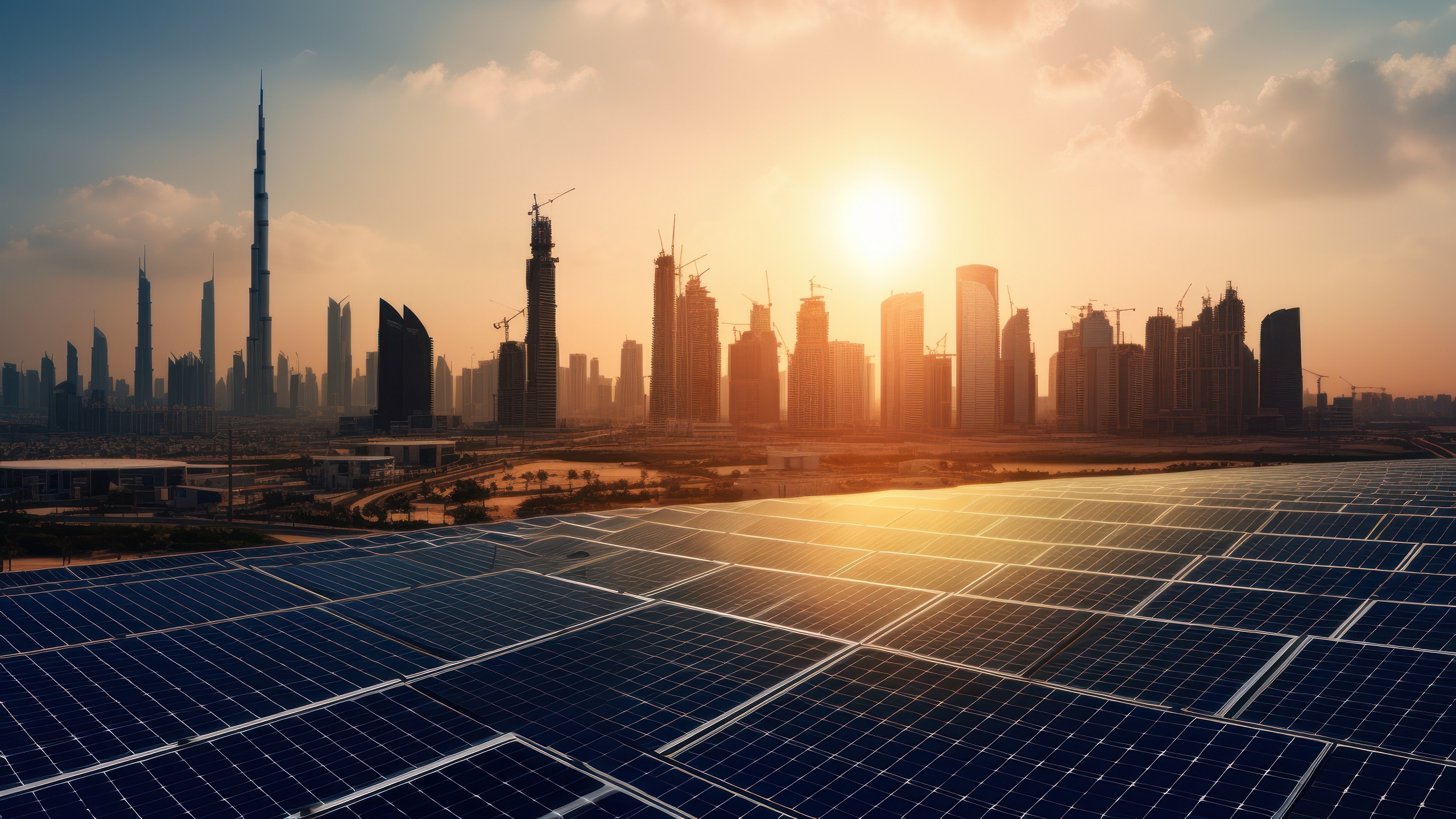
The United Arab Emirates is expanding its renewable energy capacity with growing support from Chinese companies. Large solar projects across the country are helping reduce emissions and strengthen the shift toward cleaner electricity.
One of the latest developments is the 1.5-gigawatt Abu Dhabi PV3 Al Ajban solar project in northeastern Abu Dhabi. The vast facility is nearing its connection to the national power grid. It is a major example of cooperation between China and the UAE in the clean energy sector.
The project covers around 20 square kilometers of desert land. Rows of solar panels stretch across the site, while workers continue final construction tasks around the electrical facilities.
Power Construction Corporation of China, known as PowerChina, is involved in the development. Its subsidiary, Huadong Engineering Corporation Limited, is responsible for engineering, procurement and construction.
Project manager Wang Xinjin said the solar plant is expected to produce about 4.4 billion kilowatt-hours of electricity every year once it becomes fully operational. That amount could supply around 160,000 households.
The facility is also expected to reduce carbon dioxide emissions by about 2.4 million metric tons annually. This would support the UAE’s efforts to increase clean electricity production and lower its carbon footprint.
The Al Ajban project is PowerChina’s first large-scale solar power development in the UAE. Its construction also reflects the growing role of Chinese technology in the country’s energy plans.
Chinese-made photovoltaic installation robots have been introduced at the site to improve the speed and efficiency of panel installation. The machines bring greater automation to construction and show how advanced equipment is becoming part of large renewable energy projects.
The cooperation between the two countries extends beyond Abu Dhabi. Chinese companies have also taken part in several major solar developments across the UAE, including projects at the Mohammed bin Rashid Al Maktoum Solar Park near Dubai.
The solar park is one of the country’s most important renewable energy facilities. Its fourth phase combines concentrated solar power and photovoltaic technology. Shanghai Electric Group helped build the project, which includes 700 megawatts of concentrated solar power capacity and 250 megawatts of photovoltaic capacity.
The use of two technologies allows the facility to produce electricity through different methods. Concentrated solar power uses heat from sunlight, while photovoltaic panels convert sunlight directly into electricity.
Shanghai Electric also took part in the park’s fifth phase. This 900-megawatt photovoltaic project is now operating and is expected to cut carbon emissions by around 1.18 million tons each year.
Together, the fourth and fifth phases are expected to reduce annual emissions by about 2.78 million tons. These projects add significant renewable capacity to Dubai’s electricity system.
China’s role in the UAE energy transition is not limited to solar power. Chinese companies are also helping the country develop wind energy.
PowerChina completed the UAE Wind Program in 2023. It was the country’s first utility-scale wind power project. The wind farms cover different types of land, including islands, mountains and semidesert areas.
The program shows how the UAE is working to use several renewable energy sources. Solar power remains a major focus because of the country’s strong sunlight, while wind projects offer another way to produce electricity with lower emissions.
The UAE has increased investment in renewable energy as part of its plan to diversify its energy mix. The country has also committed to reaching net-zero greenhouse gas emissions by 2050.
However, the expansion of renewable power creates new challenges. Solar and wind generation can change with weather conditions and the time of day. A reliable electricity supply therefore requires systems that can store energy and release it when demand rises or renewable production falls.
This has encouraged China-UAE cooperation to move beyond individual solar plants. New projects are increasingly focused on combining photovoltaic generation with large-scale energy storage.
Energy storage systems can help balance electricity supply and demand. They also allow more renewable power to enter the grid without creating major reliability problems.
Francesco La Camera, director-general of the International Renewable Energy Agency, has highlighted China’s contribution to the global energy transition. In a recent interview, he said Chinese advances in technology and manufacturing have helped reduce the cost of clean energy equipment.
Lower costs make renewable energy more affordable for governments and businesses. They also support wider access to solar and other clean power technologies.
As the Al Ajban project approaches grid connection, it adds to a growing list of developments linking Chinese engineering with the UAE’s energy goals. The partnership is helping expand renewable capacity while creating new opportunities in automation, storage and clean electricity.
The projects also show how international cooperation can support the transition to lower-carbon energy. For the UAE, the next challenge will be to connect more renewable power to the grid while keeping electricity supplies stable and reliable.

