


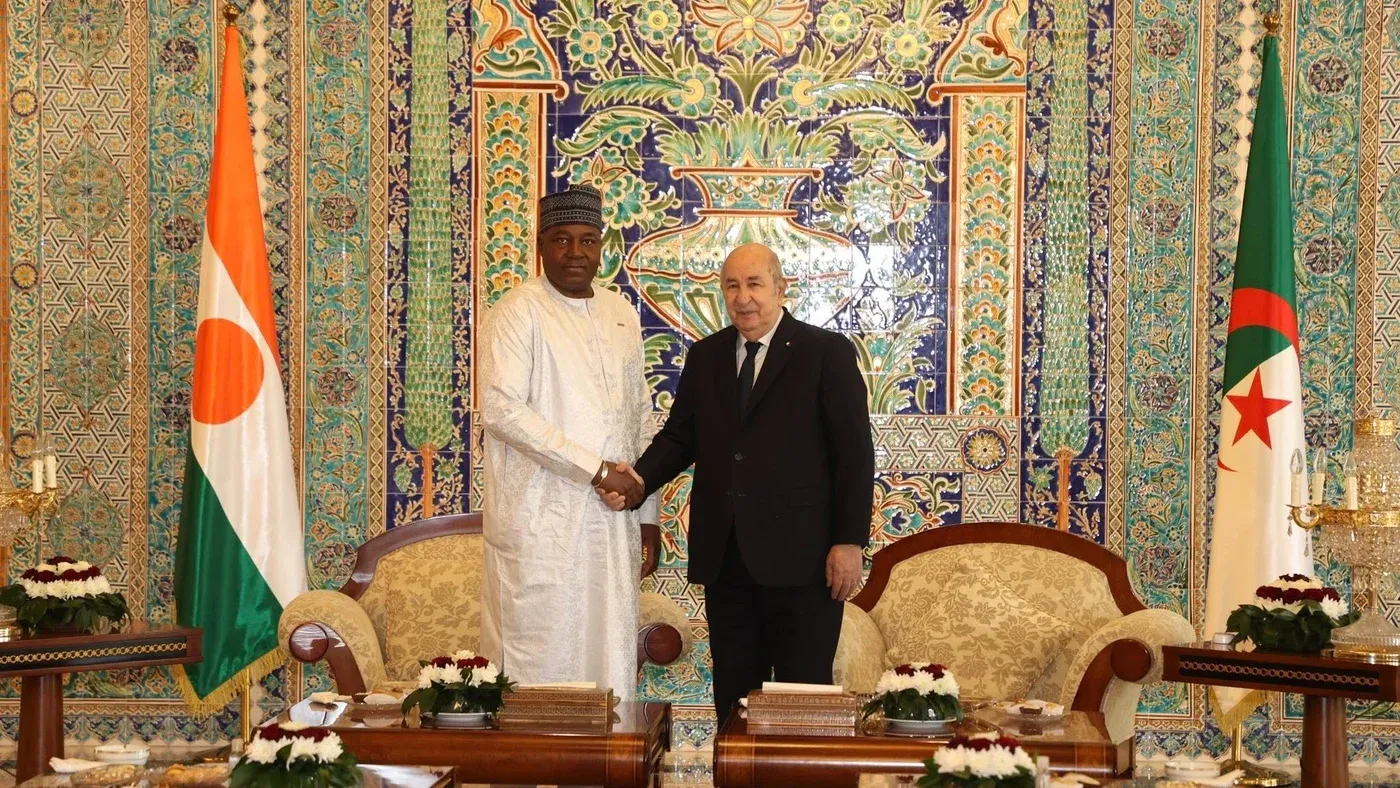
Algeria has deployed military forces to Niger for the first time in more than five decades. The move marks a major change in its long-standing policy against military intervention beyond its borders.
An Algerian military convoy arrived in Niger last Friday. The last time Algeria sent troops abroad was in 1973, when it supported Egypt during its war with Israel over the Sinai Peninsula.
The latest deployment follows rising security concerns across the Sahel region. It also shows Algeria’s growing willingness to take direct action to protect its interests in neighboring countries.
The decision came after Algeria sent four fighter jets to Niger on August 30. The aircraft were deployed to stop an attempted coup against Nigerien President Abdourahamane Tiani.
Algeria had opposed the 2023 coup that brought Tiani to power. However, President Abdelmadjid Tebboune now appears ready to support the leader as Niger faces growing political and security pressure.
Tiani requested the deployment of Algerian forces. Algerian Senator Belkacem Boulghiti said the soldiers would protect important economic infrastructure and oil facilities operated by Algerian companies.
He stressed that the mission was not intended to start a war. Algeria was not sending troops to fight Niger’s neighbors or take part in a wider military conflict, he said.
The deployment reflects a shift in how Algiers views security threats in the Sahel. Retired Algerian diplomat Amar Belani argued in an October article that instability in the region was linked to the activities of several foreign powers.
He named the United Arab Emirates, Morocco, Israel and groups linked to France as actors involved in what he described as a wider effort to destabilize the region. He also warned that continued unrest in Niger could threaten Algerian interests.
One major concern is the planned Trans-Saharan Gas Pipeline. The project is designed to carry Nigerian natural gas through Niger and Algeria before reaching European markets.
Zine Ghebouli, a visiting fellow at the European Council on Foreign Relations, said the changing regional situation was creating new security needs for Algeria. He said protecting strategic interests, especially in the energy sector, had become increasingly important.
Relations between Algeria and the United Arab Emirates have also deteriorated. Algiers severed diplomatic ties with Abu Dhabi in September after accusing the UAE of hostile actions and repeated interference in regional affairs.
Ghebouli said Algeria viewed the UAE’s role in several regional conflicts as destructive. He pointed to Emirati links with armed groups and political actors in Libya, Sudan and the Sahel.
Sudan has also broken relations with the UAE over allegations that Abu Dhabi supported forces involved in the country’s civil war. Somalia, Libya and Yemen have raised concerns about Emirati backing for rival armed groups and separatist movements.
The UAE has expanded its relations with military-led governments in the Sahel through diplomacy, trade and investment. In May 2025, Emirati minister Sheikh Shakhboot bin Nahyan met leaders in Mali, Burkina Faso and Niger to discuss cooperation in areas such as energy and economic development.
For Algeria, the Sahel has long been viewed as part of its wider national security area. Ghebouli said the country was now using new methods to protect its interests, including a visible military presence.
Another concern is the growing influence of eastern Libya’s military leader, Khalifa Haftar. The UAE supports Haftar, whose forces operate near important routes linking Libya and Niger.
Tensions have increased because Haftar’s son, Saddam, has supported Mahamoud Sallah, a Nigerien opponent of Tiani. Libya analyst Jalel Harchaoui said the Algerian state and Saddam Haftar were on opposing sides in the Niger dispute.
However, analysts cautioned against viewing the deployment as a direct intervention in Libya. Algeria’s current mission is focused on security inside Niger, and its full scope may become clearer in the coming weeks.
Turkey’s recent rapprochement with Haftar could also affect regional relations. Ankara has close ties with Algiers and shares interests with Algeria in Libya and Sudan. Morocco has also developed contacts with the Haftar family, including an official visit by Khaled Haftar last month.
Energy competition adds another layer to the situation. Algeria, Niger and Nigeria are working on a pipeline of about 4,000 kilometers. The project aims to move Nigerian gas through the two neighboring countries and toward Europe.
Algeria’s national energy company Sonatrach is involved in the project. Political scientist Fatiha Dazi-Heni said the deployed troops were intended to protect energy installations, including Sonatrach projects and the pipeline route.
Morocco is promoting a rival project that would transport Nigerian gas along an Atlantic route. The plan has received financial and technical support from the UAE.
Niger is essential to Algeria’s overland pipeline because the route cannot avoid the country. Dazi-Heni said securing Niger would help Algeria protect its energy strategy against the competing Morocco-UAE project.
The deployment therefore carries both security and economic importance. It signals that Algeria may be prepared to use military forces abroad when instability threatens its borders, energy projects and influence across the Sahel.

