


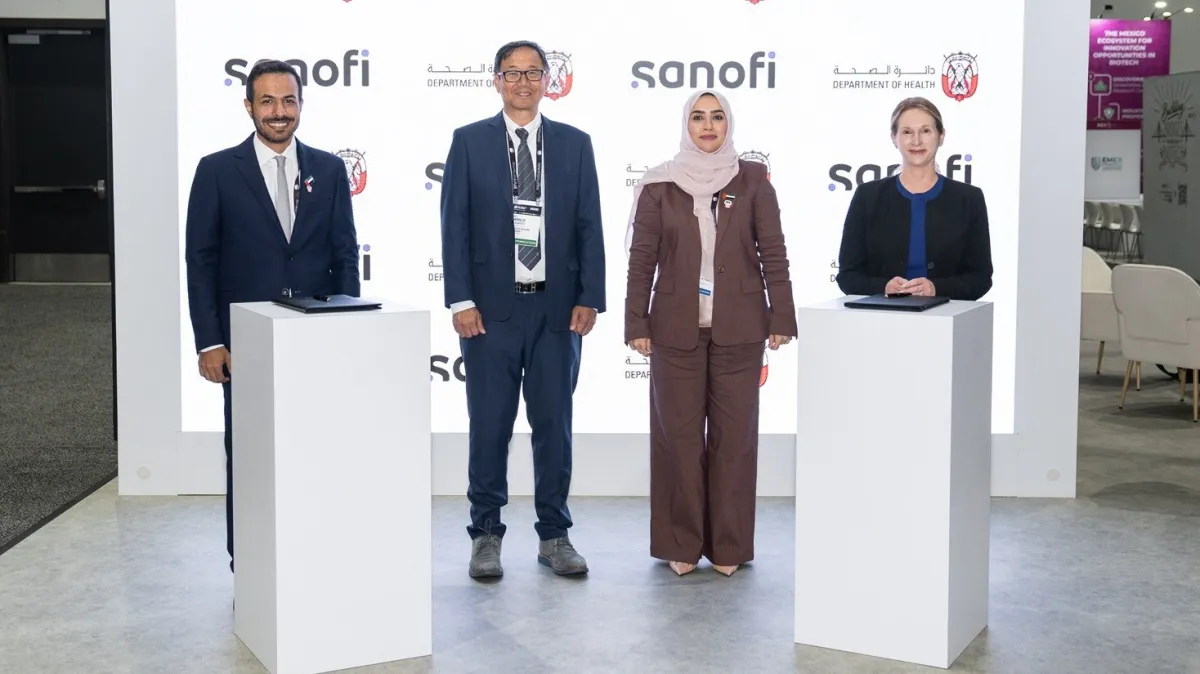
Abu Dhabi has taken a major step in global health research with a new Abu Dhabi vaccine deal. The agreement is between the Department of Health Abu Dhabi and Sanofi. It aims to speed up vaccine innovation and improve health security. The focus is on new technology, faster research, and stronger response to future health risks. The deal also supports long term cooperation between the two sides in medical science and public health planning.
The agreement was signed as a Memorandum of Understanding. It sets a framework for joint work in vaccine research and development. Both sides want to improve how vaccines are discovered and produced. They also want to respond faster to new disease threats. The partnership is expected to support both regional and global health systems. It also shows a shared interest in building stronger scientific networks. The focus is on long term results that can help many countries.
A key part of the Abu Dhabi vaccine deal is the use of artificial intelligence in research. AI tools will be used to support vaccine discovery. These tools can help scientists study large amounts of data. They can also help find patterns in diseases faster. This may reduce the time needed to develop new vaccines. The agreement also supports research in mRNA technology. This type of science is used to build modern vaccines. It can help create faster and more flexible vaccine designs for new viruses.
The partners say AI can improve both speed and accuracy in research. It can help scientists test ideas in a shorter time. It can also reduce costs in early development stages. However, experts still stress the need for strong safety checks. All results must go through medical review and testing. This ensures that new vaccines remain safe and effective for public use. The deal aims to balance speed with safety in all stages of research.
Another major goal of the agreement is the possible creation of a Vaccine Innovation Centre in Abu Dhabi. This centre would focus on research, testing, and development of new vaccines. It would also bring scientists, engineers, and health experts together. The centre is expected to support both local and global projects. It could also become a hub for advanced vaccine science in the region. Planning is still in early stages, but both sides see strong potential in the idea.
The Vaccine Innovation Centre is also expected to support training and education. It may help develop local scientific talent in the United Arab Emirates. Young researchers could gain hands-on experience in vaccine science. The centre may also support advanced manufacturing skills. This would help the country build stronger medical production capacity. It would also reduce dependence on external supply chains during health emergencies. The goal is to build a stronger and more self-reliant health system.
The partnership also focuses on preparing for future health challenges. This includes both regional and global risks. Recent years have shown how quickly diseases can spread across borders. Health systems need to respond quickly and effectively. The agreement aims to improve readiness for such events. It also supports better planning and early warning systems. This can help reduce the impact of future outbreaks.
Sanofi brings global experience in vaccine development. The company has worked on many vaccines used around the world. Its research includes both traditional vaccines and modern mRNA-based solutions. By working with Abu Dhabi, it aims to expand innovation efforts. The collaboration also helps connect global science with regional health priorities. This creates a stronger link between research and real world needs.
Officials say the Abu Dhabi vaccine deal reflects a wider strategy to invest in science and technology. Health research is becoming more important for national planning. Countries are now focusing on prevention as well as treatment. Vaccine development is a key part of this approach. It helps protect populations before outbreaks spread widely. This deal supports that long term vision for public health.
The agreement also shows how international partnerships are changing. Countries and companies are now working together more closely in research. Shared knowledge is becoming more important in solving health problems. The partnership between Abu Dhabi and Sanofi is part of this global trend. It combines public sector support with private sector expertise. This model is expected to grow in the future.
In the long term, the Abu Dhabi vaccine deal may help shape how vaccines are developed in the region. It brings together technology, research, and training in one framework. It also strengthens global cooperation in health science. If successful, it could lead to faster and better vaccine solutions. It may also help prepare the world for future health emergencies in a more effective way.

