


Brain Tumour Smart Molecules is a new medical research from Abu Dhabi. Scientists at New York University Abu Dhabi have created special molecules that can both detect brain tumours and help destroy cancer cells. The work was published in a leading chemistry journal.
The research focuses on glioblastoma. This is one of the most aggressive brain cancers. It is also the most common malignant brain tumour in adults. It grows fast and spreads into nearby brain tissue. Doctors find it very hard to treat. Even with surgery, radiation, and chemotherapy, many patients survive only about 12 to 18 months after diagnosis.
The main problem in brain cancer care is twofold. First, doctors often struggle to see the tumour clearly inside the brain. Second, many drugs cannot reach the brain because of a natural barrier called the blood-brain barrier. This barrier protects the brain from harmful substances, but it also blocks useful medicines.
The Abu Dhabi research team designed smart molecules that solve both problems at once. These molecules stay inactive in healthy tissue. When they reach tumour areas, they become active. Tumours often have a more acidic environment than normal tissue. This difference triggers the molecules.
Once activated, the molecules release manganese ions. These ions improve MRI scan images. This helps doctors see the tumour more clearly. At the same time, the molecules also create a therapeutic effect that damages cancer cells. This means they help both imaging and treatment.
Another key success is that the molecules can cross the blood-brain barrier. This is very important because many cancer drugs fail at this step. The team reported that the molecules were able to build up inside glioblastoma tumours in tests on cells and animals.
Researchers also say the structure of these molecules is unusual. Unlike simple drug molecules, they have interlocked shapes. This design helps them behave in a controlled way inside the body. It also improves how they work in both imaging and treatment.
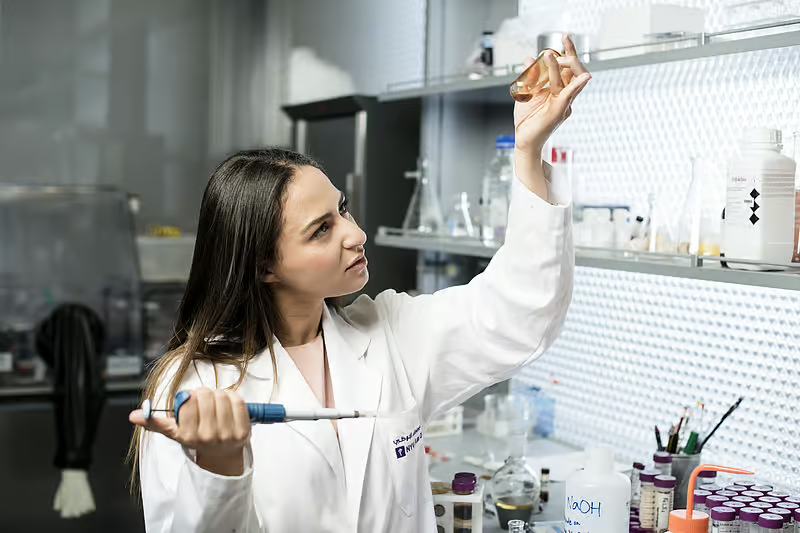
Lead researcher Farah Benyettou explained that the goal was to help doctors see and treat cancer at the same time. She said that combining imaging and therapy in one system could be very powerful for future medicine.
Early results are positive, but the research is still in an early stage. It has not been tested in humans yet. More studies are needed to check safety, correct dose levels, and long-term effects. Larger trials will also be required before any hospital use.
The team said preclinical tests showed good safety and clear imaging results. The molecules were also cleared from the body in a safe way during early studies. This is an important step before human trials can begin.
This discovery also highlights the growing role of Abu Dhabi in medical research. The UAE has been investing in advanced healthcare, genetics, and life sciences. Institutions like health authorities, hospitals, and research centers are supporting this growth.
Researchers say this kind of work shows how science in the region is reaching global levels. If future studies succeed, doctors may one day use a single tool to both detect and treat brain tumours. This could change how brain cancer is managed in the future.
Experts say this type of research could change how brain cancer is diagnosed in the future. Today, patients often need many scans and different treatments. A single system that can see and treat at the same time could reduce delays. It may also help doctors plan surgery more accurately. However, scientists also warn that many promising lab results do not always become real treatments. Human biology is more complex than animal tests. That is why careful clinical trials are needed. If the safety and effectiveness are confirmed, this approach could support faster diagnosis, better drug delivery, and more precise care for patients with glioblastoma and other brain tumours.
The study also strengthens global interest in combining imaging and therapy into one smart system for cancer care.

