


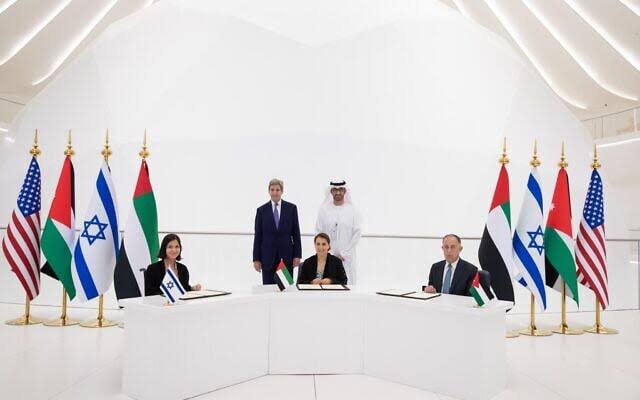
Israel is considering taking part in a trilateral summit in Abu Dhabi with Jordan and the United Arab Emirates as the three countries explore ways to strengthen cooperation on water, energy, and regional relations.
According to Israeli officials familiar with the discussions, the proposed meeting would bring together the energy ministers of Israel, Jordan, and the UAE. The talks are expected to focus on a new agreement that would increase water supplies to Jordan while supporting broader regional cooperation.
The United Arab Emirates is backing the proposal and is expected to host the summit in Abu Dhabi if all sides agree to move forward. Officials are still discussing the timing of the meeting, and no final date has been announced.
One of the main topics would be a new water agreement between Israel and Jordan. Under the proposal, Israel would provide Jordan with an additional 50 million cubic meters of water each year. This would be added to the 50 million cubic meters that Israel already supplies annually under the 1994 peace treaty between the two countries.
If approved, Jordan would receive a total of 100 million cubic meters of water from Israel each year. The increase would help address Jordan’s growing water shortage, which remains one of the country’s biggest long-term challenges.
Jordan is among the world’s most water-scarce countries. Population growth, climate change, and repeated periods of drought have placed increasing pressure on the country’s limited water resources. Government officials have continued to search for new and reliable sources of water to meet rising demand.
Israel has developed advanced water management systems over the past several decades. Large-scale desalination plants, wastewater recycling, and modern irrigation technology have allowed the country to expand its available water supply despite its dry climate. These technologies have also made water cooperation an important part of Israel’s regional relationships.
The proposed summit is expected to cover energy cooperation as well. While details have not been made public, officials are exploring projects that could benefit all three countries by improving energy security and supporting long-term economic development.
The United Arab Emirates has taken a growing role in encouraging regional partnerships since normalizing relations with Israel through the Abraham Accords in 2020. The agreement opened the way for closer diplomatic and economic ties between Israel and several Arab countries, including the UAE.
Since then, Israel and the UAE have expanded cooperation in areas such as trade, technology, investment, renewable energy, agriculture, and infrastructure. Joint projects have continued despite periods of regional tension.
Jordan signed a peace treaty with Israel in 1994, creating formal diplomatic relations and establishing agreements on security, trade, and water sharing. Water cooperation has remained one of the most important parts of that relationship, even during times of political disagreement.
Regional experts say additional cooperation on water and energy could improve stability by helping countries address shared environmental and economic challenges. Reliable access to water has become an increasingly urgent issue across the Middle East as temperatures rise and rainfall becomes less predictable.
Israeli officials have not confirmed whether the summit will take place, and representatives from Jordan and the United Arab Emirates have not announced any final agreement. However, discussions continue as the three governments examine ways to expand practical cooperation.
If the meeting goes ahead, it could mark another step in regional efforts to strengthen partnerships through shared infrastructure projects and resource management. The proposed water agreement would also build on decades of cooperation between Israel and Jordan while highlighting the UAE’s role in supporting dialogue and regional development.

