


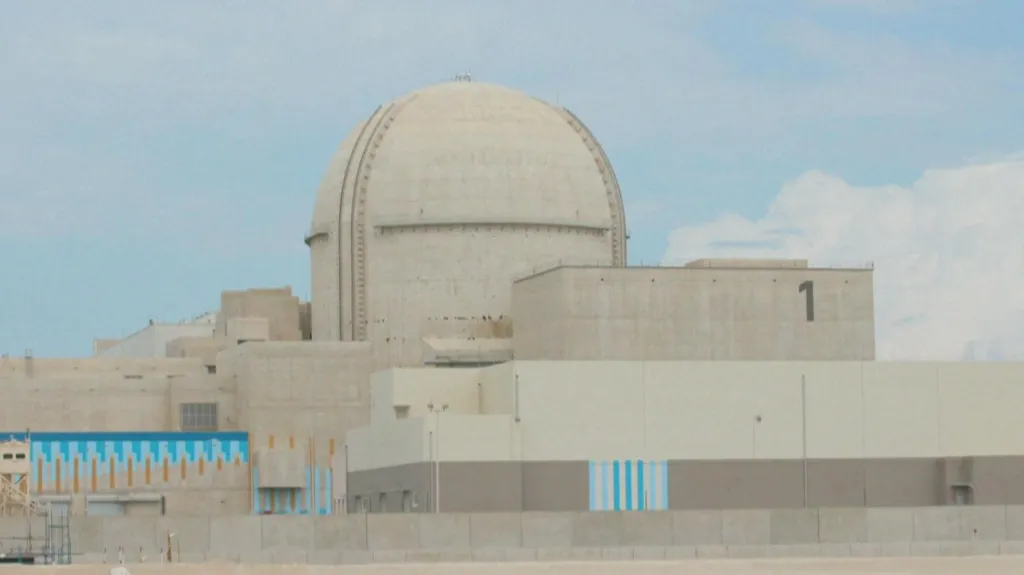
The United Arab Emirates said a drone strike caused a fire near the Barakah Nuclear Power Plant in Abu Dhabi on Sunday. Officials called the attack a dangerous step that could raise tensions across the Middle East.
According to the UAE defence ministry, three drones entered the country from the western border direction. Air defence systems intercepted two drones before they reached their targets. However, a third drone hit an electrical generator outside the protected area of the nuclear facility.
The strike caused a fire near the plant. Emergency teams quickly moved to control the situation. Authorities later confirmed that the fire was contained and that no one was hurt.
Officials also said there was no damage to the nuclear reactors or any impact on radiation safety levels. The Barakah Nuclear Power Plant continued normal operations after the incident.
The Abu Dhabi Media Office said precautionary safety steps were taken immediately after the fire started. It added that the damaged generator was located outside the plant’s inner security perimeter.
The UAE foreign ministry strongly condemned the attack. It described the strike as an unacceptable act of aggression against peaceful infrastructure.
In a statement, the ministry said targeting civilian nuclear facilities violates international law and humanitarian principles. It also warned that the UAE has the right to respond to threats against its security and stability.
The UAE defence ministry also issued a statement after the attack. Officials said the country would firmly confront any actions that threaten national safety.
Authorities have not yet confirmed who launched the drones. However, the UAE has previously accused Iran-backed groups of carrying out attacks on energy and economic sites in the Gulf region.
The latest incident comes during a period of ongoing instability in the Middle East. Although the United States and Iran agreed to a ceasefire in April, clashes and security incidents have continued in several areas.
The International Atomic Energy Agency said it was closely watching developments near the Barakah facility. The agency’s director general, Rafael Grossi, expressed deep concern over the incident.
Grossi said military actions that threaten nuclear safety are unacceptable. He also called on all sides to show maximum restraint to avoid further escalation in the region.
The Barakah Nuclear Power Plant is one of the most important energy projects in the UAE. It is the first nuclear power station in the Arab world and plays a major role in the country’s electricity supply.
Security experts have long warned that attacks near nuclear sites could create serious risks, even when reactors are not directly targeted. Energy infrastructure across the Gulf has become more vulnerable since regional conflicts intensified earlier this year.
The incident also raised concerns among international observers about the safety of major shipping and energy routes in the Gulf region.
On the same day, Saudi Arabia said it intercepted and destroyed three drones that entered its airspace from Iraq. Saudi officials did not provide more details about the drones or their intended targets.
The growing number of drone attacks has increased fears of wider conflict across the region. Gulf countries have invested heavily in air defence systems, but experts say drone warfare remains difficult to stop completely.
Meanwhile, tensions between the United States and Iran continue despite earlier diplomatic efforts. Former US President Donald Trump said the ceasefire agreement was on “massive life support” after talks between the two sides stalled.
Trump also rejected Iranian demands linked to reopening the Strait of Hormuz. The strategic waterway is one of the world’s most important oil shipping routes and has faced major disruptions since fighting began earlier this year.
The UAE has increased security measures around key facilities following Sunday’s attack. Officials said investigations are ongoing and more information will be released once authorities identify the source of the drones.
International leaders are now urging calm as fears grow over further attacks on energy and nuclear infrastructure in the Gulf.

