


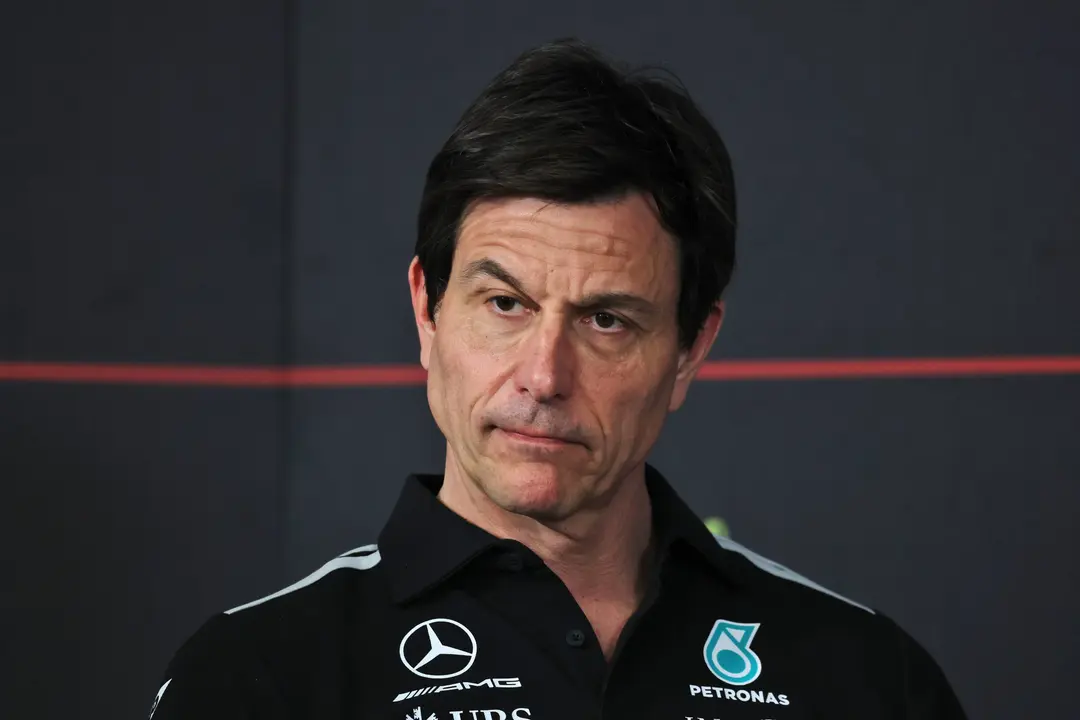
Mercedes Team Principal Toto Wolff welcomed the FIA’s decision to keep the safety car on track until the end of the British Grand Prix, saying it avoided another controversial finish similar to the 2021 Formula One title decider.
A late crash involving Max Verstappen brought out the safety car during the closing laps at Silverstone. As officials worked to clear the incident, a message briefly appeared indicating that the safety car would return to the pits before the final lap.
The message created expectations that drivers could have one final lap of racing. However, the FIA later confirmed that the notification had been displayed by mistake. The safety car remained on track, and the race finished without returning to green-flag conditions.
That decision allowed Charles Leclerc to secure victory ahead of George Russell and Lewis Hamilton. The finishing order remained unchanged as the field crossed the line behind the safety car.
The incident immediately reminded many Formula One fans of the dramatic 2021 season finale in Abu Dhabi. During that race, the safety car was withdrawn for the final lap, allowing racing to resume under controversial circumstances.
Max Verstappen, running on much fresher tyres, overtook Lewis Hamilton during the final lap to win both the race and his first Formula One world championship. The decision sparked widespread debate and led to major changes in Formula One race control procedures.
Speaking after the race, Wolff said he would have preferred the current rules to have been applied during the 2021 championship finale.
He said that decision was far more important because it affected the outcome of the world title. However, he added that he was pleased race officials followed the regulations correctly at Silverstone.
Wolff acknowledged that many fans would have enjoyed seeing one final racing lap. A late restart could have created an exciting battle between Lewis Hamilton, who was running on soft tyres, and race leader Charles Leclerc.
Even so, Wolff said sporting fairness should always come before entertainment. According to him, Formula One should remain focused on applying its rules consistently, with the excitement coming naturally from fair competition rather than decisions made purely for spectacle.
The FIA’s explanation that the “safety car in” message appeared in error helped clarify why the race did not restart. Officials confirmed that the message was displayed accidentally and did not represent the intended race procedure.
The closing laps therefore remained under safety car conditions until the chequered flag, bringing an orderly end to the race despite the confusion.
Mercedes also left Silverstone with another issue to review after rookie driver Kimi Antonelli received a five-second time penalty during the race.
Antonelli was penalized after race officials reviewed an incident that occurred while he was challenging Charles Leclerc for the lead. During the battle, Antonelli suffered damage to his tyre shield, which became part of the investigation.
The penalty pushed Antonelli out of the points, reducing Mercedes’ overall result from the weekend.
Wolff confirmed after the race that the team would study the decision carefully before deciding whether to challenge the penalty through the official appeal process.
Mercedes will now review all available evidence before making a final decision on its next steps.
The British Grand Prix once again highlighted how safety car decisions can have a major influence on Formula One races. Although many fans hoped for a dramatic final lap, race officials chose to complete the event under caution after confirming the restart message had been displayed by mistake.
For Wolff, the outcome showed that Formula One has learned important lessons from past controversies. While the finish may have lacked the excitement of a last-lap battle, he believes following the rules consistently protects the integrity of the sport.
With the race now complete, attention turns to the next round of the Formula One season as teams continue their fight for victories, championship points, and positions in both the drivers’ and constructors’ standings.

