


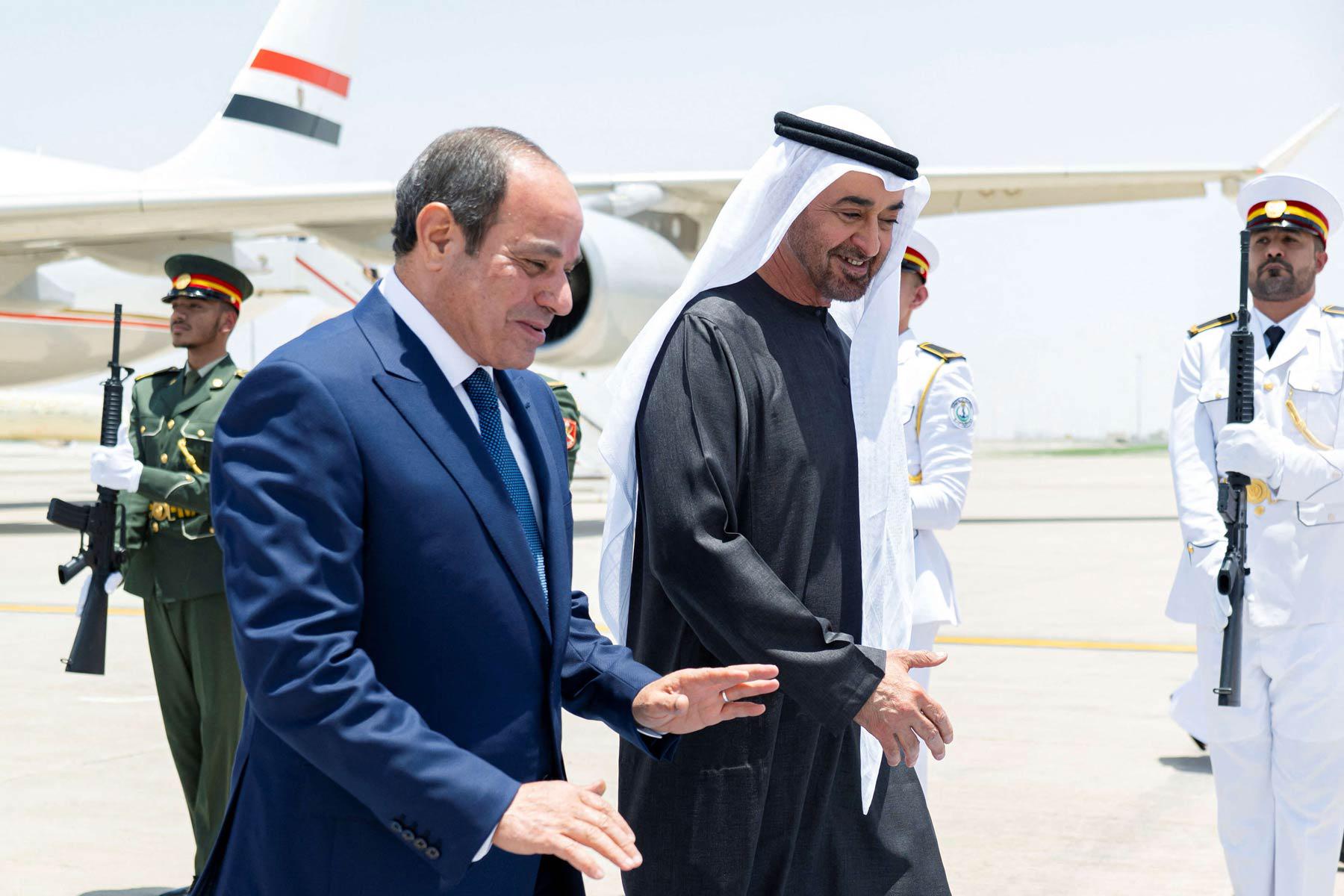
Egyptian President Abdel Fattah El-Sisi visited Abu Dhabi on Thursday in a strong show of support for the UAE during growing regional tensions linked to Iran.
During the visit, Sisi held talks with UAE President Mohamed bin Zayed Al Nahyan and inspected an Egyptian fighter jet unit stationed in the Emirates.
The meeting focused on the latest regional developments and the impact of the ongoing crisis on regional and global security. Officials from both countries discussed ways to improve co-operation and maintain stability during a period of rising military tension.
Sisi strongly condemned the recent Iranian attacks targeting civilians and civilian facilities in the UAE. He said Egypt fully supports the UAE and backs all measures taken to protect its security, sovereignty, and people.
The two leaders also visited the Egyptian fighter jet detachment currently deployed in the UAE. Officials reviewed military readiness and discussed efforts to strengthen operational preparedness against possible threats.
The visit came as the UAE reported another wave of Iranian missile and drone attacks early Friday. According to officials, UAE air defence systems intercepted several threats for the third consecutive day this week.
The attacks happened during a fragile ceasefire period between the United States and Iran. Tensions in the region remain high after recent military exchanges around the Strait of Hormuz.
Iranian officials reacted with mixed statements regarding the strikes. Some denied responsibility, while others suggested the attacks were linked to regional military activity involving the United States and allied countries.
An Iranian military spokesperson claimed that the US, with help from regional partners, carried out air strikes on civilian areas near Bandar Khamir, Sirik, and Qeshm Island.
The UAE and other Gulf countries have repeatedly stated they are not directly involved in the conflict with Iran. Despite those statements, Iran has continued launching drones and missiles toward Gulf states since fighting escalated earlier this year.
Officials said the UAE has faced more attacks than any other Gulf country since the conflict began in February. Drones and missiles launched from Iran have targeted civilian areas, infrastructure, and strategic sites across the Emirates.
According to UAE figures, authorities have dealt with more than 2,250 drones, 537 ballistic missiles, and 26 cruise missiles since the conflict started.
Most of the incoming attacks were intercepted by air defence systems. However, officials confirmed that at least 13 people have been killed and more than 200 injured during the attacks.
Several important civilian facilities, including energy infrastructure, also suffered damage.
Sisi described the attacks as a serious violation of international law and the United Nations Charter. He warned that the situation threatens regional and international stability.
The Egyptian president also stressed the need for dialogue and diplomacy to reduce tensions and avoid a wider regional conflict. He said peaceful solutions remain the best path forward.
On Thursday, the UAE announced the creation of a national committee tasked with documenting Iranian attacks and recording the human and economic damage caused by the strikes.
The committee will gather evidence related to what UAE officials described as Iranian aggression against the country. Authorities said the information could support future legal action and international accountability efforts.
The committee will work under the leadership of the UAE attorney general and document violations using internationally recognised legal standards.
Along with security matters, the Egyptian and Emirati leaders also discussed ways to strengthen trade, investment, and economic ties between the two countries.
Officials said both sides agreed to continue consultations on regional crises and work together to protect national stability, territorial integrity, and the resources of their people.
The visit highlighted the close relationship between Egypt and the UAE as both countries continue facing growing regional security challenges and diplomatic tensions in the Middle East.

