


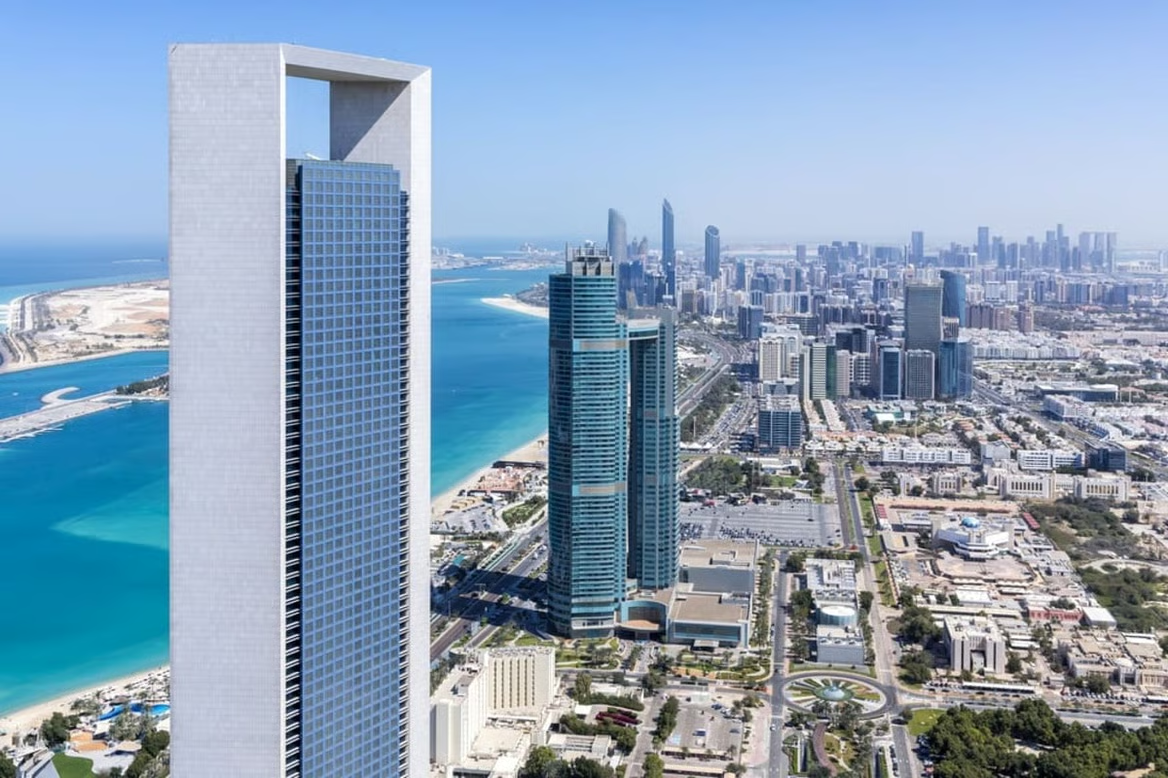
Abu Dhabi recorded another strong quarter in its residential property market as home prices continued rising during the first three months of 2026.
According to the latest report from ValuStrat, capital values in Abu Dhabi increased faster compared to the previous quarter, showing strong momentum across the real estate sector.
The report said the city’s property market remains resilient despite regional uncertainty and geopolitical tensions in the Middle East. Analysts noted that no major negative impact on Abu Dhabi’s housing market has appeared so far.
Experts believe Abu Dhabi’s position in the property cycle differs slightly from Dubai’s market. However, both cities often follow similar long-term trends over time.
The report also highlighted that Abu Dhabi’s relatively affordable property prices continue attracting buyers, especially end users searching for homes instead of short-term investors.
The ValuStrat Price Index for Abu Dhabi’s freehold residential market reached 148 points during the first quarter of 2026.
This represented a 6.4 percent increase compared to the previous quarter and a strong 17.8 percent rise compared to the same period last year.
Apartments led the market surge during the quarter. Apartment values climbed 10.4 percent quarter over quarter and increased 22.7 percent year over year.
Villa prices also continued rising, although at a slower pace. Villa values increased 2.7 percent during the quarter and posted a 13.4 percent annual gain.
The strongest growth appeared in established communities where buyers could access ready-to-move-in properties immediately.
Analysts said controlled housing supply also helped support property values. Limited new project deliveries allowed demand to remain higher than available inventory in many areas.
While prices continued rising, transaction activity faced some seasonal pressure during the quarter. The report noted that Ramadan, Eid holidays, remote work trends, homeschooling, and difficult weather conditions likely slowed some market activity.
Even with those temporary challenges, the market continued showing stability and strong buyer interest.
The rental market also remained steady during the first quarter of the year. The residential rental ValuStrat Price Index stayed unchanged from the previous quarter at 128.1 points.
However, rental prices still recorded a 5.9 percent increase compared to the same period in 2025.
The report said stable rents and high occupancy levels reflected a balanced rental market across the capital.
Occupancy rates reached 88.1 percent, showing continued demand for residential properties in Abu Dhabi.
Beyond housing, Abu Dhabi’s office property market also posted positive results during the quarter. Office sales prices and rental values increased both quarterly and annually.
Analysts linked the office sector’s growth to strong occupancy levels and stable business demand across the city.
The industrial property sector also remained stable. Prices stayed mostly flat during the quarter but continued recording double-digit annual growth.
Industrial rents also increased in many parts of Abu Dhabi as demand for logistics, warehousing, and industrial space remained healthy.
The UAE property sector has remained one of the country’s strongest economic drivers in recent years. Abu Dhabi and Dubai have both attracted local and international buyers through long-term residency programs, business growth, and infrastructure investment.
Real estate experts believe Abu Dhabi’s market continues benefiting from steady economic conditions, population growth, and increased interest from buyers seeking more affordable alternatives compared to other major global cities.
Government investment in infrastructure, tourism, business development, and public services has also helped improve confidence in the capital’s property market.
Analysts said Abu Dhabi’s real estate sector may continue seeing gradual growth during the coming months if supply levels remain controlled and buyer demand stays strong.
The latest figures suggest the capital’s housing market remains on a solid path despite wider regional uncertainty and global economic pressures.

