


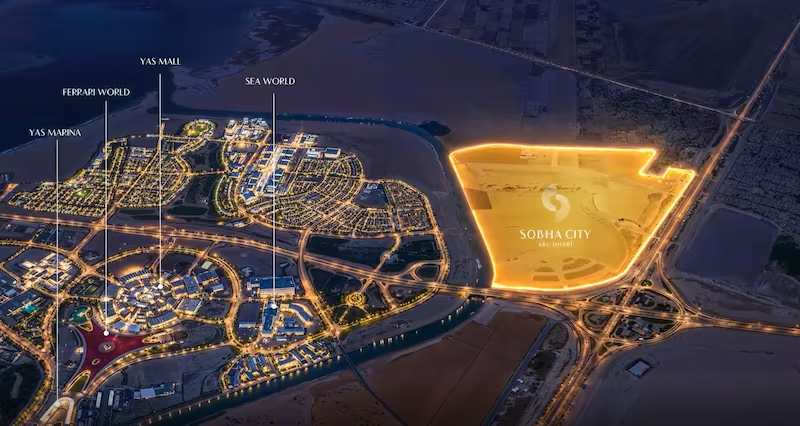
Sobha Realty has entered the Abu Dhabi property market with a major Dh40 billion residential project. The company said it expects the long-term impact of the recent Iran conflict on the UAE real estate sector to remain limited.
The new development, called Sobha City, will cover 38 million square feet in Al Bahiya, close to Zayed International Airport and Yas Island. The project will include 4,000 apartments and 2,500 villas once fully completed.
The master community will also feature a two-kilometre waterfront promenade, shopping areas, mosques, schools, health-care facilities, and large green spaces. A par-3 golf course designed by former Australian golfer Greg Norman is also planned.
According to the developer, nearly 60 per cent of the project will consist of open and green areas, including around 50,000 trees.
The project will be built in several phases. The first phase is already on sale and will include about one-third of the total homes. Sobha expects handovers to begin in the final quarter of 2029.
Prices for one-bedroom apartments start at Dh1.31 million, while villa prices begin at Dh4.96 million.
Francis Alfred said the company launched the project because of rising demand in Abu Dhabi’s property market.
“People are waiting for such a development,” Mr Alfred said. He added that strong local interest has already appeared since sales opened.
He also said buyers are gaining confidence because the company has committed to completing the first phase by 2029.
The launch comes as Abu Dhabi’s real estate sector continues to grow quickly. The emirate has seen strong demand from both local and international investors in recent years.
Government economic reforms and diversification efforts have helped support the market. Officials continue investing in infrastructure, tourism, technology, and business growth across the capital.
Recent figures from the Abu Dhabi Real Estate Centre showed that total property transactions in the emirate rose sharply last year. Real estate deals reached Dh142 billion, while transaction volumes increased by more than 50 per cent.
Property sales and purchase activity alone reached Dh99.4 billion.
Sobha’s decision to expand into Abu Dhabi reflects growing confidence in the city’s long-term property outlook.
Mr Alfred also addressed concerns about the impact of the recent Iran war on the UAE real estate market. He said the company believes the disruption is temporary.
According to him, sales and customer enquiries dropped sharply during the early days of the conflict. Numbers fell to about 20 to 25 per cent of normal levels during the month-long crisis.
However, demand started recovering after the ceasefire announcement involving the US and Iran.
“The moment the ceasefire was announced, things started picking up again,” Mr Alfred said.
He explained that the recovery showed investors still trust the UAE’s long-term economic strength.
Mr Alfred described the slowdown as a “forced stop” rather than a normal property market cycle. He said the decline was caused by outside geopolitical events instead of problems with supply and demand.
Because of this, he expects the market to return to normal once regional tensions ease.
He also stressed that Sobha remains financially strong despite the temporary slowdown.
The company recorded strong sales during recent years and currently has several years of revenue already secured through ongoing projects, according to Mr Alfred.
He added that Sobha also owns a large land bank and maintains healthy cash reserves, giving the company stability during uncertain periods.
The Abu Dhabi project will also include 80 luxury mansions near the golf course. These homes are expected to launch during later development phases.
Sobha already has projects in Dubai and Umm Al Quwain. The company said prices in Abu Dhabi are intentionally competitive because this is its first major master community in the capital.
Mr Alfred said the lower pricing is not connected to the regional conflict.
The developer expects around 60 per cent of buyers to come from within the UAE, while 40 per cent are likely to come from overseas markets. Interest has already emerged from countries including the United States, Canada, and parts of Europe.
Mr Alfred said Abu Dhabi’s growing population and steady demand for homes continue to support the market.
He added that demand for residential units remains stronger than available supply, creating a positive outlook for the emirate’s property sector in the coming years.

