


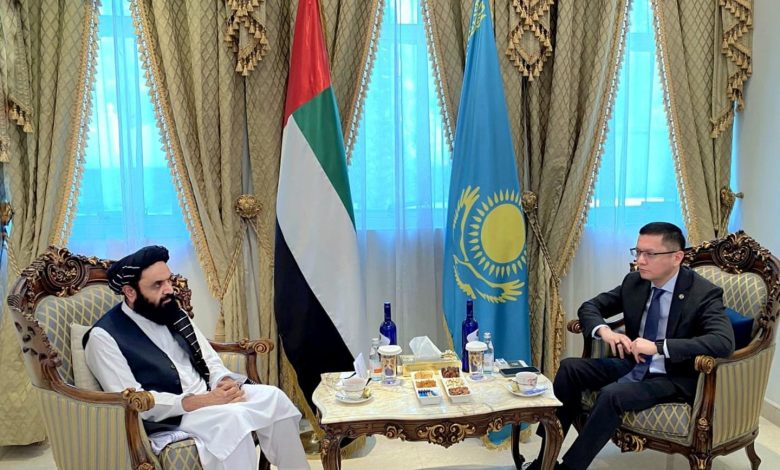
A senior Taliban representative held talks with Kazakhstan’s ambassador in Abu Dhabi. The meeting focused on building stronger political and economic ties between the two sides. Both parties discussed ways to expand cooperation in trade, education, and regional development.
Badruddin Haqqani, who represents the Taliban administration in Abu Dhabi, met with Rovan Jumabayev, Kazakhstan’s ambassador. The talks were held to explore practical steps for improving relations between Afghanistan and Kazakhstan. Officials described the meeting as part of ongoing efforts to support regional stability.
During the discussion, both sides highlighted the importance of mutual respect. They agreed that stronger engagement could help improve economic activity and regional cooperation. The talks also touched on long-term opportunities for collaboration in key sectors.
Education was one of the main topics. Both delegations explored the possibility of expanding academic exchanges and training programs. This could help Afghan students access more learning opportunities while also strengthening institutional links between the two countries.
Trade and economic cooperation were also discussed in detail. Kazakhstan expressed interest in developing more practical business ties with Afghanistan. Officials said this could include improved trade routes, investment cooperation, and support for economic development projects.
The Taliban representative expressed appreciation for Kazakhstan’s humanitarian assistance. He also welcomed what he called Kazakhstan’s positive approach toward engagement. He stated that the administration is committed to supporting regional stability and economic growth through cooperation with neighboring countries.
Kazakhstan’s ambassador also showed interest in maintaining regular communication. He emphasized the importance of continued dialogue to build trust and create real-world partnerships in areas that benefit both nations.
The meeting in Abu Dhabi comes at a time when Afghanistan’s political situation remains sensitive. The Taliban administration is still not officially recognized by many countries. Because of this, diplomatic meetings like this are closely watched by regional observers.
International engagement with the Taliban remains a complex issue. Some countries continue limited dialogue focused on humanitarian support, security, and economic stability. Others maintain a cautious stance due to political and human rights concerns.
Despite these challenges, regional cooperation efforts continue to grow. Countries in Central Asia, including Kazakhstan, have shown interest in maintaining practical ties with Afghanistan. These efforts are often focused on trade, border stability, and economic connectivity.
The Abu Dhabi meeting reflects this broader trend of regional diplomacy. Even without full international recognition, the Taliban administration continues to engage with neighboring countries through official and informal channels.
Experts say such meetings are important for maintaining communication in a tense regional environment. They can help reduce misunderstandings and create limited cooperation in areas where mutual interests align.
However, analysts also note that long-term progress depends on broader political developments. Full diplomatic normalization would require wider international consensus, which remains uncertain.
For now, meetings like the one in Abu Dhabi highlight cautious but ongoing engagement. Both sides appear focused on practical cooperation rather than political recognition, with attention on trade, education, and stability.
As regional dynamics continue to evolve, future discussions between Afghanistan and Central Asian states like Kazakhstan are likely to remain an important part of diplomatic activity in the region.

