


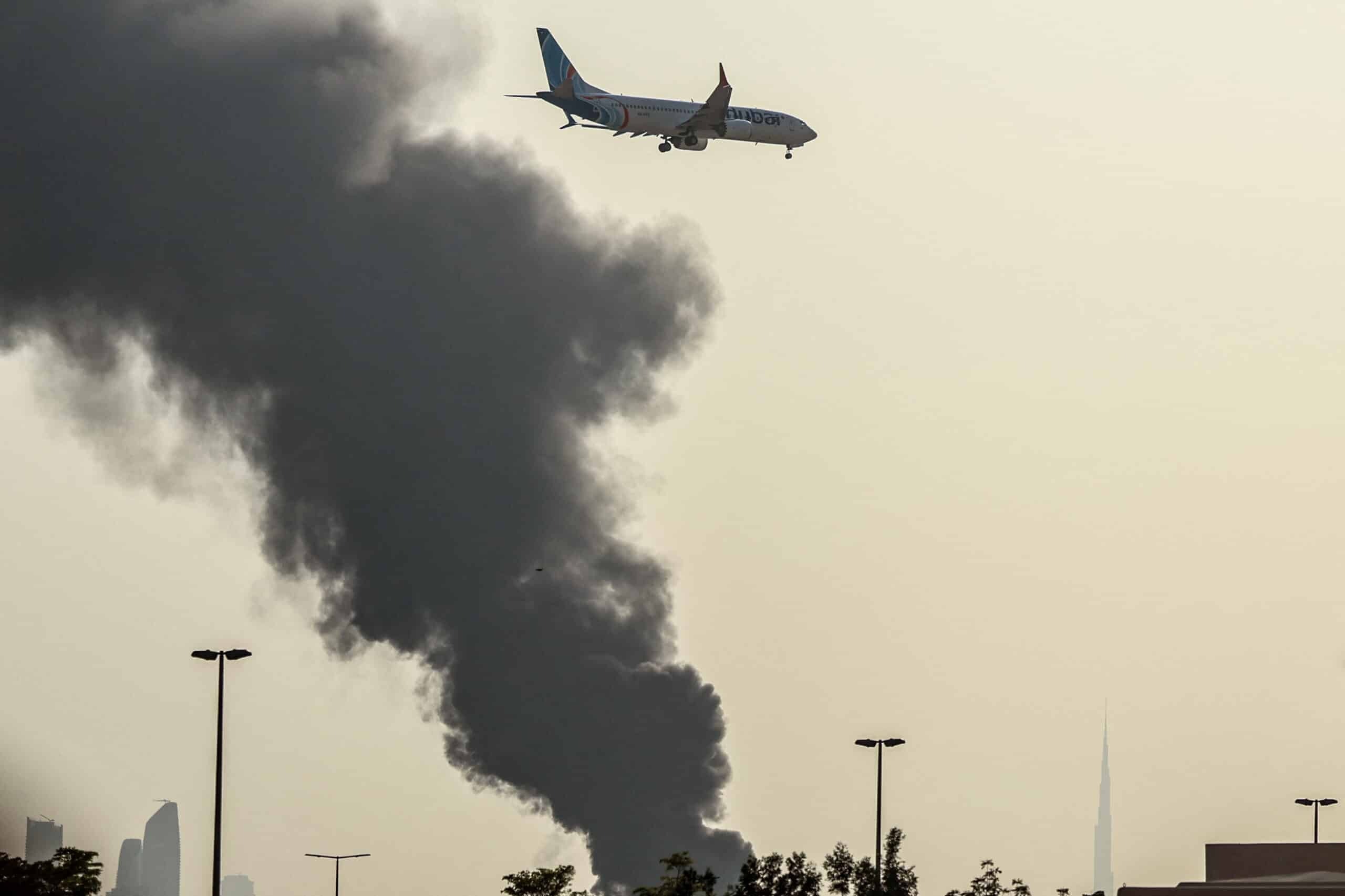
A drone launched from Iran was intercepted over the territorial waters of the United Arab Emirates early Monday, according to the UAE Defense Ministry. The incident marked a new rise in tensions in the Middle East after a period of limited military activity.
The UAE said its defense forces detected and stopped the drone before it could reach its target. Officials described the incident as a serious development and warned that actions of this kind could increase instability in the region.
The drone interception came after a weekend of military exchanges involving Iran and the United States. It was the first major military activity reported in more than a month.
According to U.S. officials, American forces targeted rocket launchers on an Iranian island on Sunday. The United States said the launchers were being prepared for operations involving mines in the Strait of Hormuz, one of the world’s most important shipping routes.
Iran later responded by launching missiles toward U.S. military sites in Jordan. Officials said all incoming missiles were intercepted and no major damage was reported.
Iranian President Masoud Pezeshkian said his country was not seeking a wider conflict. However, he stated that Iran would react strongly to any action it viewed as aggression.
The UAE condemned the drone launch and called it a dangerous escalation. Authorities said they remain committed to protecting the country’s security and safeguarding regional stability.
The latest developments have renewed concerns about maritime safety in the Gulf region. Shipping activity remains vital to global trade, especially in and around the Strait of Hormuz.
Late Monday, a separate security incident was reported near the strategic waterway. A commercial tanker traveling east of Khasab, Oman, was struck by three unidentified projectiles.
The vessel was located about 17 nautical miles from the Omani coast when the incident occurred. Maritime authorities said the tanker was moving away from the Strait of Hormuz at the time.
Officials reported no casualties among the crew. The ship remained operational, and an investigation was launched to determine the source of the projectiles.
Security experts continue to monitor the situation closely. The Strait of Hormuz handles a large share of global energy shipments. Any threat to shipping in the area can affect international trade and energy markets.
Elsewhere in the region, violence continued in Gaza. Hospital officials said Israeli airstrikes killed at least five Palestinians in Gaza City on Monday.
One strike hit the entrance of a residential building near a public park. Medical officials reported two deaths and several injuries. Some of the wounded were listed in critical condition.
Another strike targeted a vehicle in the Tal al-Hawa area of the city. Hospital authorities said three people were killed in that attack.
The deaths added to ongoing casualties despite a ceasefire agreement reached in October. The truce was intended to reduce fighting after more than two years of conflict between Israel and Hamas.
Regional tensions also formed the backdrop to an important international meeting in Central Asia. Leaders from several major countries gathered in Kyrgyzstan for the annual summit of the Shanghai Cooperation Organization.
The event brought together Chinese President Xi Jinping, Russian President Vladimir Putin, Indian Prime Minister Narendra Modi, and other leaders. The organization is often viewed as a platform for countries seeking greater cooperation outside Western-led institutions.
Iran was also represented at the summit. President Pezeshkian was expected to hold talks with President Putin during the gathering.
At the same time, economic pressure on Iran remained a key issue for the United States. U.S. Treasury Secretary Scott Bessent was scheduled to meet finance ministers from leading economies during Group of 20 discussions in North Carolina.
The meetings are expected to focus on economic cooperation and efforts aimed at increasing pressure on Iran through international measures.
As diplomatic talks continue and military incidents increase, governments across the Middle East remain on alert. The interception of the drone, the tanker strike, and ongoing conflicts highlight the fragile security situation facing the region. Officials are closely watching developments as global powers seek ways to prevent further escalation.

