


France and the United Arab Emirates have revived plans to develop an upgraded Rafale fighter jet together. The project had stalled earlier this year, but new talks have given Paris another chance to advance its main fighter aircraft programme.
The plan comes as France faces pressure to fund major defence projects while dealing with a large budget deficit and rising public debt. The French government has set aside €3 billion for the programme in its draft budget for 2027.
The project has gained fresh attention after plans for France and Germany to build a next-generation fighter aircraft together failed to make progress and collapsed earlier this year.
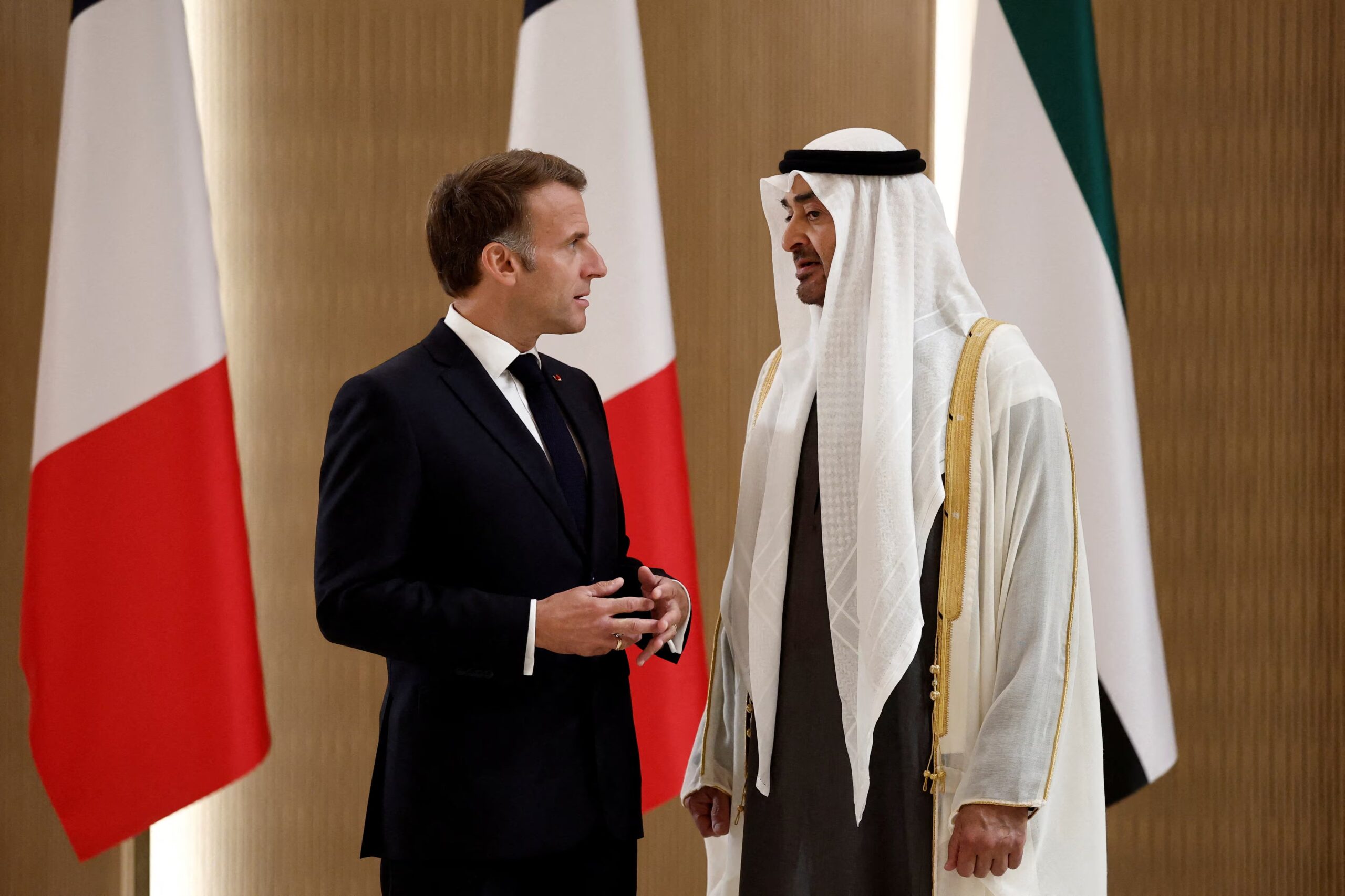
French President Emmanuel Macron visited the region this week. During the trip, he and UAE President Sheikh Mohammed bin Zayed Al Nahyan agreed to strengthen defence cooperation between their countries.
Macron said the visit had helped deepen the strategic relationship with the UAE. He also said the two countries had signed an important agreement to develop a shared strategy for a fifth-generation version of the Rafale.
The next stage will focus on the programme’s costs and technical details. People familiar with the matter said industrial partners would lead discussions on how the project could move forward.
UAE Is a Key Rafale Customer
The UAE is France’s largest customer for the Rafale fighter jet, which is made by Dassault Aviation. The aircraft has become a central part of France’s defence exports and its long-term military aviation plans.
France also maintains military bases in the UAE. Relations between the two countries have remained close during the current conflict in the Gulf.
Paris has supplied air defence systems to the UAE and used its own aircraft to intercept Iranian drones, according to officials. These actions have strengthened the UAE’s view of France as a reliable defence partner during a period of regional tension.
The renewed cooperation could help both countries support the Rafale’s future development. France would gain a partner for an expensive programme, while the UAE could seek a greater role in the aircraft’s technology and production.
However, the project still faces important questions. Before the talks stalled, French newspaper La Tribune reported in April that the estimated cost had reached €5 billion. The UAE was expected to pay roughly two-thirds of that amount.
The final cost and funding arrangement have yet to be confirmed. Officials and industrial partners must now work through the technical and financial details.
Budget Pressure Raises Stakes for France
Macron has promised to speed up France’s military investment in response to a more uncertain security environment. Yet the government faces growing scrutiny over how it will pay for long-term defence programmes.
The Rafale F5 upgrade is a key part of France’s future air combat plans. Also known as the F5 standard, it is designed to improve the current aircraft rather than replace it immediately.
The upgrade is expected to add better connectivity and more advanced weapons. These changes aim to keep the Rafale effective into the 2040s and help France prepare for future European combat aircraft projects.
Finding an external partner could reduce pressure on France’s public finances. It could also help preserve the country’s industrial skills and technology while spreading development costs across more than one country.
For the UAE, participation may offer access to new defence technology and a greater role in the programme. However, technology sharing could become a difficult issue during negotiations.
Technology Transfer Could Be a Challenge
The UAE may seek technology transfers or ask for some production to move to its territory as part of an agreement.
Such demands have caused tension in past defence deals. Supplier countries and their defence companies can be reluctant to share sensitive knowledge or move production abroad because these choices may affect strategic control and industrial jobs.
A senior French official said Abu Dhabi had made a firm commitment to work with France. Dassault Aviation was also working with EDGE Group, an Emirati defence company.
Dassault declined to comment on the agreement. Safran chief executive Olivier Andries, whose company makes the Rafale’s engines, welcomed the news on Friday and described the agreement as very positive.
The companies must still settle the details before the project can advance fully. Funding, technology access and production arrangements are likely to remain central issues.
The renewed talks offer France a possible way to support the Rafale’s future while managing its defence budget. For the UAE, the project could deepen a strategic partnership and expand its role in advanced military aviation. The outcome will depend on whether both sides can agree on costs, technology and industrial cooperation.

