


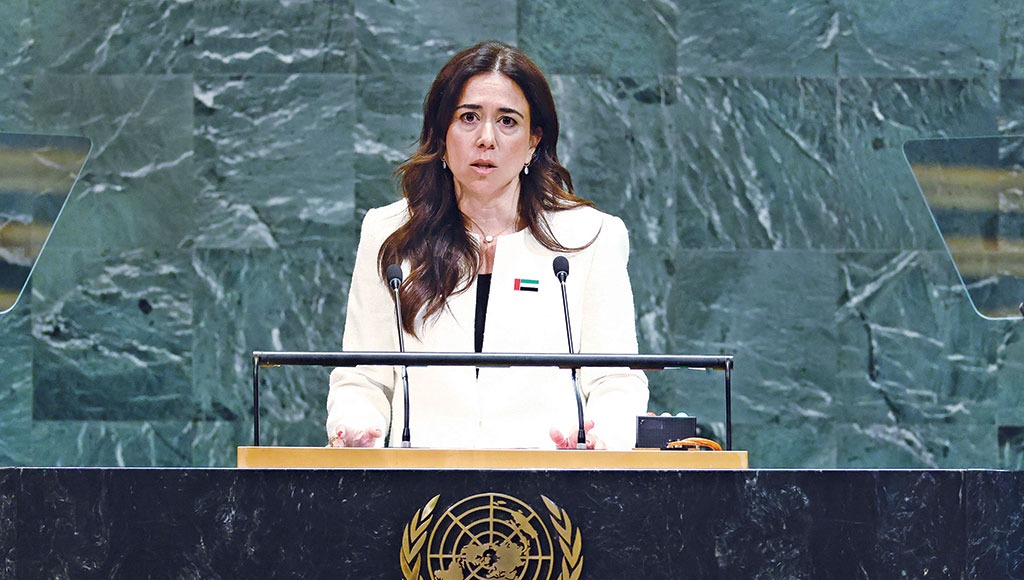
United Arab Emirates diplomat Lana Nusseibeh has emerged as a contender for the United Nations’ top job. Her campaign focuses on reform, peace and human rights. Her nomination has gained support from Gulf states, while also drawing questions about the UAE’s foreign policy.
Nusseibeh, 48, was officially nominated on Wednesday. If elected, she would become the first woman to serve as UN secretary-general and the second Arab to hold the position. Her success would also mark a major diplomatic achievement for the UAE.
The country has worked for years to strengthen its role in global affairs. It has built ties with major powers and expanded its diplomatic presence across the Middle East and beyond. A successful campaign would raise its international standing further.
In a campaign video, Nusseibeh promises to bring greater urgency to efforts for peace and to defend human rights. She speaks fluent English with a slight British accent and presents herself as a modern, experienced diplomat.
Her public image reflects the UAE’s effort to promote itself as an influential and forward-looking country. Supporters say her diplomatic background could help her lead an organisation facing conflicts, political divisions and calls for change.
Emirati political science academic Abdulkhaleq Abdulla praised her experience, saying she has a strong record and represents the best of UAE diplomacy.
Nusseibeh’s nomination comes at a time when the UN faces major challenges. Conflicts in several regions have increased demands for effective mediation and humanitarian action. At the same time, disagreements among powerful member states have often made it difficult for the organisation to respond quickly.
The secretary-general serves as the UN’s chief administrative officer and plays an important role in raising global concerns, supporting diplomatic talks and coordinating the organisation’s work. The position does not give its holder unlimited power, as major decisions also depend on member states and UN bodies.
Nusseibeh’s campaign is therefore likely to be judged on her ability to build trust across different regions and political groups. Her supporters may point to her diplomatic experience and knowledge of regional affairs as important strengths.
However, her candidacy also faces scrutiny over the UAE’s international policies. One issue is the country’s decision to normalise relations with Israel under the Abraham Accords in 2020. The agreement opened new diplomatic and economic links between the two countries but has also drawn criticism, especially amid continuing conflict and tensions involving Palestinians.
Nusseibeh’s Palestinian roots may bring additional attention to how she addresses questions about the Israeli-Palestinian conflict. If she advances in the selection process, she may face questions about how she would approach peace efforts and protect human rights while maintaining the confidence of UN member states.
Another source of scrutiny is the UAE’s alleged role in Sudan’s ongoing war. Accusations about outside support for parties in the conflict have placed regional powers under pressure. Abu Dhabi has faced allegations concerning its involvement, which have become part of the wider debate over its foreign policy. Such claims remain politically sensitive and would need to be considered alongside the available evidence and responses from the parties involved.
The campaign also carries broader significance for the Gulf region. Nusseibeh’s potential appointment would give the UAE an opportunity to demonstrate its diplomatic reach at a time when the Middle East faces serious security challenges. The country experienced Iranian attacks earlier this year, adding to the pressures facing the region.
Her bid may also renew debate about representation at the UN. No woman has yet served as secretary-general, despite repeated calls for the organisation to appoint a female leader. Nusseibeh’s candidacy could become a key part of that discussion if it gains wider international support.
Still, backing from Gulf states alone would not guarantee success. The selection of a secretary-general requires support across the UN system, including approval by the Security Council and appointment by the General Assembly. The positions of major powers and other member states can therefore shape the final outcome.
For now, Nusseibeh is presenting herself as a candidate focused on peace, reform and human rights. Her diplomatic record has helped put her in the spotlight, while questions about the UAE’s policies may test her ability to win broad support.
The race will reveal whether her experience and campaign message can overcome political differences among UN members. If she succeeds, her appointment would be historic for women’s representation and a significant milestone for Emirati diplomacy.

