


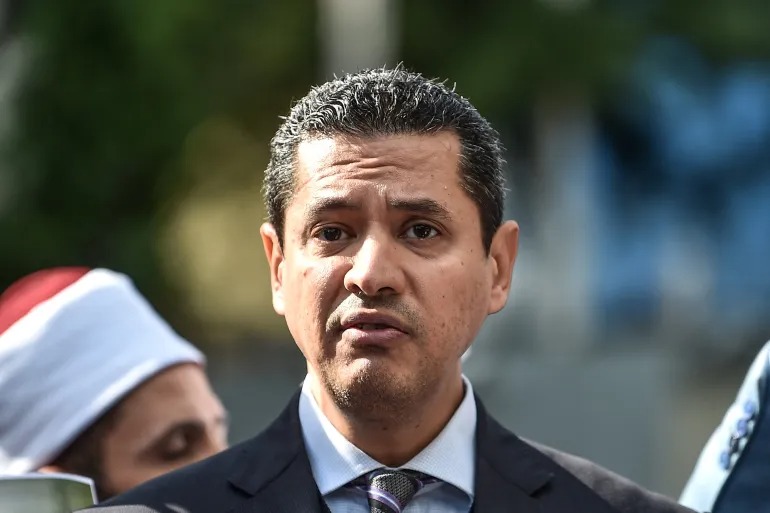
A presidential pardon granted by the United Arab Emirates has drawn international attention after Egyptian opposition activist and poet Abdul Rahman al-Qaradawi was forgiven just days after receiving a lengthy prison sentence.
The pardon was issued by UAE President Sheikh Mohamed bin Zayed Al Nahyan, according to the country’s state media. The decision came shortly after al-Qaradawi was sentenced by a court in Abu Dhabi to 10 years in prison and ordered to pay a fine of 200,000 dirhams, equivalent to about $55,000.
Authorities have not confirmed whether al-Qaradawi has already been released. However, state media reported that the required legal and administrative steps to implement the presidential pardon have begun.
The case has attracted widespread interest across the Middle East and among international human rights organizations. Al-Qaradawi was arrested in Lebanon in December 2024 before being extradited to the UAE in January 2025.
UAE authorities accused him of engaging in activities that threatened public security and stability. The allegations led to legal proceedings that concluded with the prison sentence announced in late August.
The presidential pardon now changes the direction of a case that has been closely followed by activists, legal observers, and international organizations. While the full impact of the pardon remains unclear, it effectively removes the punishment imposed by the court.
Al-Qaradawi is widely known not only for his political views but also because of his family background. He is the son of Yusuf al-Qaradawi, one of the most influential Sunni Muslim scholars of recent decades.
Yusuf al-Qaradawi became well known across the Muslim world for his religious teachings and public support for the Arab Spring uprisings that swept through several countries in 2011. His positions often generated strong reactions from governments across the region, particularly in Egypt and some Gulf states.
Because of that history, Abdul Rahman al-Qaradawi has remained a prominent public figure whose statements and activities have attracted attention from both supporters and critics.
The activist’s arrest in Lebanon triggered concern among family members and rights advocates. Before his extradition, relatives publicly appealed against transferring him to another country. Family members argued that sending him abroad could place his safety and well-being at risk.
Following his transfer to the UAE, several international rights organizations called for his release. Human rights groups argued that his detention was connected to the peaceful expression of political views and opinions.
United Nations experts also expressed concern about the case. Some called for his immediate release, stating that individuals should not face imprisonment simply for exercising freedom of expression.
Supporters of al-Qaradawi viewed the case as an important test of civil liberties and free speech protections in the region. They argued that criticism of governments and political commentary should not result in criminal penalties.
Officials in the UAE maintained that the legal proceedings were conducted according to national laws and that the charges related to activities affecting public security. Authorities did not publicly indicate that the conviction would be overturned before the presidential pardon was announced.
The decision to grant clemency has now shifted attention to what comes next. Observers are waiting for confirmation regarding al-Qaradawi’s status and whether he will be allowed to travel or return to his family.
Political analysts note that presidential pardons are often viewed as humanitarian or reconciliation measures. In some cases, such actions can reduce tensions surrounding highly publicized legal disputes and attract positive international attention.
The announcement has already generated reactions from supporters who had campaigned for his release over the past year. Many see the pardon as a significant development after months of uncertainty surrounding his future.
As details continue to emerge, the focus remains on the implementation of the decision and the next chapter for Abdul Rahman al-Qaradawi. For now, the presidential pardon marks a major turning point in one of the region’s most closely watched legal and political cases.

