


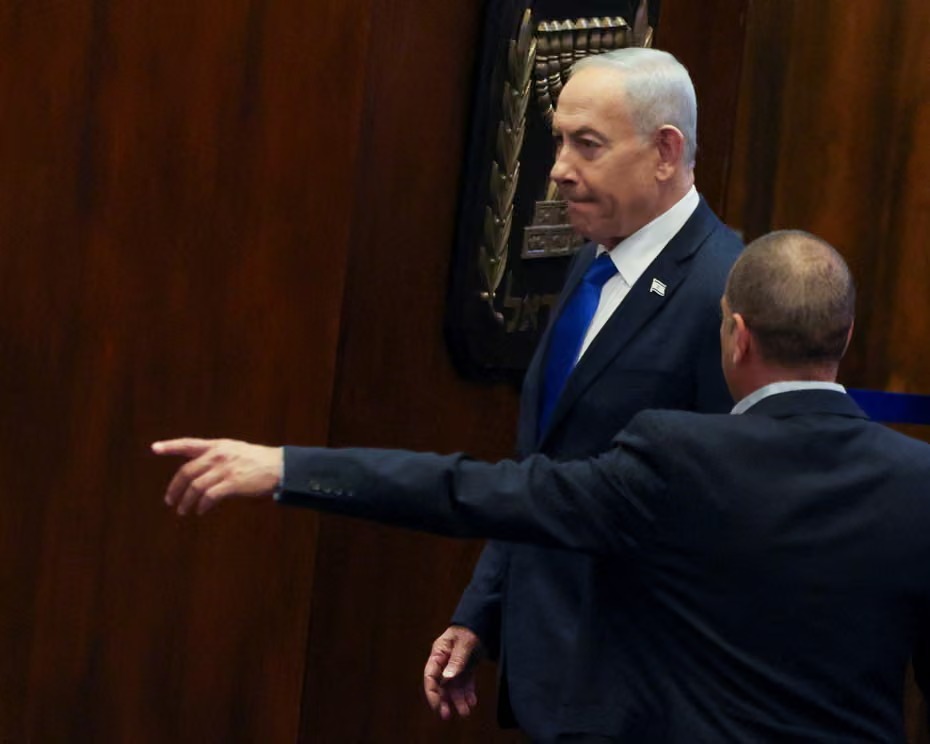
Fresh allegations about events leading up to the October 7, 2023, Hamas attack have intensified political tensions in Israel, placing Prime Minister Benjamin Netanyahu under renewed scrutiny during a critical election campaign.
The claims emerged from a newly published book written by two Israeli journalists. The authors allege that Netanyahu received a warning about a possible large-scale Hamas operation more than a week before the attack but failed to take action. The report has sparked fierce political debate, with opposition leaders demanding answers and accusing the prime minister of failing to protect the country.
According to the book, the warning came from United Arab Emirates President Mohamed bin Zayed Al Nahyan. The authors claim the Emirati leader contacted Netanyahu roughly ten days before the attack and shared concerns about a major operation being planned by Hamas.
The book states that the information originated from Hamas leader Yahya Sinwar, who was later killed by Israeli forces. Sinwar reportedly described the planned operation as an event that would have a dramatic and far-reaching impact.
The authors say bin Zayed believed the planned action could destabilize the region and therefore chose to communicate the warning directly to Israeli leadership. According to their account, the two leaders held a lengthy conversation during which the concern was discussed.
The report further claims that Netanyahu reacted calmly during the exchange and did not appear alarmed by the information. These allegations have become a major political issue because of the continuing debate over whether warning signs before the attack were missed or ignored.
Netanyahu’s office strongly rejected the claims. Officials described the report as completely false and denied that any such warning was delivered directly by the UAE president.
A statement from the prime minister’s office said that if any relevant information had existed, it would have been exchanged through official intelligence channels between the two countries rather than through a direct warning of the kind described in the book.
The allegations arrive at a sensitive moment in Israeli politics. Questions about the government’s preparedness before the October 7 attack have remained central to public debate since the assault occurred.
During the attack, Hamas fighters entered southern Israel, killing more than 1,200 people and taking hundreds of hostages. The event triggered a series of military conflicts that expanded beyond Gaza and affected several parts of the region.
The attack remains one of the deadliest incidents in Israel’s history and continues to shape the country’s political landscape. Families of victims, former military officials, and opposition politicians have repeatedly called for a full investigation into the failures that allowed the assault to occur.
Opposition leaders quickly seized on the latest report. Several parties issued statements demanding clarity about what information Netanyahu may have received before the attack and what actions, if any, followed.
They argued that the public deserves to know whether any warning was available and whether appropriate steps were taken to assess the threat. Opposition figures said these questions are critical to understanding the events that led to the attack.
Among the strongest critics was Gadi Eisenkot, a former military commander and one of Netanyahu’s leading political rivals. Eisenkot accused the prime minister of repeatedly ignoring warnings and failing to take responsibility for security shortcomings.
Former Prime Minister Naftali Bennett also criticized Netanyahu, arguing that leadership failures contributed to the tragedy. Other opposition leaders echoed similar concerns and renewed calls for accountability.
The controversy has also revived demands for an independent state commission of inquiry. Supporters of such a commission argue that a thorough investigation is necessary to determine what happened before the attack and whether mistakes were made by political or security leaders.
Opposition parties have pledged to establish an independent inquiry if they gain power. They say the commission should have broad authority to examine intelligence warnings, government decisions, and military preparedness.
Netanyahu’s government has opposed those proposals, arguing that existing reviews and investigations are sufficient.
As election campaigning continues, the latest allegations are likely to remain at the center of political debate. Whether the claims can be verified may become a key issue for voters as they weigh questions of leadership, security, and accountability in the months ahead.

