


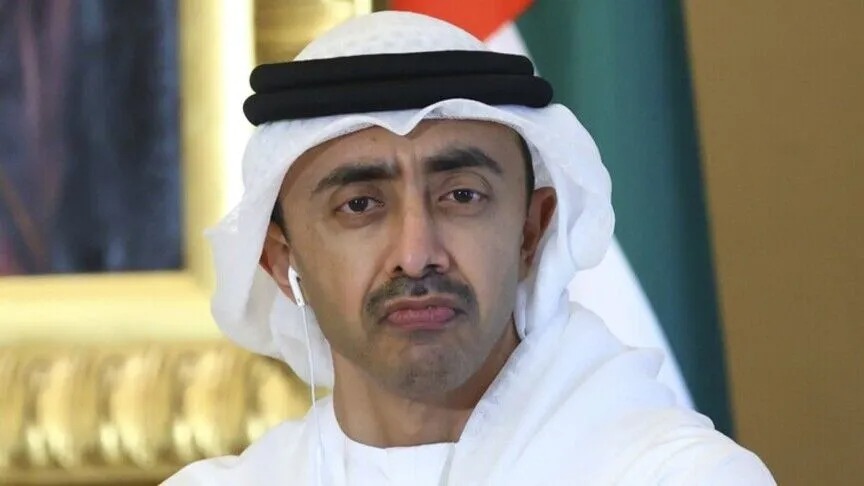
United Arab Emirates Foreign Minister Sheikh Abdullah bin Zayed Al Nahyan held separate discussions with senior officials from Saudi Arabia and Iraq as regional leaders stepped up efforts to prevent a broader conflict in the Middle East.
The talks took place on Sunday against a backdrop of rising tensions across the region. The conversations focused on security concerns, regional cooperation, and ways to reduce the risk of further escalation.
In a phone call with Saudi Foreign Minister Prince Faisal bin Farhan Al Saud, Sheikh Abdullah reviewed recent developments affecting the region and discussed ongoing efforts aimed at maintaining stability.
The two ministers examined the current security situation and exchanged views on measures that could help contain growing tensions. They also highlighted the importance of cooperation among Gulf countries during a period of uncertainty.
According to information released after the call, both sides emphasized the need for close coordination and stronger Gulf cooperation. They agreed that maintaining unity among Gulf states remains important for protecting regional security and shared interests.
The discussion reflected continued efforts by Gulf nations to work together on common challenges while promoting stability across the region.
Sheikh Abdullah later held a separate phone conversation with Iraqi Foreign Minister Fuad Hussein.
The two officials discussed a range of issues linked to regional security. Their talks also covered developments in Yemen and Iraq’s relations with neighboring Gulf countries.
Both ministers stressed the importance of preventing further escalation and encouraging peaceful solutions to regional disputes. They agreed that dialogue and negotiations remain the best path for addressing political and security challenges.
The discussion also focused on strengthening diplomatic engagement between countries in the region and reducing tensions through communication and cooperation.
During the call, Hussein reaffirmed Iraq’s commitment to supporting regional stability. He emphasized the importance of dialogue as a tool for resolving disagreements and maintaining positive relations with neighboring states.
The latest diplomatic contacts came at a sensitive moment for the region.
Tensions have increased following recent drone attacks targeting Saudi Arabia’s East-West oil pipeline. Saudi authorities said the attacks were launched from Iraqi territory, raising concerns about regional security and cross-border threats.
The incident prompted renewed attention to efforts aimed at preventing violence from spreading beyond existing areas of conflict.
Iraqi officials have responded by stating that Baghdad is taking steps to ensure that its territory is not used to threaten neighboring countries. The government has also stressed its commitment to maintaining good relations with regional partners.
The issue has become an important topic in diplomatic discussions as countries seek to avoid actions that could trigger a wider confrontation.
Analysts say regional leaders are increasingly focused on preventing tensions from escalating into a broader crisis. Diplomatic engagement has become a key tool in those efforts.
The UAE, Saudi Arabia, and Iraq have all expressed support for dialogue and cooperation as a means of reducing risks and promoting stability.
Recent developments have highlighted the importance of communication between governments as they work to address security concerns and manage regional challenges.
Officials across the Gulf have repeatedly called for peaceful solutions to disputes and have encouraged stronger coordination on matters affecting regional security.
The latest conversations between Sheikh Abdullah and his counterparts reflect those priorities.
The UAE has continued to support diplomatic initiatives aimed at reducing tensions and strengthening partnerships across the region. Regional cooperation remains a central element of efforts to protect economic interests, maintain security, and promote long-term stability.
While challenges remain, officials involved in the discussions signaled a shared commitment to dialogue and peaceful engagement.
The calls between the foreign ministers underscore growing diplomatic activity as governments seek to navigate a complex regional environment.
With security concerns remaining high, Gulf and regional leaders are expected to continue consultations in the coming weeks. Their focus is likely to remain on preventing further escalation, encouraging cooperation, and supporting political solutions to ongoing disputes.
The latest exchanges between the UAE, Saudi Arabia, and Iraq highlight the importance of diplomacy as countries work together to preserve stability and avoid a wider regional conflict.

