


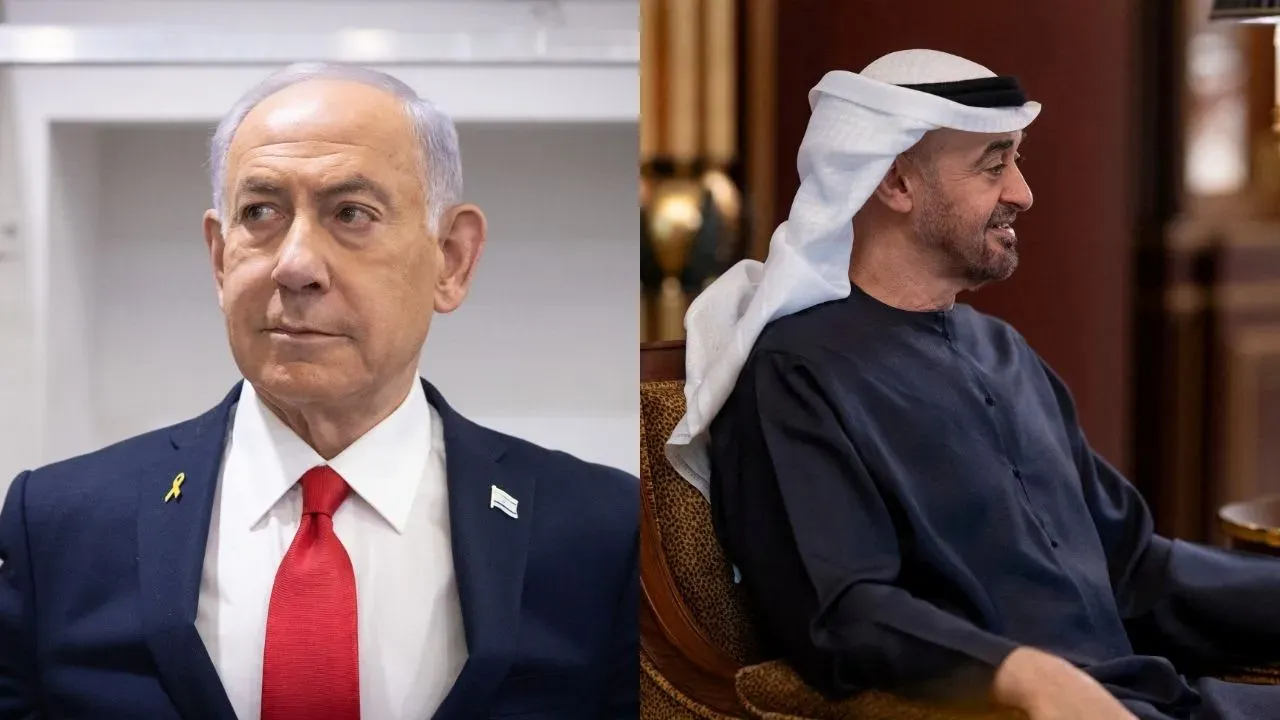
Israeli Prime Minister Benjamin Netanyahu met United Arab Emirates President Sheikh Mohammed bin Zayed Al Nahyan on Sunday during a visit to Abu Dhabi, according to multiple reports and a diplomatic source familiar with the meeting.
The visit was not publicly announced in advance, and officials provided few details about the discussions. Netanyahu’s office declined to comment on the substance of the talks, leaving the agenda of the meeting unclear.
According to reports, Netanyahu traveled to the UAE aboard a private executive aircraft. The same plane was reportedly used during a previous visit to the Gulf nation earlier this year.
Flight information showed that the Israeli prime minister departed from Ben-Gurion Airport shortly after midday and arrived in Abu Dhabi during the afternoon. After spending several hours in the UAE, he returned to Israel later the same day.
The meeting highlights the continuing relationship between Israel and the United Arab Emirates, which established formal diplomatic ties in 2020 through the Abraham Accords. Since then, both countries have expanded cooperation in areas including trade, technology, investment, and regional security.
Although neither side released an official summary of Sunday’s discussions, the meeting comes at a time of ongoing diplomatic activity across the Middle East. Regional leaders continue to engage on issues related to security, economic cooperation, and broader geopolitical developments.
The visit also comes amid renewed attention surrounding reports about communications between the two countries before the Hamas attack on Israel on October 7, 2023.
Earlier this month, a media report claimed that Sheikh Mohammed bin Zayed had warned Netanyahu shortly before the attack that Hamas was preparing a major operation against Israel. The report alleged that the warning was not passed on to Israeli intelligence agencies or military officials.
The United Arab Emirates has not commented directly on those claims. However, UAE officials have previously stated that the country and Israel have maintained open and direct channels of communication since diplomatic relations were established.
A UAE source previously said that security-related discussions are typically handled through the appropriate professional and government institutions rather than through direct exchanges between national leaders.
The latest meeting between Netanyahu and Sheikh Mohammed bin Zayed has therefore drawn attention because of the ongoing debate surrounding those earlier reports.
The visit also follows a separate controversy earlier this year. In May, Netanyahu’s office stated that the prime minister had secretly traveled to the UAE and met with the Emirati leader. UAE officials later denied that such a meeting had taken place.
Sunday’s visit appears to confirm direct engagement between the two leaders, although details regarding the content of their talks have not been made public.
Relations between Israel and the UAE have remained strategically important despite periods of regional tension. Both countries have continued diplomatic contacts while addressing shared concerns related to regional stability, economic development, and security cooperation.
Since normalizing ties, the two nations have signed agreements covering investment, tourism, innovation, energy, and advanced technology. Bilateral trade has expanded significantly, making the UAE one of Israel’s most important partners in the Gulf region.
Analysts note that meetings between senior leaders often serve as opportunities to discuss regional developments and strengthen diplomatic coordination. However, without official statements from either government, the exact topics discussed during Sunday’s meeting remain unknown.
The meeting took place shortly after Netanyahu attended international events in New York, where regional security and global diplomatic issues were key topics of discussion.
As attention remains focused on developments across the Middle East, the meeting between Netanyahu and Sheikh Mohammed bin Zayed underscores the continued importance of communication between regional leaders. Observers will now watch for any official statements or future diplomatic initiatives that may emerge following the talks in Abu Dhabi.

