


Saudi Arabia and the United Arab Emirates are showing signs of renewed cooperation in Yemen as rapid advances by Houthi forces raise fresh security concerns. The two Gulf powers appear ready to put aside recent disputes to face a common threat. However, their different plans for Yemen could still weaken any joint effort.
The renewed contact comes less than a year after a serious dispute over the future of southern Yemen damaged relations between Riyadh and Abu Dhabi. Both countries have signalled that they want to reduce tensions and focus on their shared security interests.
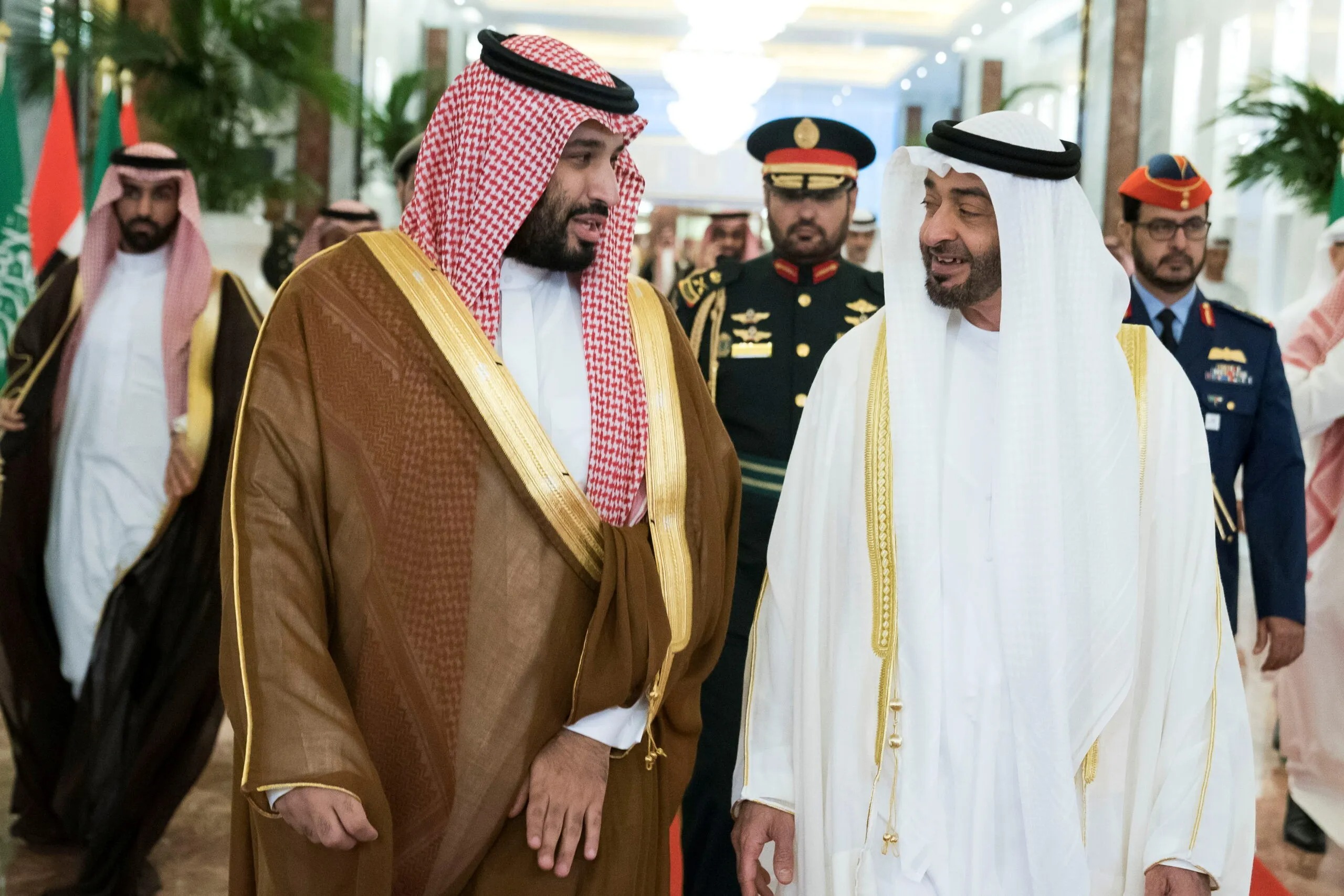
A key sign of this change came on October 18, when Saudi Defence Minister Khalid bin Salman met UAE President Mohammed bin Zayed in Abu Dhabi. Following the meeting, the Saudi minister praised the historic ties between the two countries and described them as brotherly partners.
The official statement did not confirm a new military agreement on Yemen. However, reports have suggested that the two sides are discussing a plan to support forces fighting the Houthis.
Under the reported arrangement, the UAE would restart financial support for government-aligned armed groups in southern Yemen. Saudi Arabia would then provide air support for those forces as they confront Houthi fighters.
Details of the possible agreement remain limited. Still, comments from media outlets in both countries suggest that officials and commentators are trying to create a more positive atmosphere. Several reports have called for cooperation and an end to public disputes.
The change in tone follows a major breakdown in relations in December 2025. At that time, forces backed by the UAE’s Southern Transitional Council (STC) took control of large areas of Hadramawt and al-Mahra. Both provinces share a border with Saudi Arabia.
Riyadh viewed the advance as a direct threat to its national security. The move led to strong public criticism from Saudi officials and increased tensions with Abu Dhabi.
Saudi Arabia later carried out an airstrike on a shipment of weapons at Mukalla port. Riyadh said the shipment was intended to support STC forces. The confrontation also led to a demand for remaining Emirati forces to leave Yemen within 24 hours.
The crisis badly weakened the STC and exposed the deep differences between the two countries over Yemen’s political future.
Saudi Arabia and the UAE first joined the war against the Houthis in 2015. The group, also known as Ansar Allah, had taken control of large parts of the country, including the capital, Sanaa.
Although both countries opposed the Houthis, they supported different local groups. Saudi Arabia backed Yemen’s internationally recognised government and wanted to keep the country united under one national authority.
The UAE, meanwhile, built close ties with southern armed groups, particularly the STC. The group supports independence for southern Yemen and has sought greater control over key areas and ports.
A major point of interest for Abu Dhabi has been the port of Aden. Its location near the entrance to the Red Sea gives it important value for regional trade and shipping.
These competing goals have created problems throughout the military campaign. In 2019, fighting broke out between STC forces and troops loyal to Yemen’s recognised government over control of Aden.
Saudi Arabia and the UAE later helped bring the rival sides into a power-sharing deal. However, the arrangement remained fragile and did not resolve their wider political differences.
Their local partnerships also make the current situation more complex. Neither country controls every armed group operating in Yemen. Both rely on local forces with their own political goals and interests.
This network could allow the UAE to support anti-Houthi operations without sending its own troops back into direct combat. Abu Dhabi is unlikely to repeat the large military role it played during the earlier stages of the war.
The risks of direct involvement have increased. Houthi forces launched attacks on Emirati territory in 2022, showing that the group could threaten the UAE itself. Such attacks are a serious concern for a country whose economy depends heavily on trade, investment and its reputation as a safe business centre.
The wider regional conflict has added another layer of risk. The UAE has faced intensive Iranian missile and drone attacks since the United States and Israel began their war against Iran. This may encourage Abu Dhabi to avoid another direct military confrontation.
The Houthis have also improved their ability to carry out long-range attacks. That makes any new military campaign more difficult and raises the potential cost for countries involved.
Saudi Arabia and the UAE may therefore find common ground in supporting local forces against the Houthis. Yet cooperation on military matters will not automatically resolve their disagreement over Yemen’s future.
Riyadh continues to favour a united Yemen, while Abu Dhabi has maintained strong links with southern separatists. Unless both sides find a way to manage these competing interests, renewed cooperation could remain limited.
Their latest diplomatic contacts show that neither country wants its rivalry to prevent action against a shared threat. But lasting stability in Yemen will require more than military coordination. It will also depend on whether Saudi Arabia and the UAE can agree on a political path that addresses the country’s deep divisions.

