


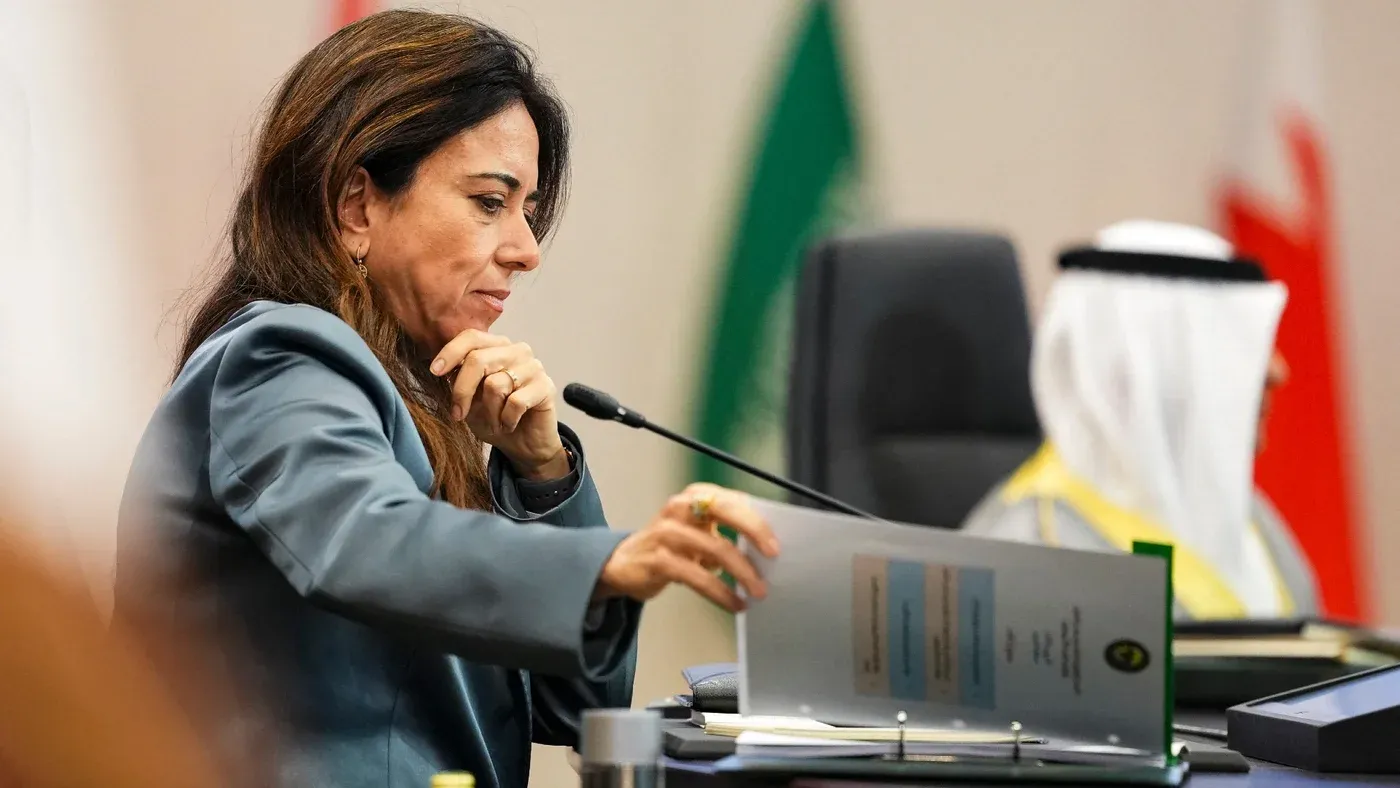
The United Arab Emirates’ candidate for United Nations secretary-general, Lana Nusseibeh, placed fourth in an informal Security Council vote on Friday. The result adds pressure to her campaign as countries consider who should lead the global body next year.
Nusseibeh received seven votes of encouragement, six votes against and two votes expressing no opinion. The poll involved all 15 members of the UN Security Council. It is part of the process to choose a successor to Antonio Guterres, whose second term ends on December 31, 2026.
Nusseibeh entered the race late. The UAE nominated the veteran diplomat on October 21. She has served in the country’s diplomatic service for years and spent the past decade working with its mission to the United Nations.
The informal poll does not decide the final outcome. However, it gives diplomats an early view of how candidates are viewed by Security Council members. Any candidate recommended to the UN General Assembly must receive at least nine votes in the council and avoid a veto from any of its five permanent members.
Those permanent members are the United States, the United Kingdom, France, China and Russia. In Friday’s vote, members used plain paper ballots instead of colour-coded sheets. As a result, diplomats could not identify whether any permanent member had cast a vote against Nusseibeh.
The result comes as the selection process enters a key stage. Governments are weighing candidates’ diplomatic experience, international support and ability to build agreement among countries with different political interests.
Nusseibeh’s campaign has also drawn criticism from human rights groups and civil society organisations. Much of the debate focuses on the UAE’s foreign policy and her previous role defending the country’s positions at the United Nations.
Before becoming a leading figure in the UAE’s diplomatic service, Nusseibeh held senior roles within the country’s Ministry of Foreign Affairs. In those positions, she repeatedly responded to reports and allegations concerning the UAE’s role in regional conflicts.
Critics have focused particularly on Sudan’s ongoing civil war. UN experts and rights organisations have raised allegations that the UAE supplied weapons to, or supported, the Rapid Support Forces, a paramilitary group accused of widespread abuses against civilians. The UAE has faced scrutiny over these claims, which have become a central issue in the debate surrounding Nusseibeh’s candidacy.
Sudan’s permanent mission to the United Nations has also questioned whether she would be suitable for the position. Earlier in the week, the mission raised concerns about her independence, impartiality and credibility.
Its representatives argued that her record of defending UAE policy could undermine confidence in her ability to lead the United Nations fairly. They said the country should face accountability over allegations linked to Sudan rather than gain the organisation’s highest leadership position.
The accusations have added a political challenge to Nusseibeh’s campaign. The secretary-general is expected to act independently and work with all member states, including countries involved in international disputes. Critics say candidates should be judged on their ability to protect the credibility of the UN and uphold its principles.
Support for other candidates is also shaping the contest. Costa Rica’s Rebeca Grynspan remains a leading contender after receiving 11 encouraging votes in the latest poll. Her campaign has gained support from Latin American and Caribbean countries, which argue that the next secretary-general should come from their region under the UN’s informal regional rotation practice.
The rotation system is not a formal rule. However, regional representation has often influenced discussions about the selection of senior international officials. Supporters of Grynspan say the time has come for Latin America and the Caribbean to hold the position.
The field of candidates expanded further on Friday. Turkey formally nominated Feridun Sinirlioglu, a veteran diplomat who previously served as the country’s representative to the United Nations. He currently leads the Organisation for Security and Cooperation in Europe.
His nomination came only hours after the Security Council poll ended, bringing the number of official candidates to seven. The new entry could add another layer of competition as governments consider which candidate has the strongest diplomatic backing.
The United Kingdom has also emerged as an important factor in Nusseibeh’s campaign. Reports before Friday’s vote indicated that London was leaning towards supporting her. However, the latest ballot results show that she still faces significant opposition within the council.
The next stages will test each candidate’s ability to secure wider international support. A strong result in an informal poll can help build momentum, but candidates must still meet the formal voting requirements.
For Nusseibeh, the fourth-place finish highlights both the support she has gained and the resistance her nomination has faced. Her campaign will need to address concerns about impartiality while persuading Security Council members that she can lead the United Nations through an increasingly divided international period.

