


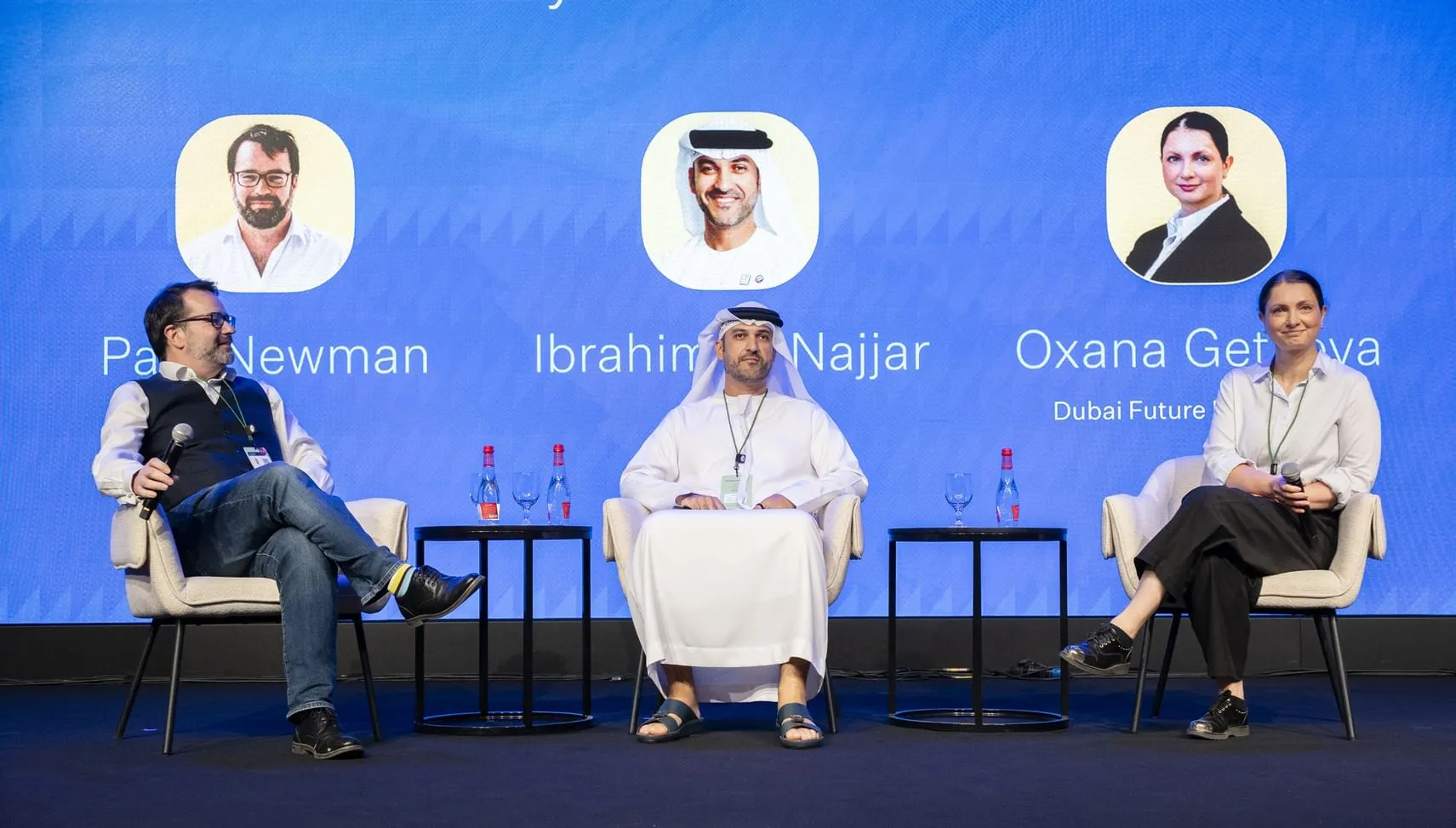
Dubai is exploring how autonomous vehicles and advanced technology could change the way major ports, airports and industrial facilities operate. The subject was discussed during Dubai Future Week 2026, where technology specialists and logistics executives examined the future of automated transport. Professor Paul Newman, founder and chief executive of Oxa, joined Ibrahim Al Najjar, senior vice-president of technology at DP World, for a session focused on the possibility of creating environments where vehicles can move and perform tasks with less direct human control. The discussion highlighted how automation could improve efficiency while supporting the expansion of international trade.
One of the main areas of interest was the use of driverless vehicles in busy port environments. Large ports handle enormous volumes of containers and require vehicles to move goods between terminals, storage areas and transport connections. Automated systems could help operators manage these movements more accurately, reduce unnecessary delays and improve the use of available space. However, introducing such technology requires more than simply installing autonomous vehicles. Companies must also develop reliable infrastructure, safety procedures and operating systems that allow machines and human workers to function together.
DP World’s Jebel Ali port is an important example of how these ideas could be developed in real working conditions. The company is working with technology partners to integrate driverless trucks into terminal operations, safety systems and existing workflows. The port already operates more than 900 vehicles on the ground, making it a major location for testing how autonomous technology can be introduced into a large commercial environment. A successful system could help the company improve the movement of goods while providing valuable experience that may be used in other ports and industrial facilities.
The discussions also addressed the commercial and regulatory challenges associated with autonomous mobility. Businesses must consider whether the technology can deliver enough value to justify its cost, while governments need rules that protect workers, customers and the public. Human supervision will remain important because automated systems must be able to respond safely when unexpected situations occur. Dubai’s interest in autonomous logistics reflects its wider ambition to strengthen its position as an international trade and technology centre. If these projects develop successfully, they could influence how ports across the world manage cargo and connect global supply chains.

