


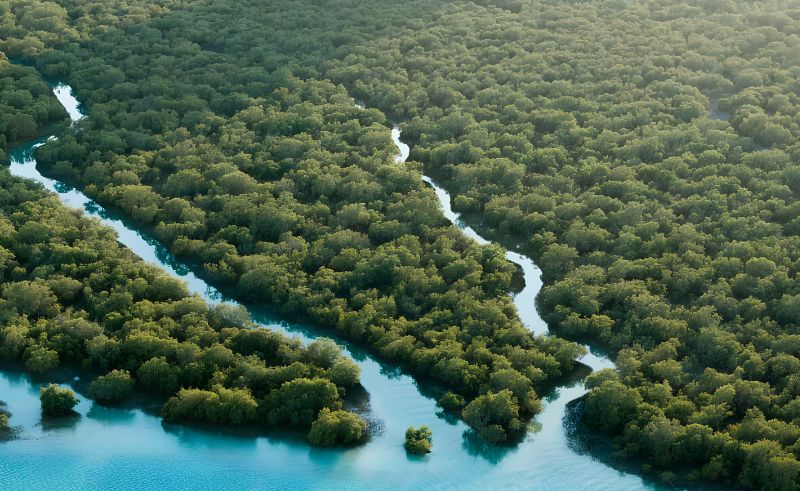
Abu Dhabi has launched a new digital mangrove observatory to improve the monitoring and management of mangrove restoration projects across the emirate. The platform is part of the Abu Dhabi Mangrove Initiative and aims to bring key environmental data into one central system.
The new Abu Dhabi mangrove observatory collects information from 19 mangrove rehabilitation projects. It uses field surveys, satellite images and data from partner groups to help track progress and guide future conservation plans.
The platform gives environmental teams a clearer view of mangrove growth and restoration work. It allows experts to check project results, study tree development and make better plans for future activities.
According to environmental officials, the system currently tracks more than 18.5 million mangrove trees planted across different restoration areas in Abu Dhabi. The collected data shows that over 10.4 million trees have recorded growth.
The overall success rate of mangrove rehabilitation projects is close to 47%, based on the available programme data. The digital system will help improve tracking methods and provide updated information about the condition of restored areas.
Mangroves play an important role in protecting coastal areas and supporting marine life. They also help store carbon and improve natural protection against coastal changes. Abu Dhabi has focused on expanding mangrove conservation as part of its long-term environmental goals.
The observatory was created to support better cooperation between organisations involved in mangrove projects. By combining different data sources, the platform helps create a complete picture of restoration efforts across the emirate.
Environmental planners can use the information to compare different sites, measure growth patterns and identify areas that need more attention. The system also supports research by providing organised data for future studies.
The Abu Dhabi Mangrove Initiative was launched in 2022 to support mangrove protection, restoration, research and new environmental solutions. The programme has helped fund scientific studies and restoration projects focused on protecting coastal ecosystems.
The initiative has raised more than USD 1.3 million to support research and restoration activities. These efforts are aimed at increasing knowledge about mangrove ecosystems and improving methods used for conservation.
Abu Dhabi is home to the largest mangrove forest in the United Arab Emirates. The forest covers about 176 square kilometres and is considered a key natural resource for the region.
The launch of the Abu Dhabi mangrove observatory marks a new step in using digital technology for environmental protection. By combining satellite data, field reports and project information, the platform is expected to support stronger conservation decisions.
The system also highlights Abu Dhabi’s wider efforts to use technology in protecting nature. Digital tools are becoming more important in environmental work because they allow teams to collect accurate information and respond quickly to changes.
As mangrove restoration projects continue, the observatory will provide ongoing updates on tree growth and ecosystem recovery. The platform is expected to support future projects and strengthen efforts to protect Abu Dhabi’s coastal environment.
Environmental experts say reliable data is essential for successful restoration work. With the new digital platform, Abu Dhabi aims to improve monitoring and create a more effective approach to mangrove conservation.
The new observatory represents a major move toward science-based environmental planning. It combines technology and conservation efforts to support the long-term protection of one of the emirate’s most valuable natural ecosystems.

