


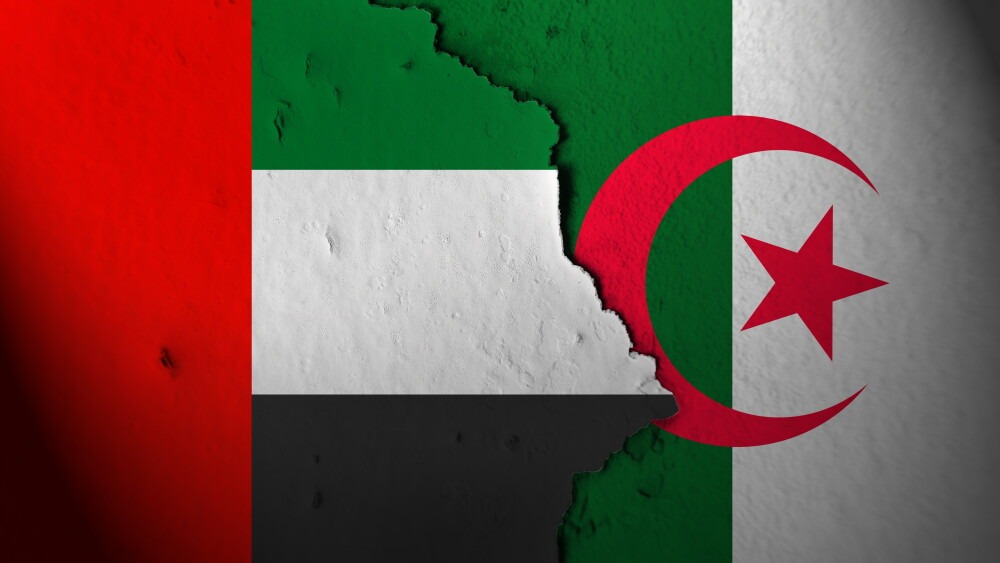
Algeria’s decision to expel the United Arab Emirates ambassador and impose restrictions on UAE-registered military and civilian aircraft has drawn attention across the Middle East and North Africa, highlighting growing tensions between two countries pursuing very different regional strategies.
On Sept. 10, Algeria ordered the UAE ambassador to leave the country within 48 hours. Algerian authorities also announced restrictions on aircraft registered in the UAE, although commercial flights were exempted until the end of the year. Officials described the move as a response to what they called a series of hostile and provocative actions but did not identify a specific event that triggered the decision.
The UAE expressed regret over the diplomatic break and said it hoped relations could eventually be restored. The absence of a single clear cause has led analysts to view the dispute as part of a broader regional competition rather than a traditional diplomatic disagreement.
At the center of the tension are two different approaches to regional influence. Algeria has traditionally relied on its large territory, energy resources, military strength and state diplomacy to maintain its role in regional affairs. The UAE, by contrast, has expanded its influence through investments, logistics networks, infrastructure projects and strategic partnerships across the Middle East and Africa.
This difference has become increasingly visible in recent years as both countries have found themselves backing different priorities across North Africa and the Sahel region.
Morocco has emerged as one of the clearest examples of this competition. Algeria has long supported the Polisario Front in the Western Sahara dispute, while Morocco claims sovereignty over the territory. In 2020, the UAE opened a consulate in Laayoune and publicly supported Morocco’s territorial position.
The move came during a period of growing cooperation between Morocco, the UAE and Israel following the Abraham Accords. Since then, economic, infrastructure and security cooperation between those countries has expanded significantly.
Major Emirati investments in Moroccan energy and infrastructure projects have strengthened ties between Rabat and Abu Dhabi. At the same time, defense and technology cooperation between Morocco and Israel has continued to grow, creating a broader network of partnerships in the region.
For Algeria, these developments have altered the strategic landscape along its western border. While there is no formal military alliance directed against Algeria, the growing cooperation among Morocco, the UAE and Israel has increased the influence of those countries in North Africa.
Competition is also visible in the Sahel. Algeria has historically played a leading diplomatic role in regional mediation efforts, including negotiations related to conflicts in Mali. However, political changes and military coups across several Sahel countries have weakened some of the diplomatic structures that Algeria previously relied upon.
The UAE has expanded its presence in parts of Africa through investment projects, transportation networks and commercial partnerships. Supporters of this approach argue that economic engagement can create influence more quickly than traditional diplomatic channels.
A similar contrast can be seen in Libya. Algeria has generally supported political dialogue and internationally backed institutions. The UAE has often focused on security partnerships and relationships with influential actors on the ground.
Sudan has provided another example of differing approaches. International organizations and rights groups have raised allegations regarding support networks connected to the conflict. The UAE has denied those accusations. Nevertheless, the debate has reinforced discussions about the growing role of economic and logistical networks in regional power competition.
Israel has also become an important factor in the changing regional environment. While Israel was not involved in the diplomatic dispute between Algeria and the UAE, the expanding ties among Israel, Morocco and the UAE have reshaped regional relationships since the signing of the Abraham Accords.
Cooperation between those countries has expanded beyond trade to include security, technology and intelligence partnerships. Algeria, which continues to support the Palestinian cause and does not have relations with Israel, remains outside that network.
The diplomatic dispute also carries implications for international powers. Algeria remains an important energy supplier to Europe and plays a role in regional security discussions. At the same time, the UAE, Morocco and Israel have developed increasingly close economic and strategic cooperation.
Analysts say the dispute reflects a broader transformation taking place across North Africa and the Middle East. Influence is increasingly being shaped not only by military strength and geography but also by investment, infrastructure, trade routes and strategic partnerships.
Although Algeria continues to possess significant economic and military resources, the current dispute illustrates how regional competition is evolving. The diplomatic break did not create those changes, but it has highlighted how rapidly the balance of influence is shifting across the region.
The Algeria UAE diplomatic rift therefore represents more than a bilateral disagreement. It reflects a wider struggle over the future political and economic landscape of North Africa and the broader Middle East.

