


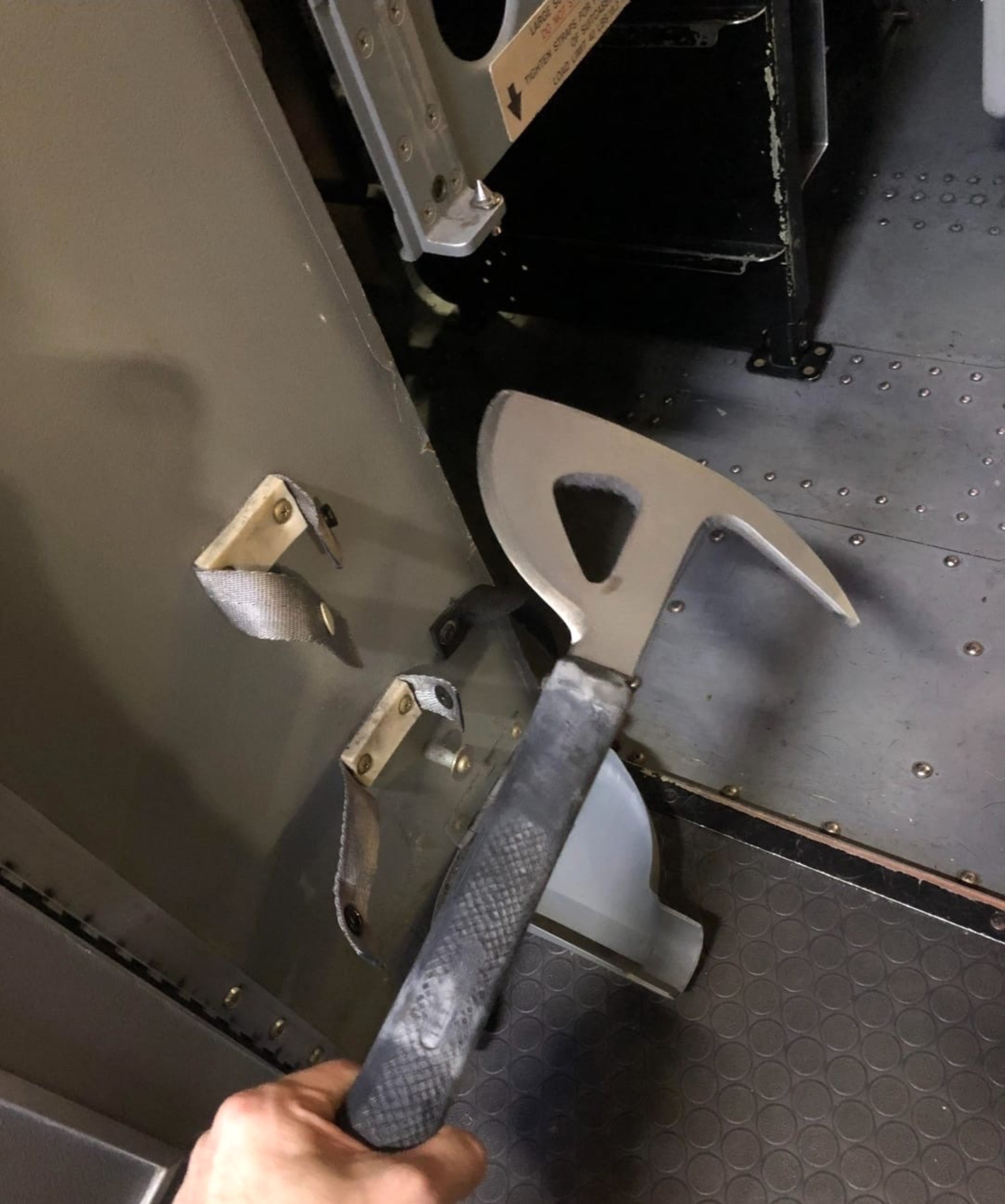
New details have emerged about the attempted attack aboard FlyDubai Flight 1073, revealing that the weapon allegedly used by the co-pilot was not smuggled onto the aircraft but was already present inside the cockpit as part of standard emergency equipment.
The disclosure has shifted attention toward aviation safety procedures and the challenges of balancing emergency preparedness with security concerns.
Investigators examining the incident have been working to understand how the attack unfolded and how a member of the flight crew was able to gain access to a weapon during a routine flight.
According to information released following the incident, the object used in the attack was a crash ax, a tool commonly carried in commercial aircraft cockpits. Aviation regulations in many jurisdictions require the presence of such equipment for emergency situations.
The tool is designed to help crew members respond to onboard emergencies. It can be used to break through barriers, access blocked areas or assist during evacuation efforts if necessary.
While intended as a safety device, the incident has highlighted the risk that emergency equipment can be misused under extraordinary circumstances.
The captain of Flight 1073 described the moments leading up to the attack during a conversation with Israeli Prime Minister Benjamin Netanyahu.
According to the account, the flight had been proceeding normally when the co-pilot requested time to pray. A short time later, the captain reported being struck from behind.
The description provided one of the first detailed accounts of the incident and offered insight into how the attack allegedly began inside the cockpit.
Authorities continue to investigate the full sequence of events.
The case has drawn international attention because of the serious consequences that could have resulted from an attack involving flight crew members. Aviation experts note that commercial aircraft rely heavily on cooperation and trust between cockpit personnel.
Any breach of that trust presents unique security challenges.
The discovery that the weapon was a standard cockpit tool rather than an item brought through airport security has added a new dimension to the investigation.
Security measures at airports are designed to prevent dangerous objects from being carried onto aircraft. However, certain tools required for operational or emergency purposes must remain available to flight crews.
This creates a difficult balance between maintaining safety equipment and minimizing potential risks.
Industry experts say crash axes have long been required aboard many commercial aircraft. The tools are generally stored in designated locations and are intended solely for emergency use.
Because they are considered essential safety equipment, removing them entirely may not be a practical option. As a result, regulators may focus on reviewing procedures related to access, storage and crew security.
The attempted attack has already prompted discussion among aviation specialists about whether additional safeguards are needed.
Authorities have not yet announced any immediate regulatory changes. However, investigations into major aviation security incidents often lead to reviews of existing policies and recommendations for future improvements.
Airlines and regulators around the world are expected to closely follow the findings of the inquiry.
The incident has also renewed attention on crew screening, mental health monitoring and cockpit security procedures. Aviation safety experts frequently emphasize that protecting passengers requires addressing both external and internal threats.
As the investigation continues, officials are working to determine the motives behind the attack and whether any warning signs were present before the flight.
The FlyDubai Crash Ax Attack has become a significant topic within the aviation industry because it highlights an unusual security challenge. Rather than involving a weapon brought onboard by a passenger, the case centers on emergency equipment that was already available inside the aircraft.
The findings of the investigation may influence future discussions about cockpit safety, emergency tools and airline security procedures. For now, aviation authorities remain focused on understanding exactly what happened aboard Flight 1073 and how similar incidents can be prevented in the future.

