


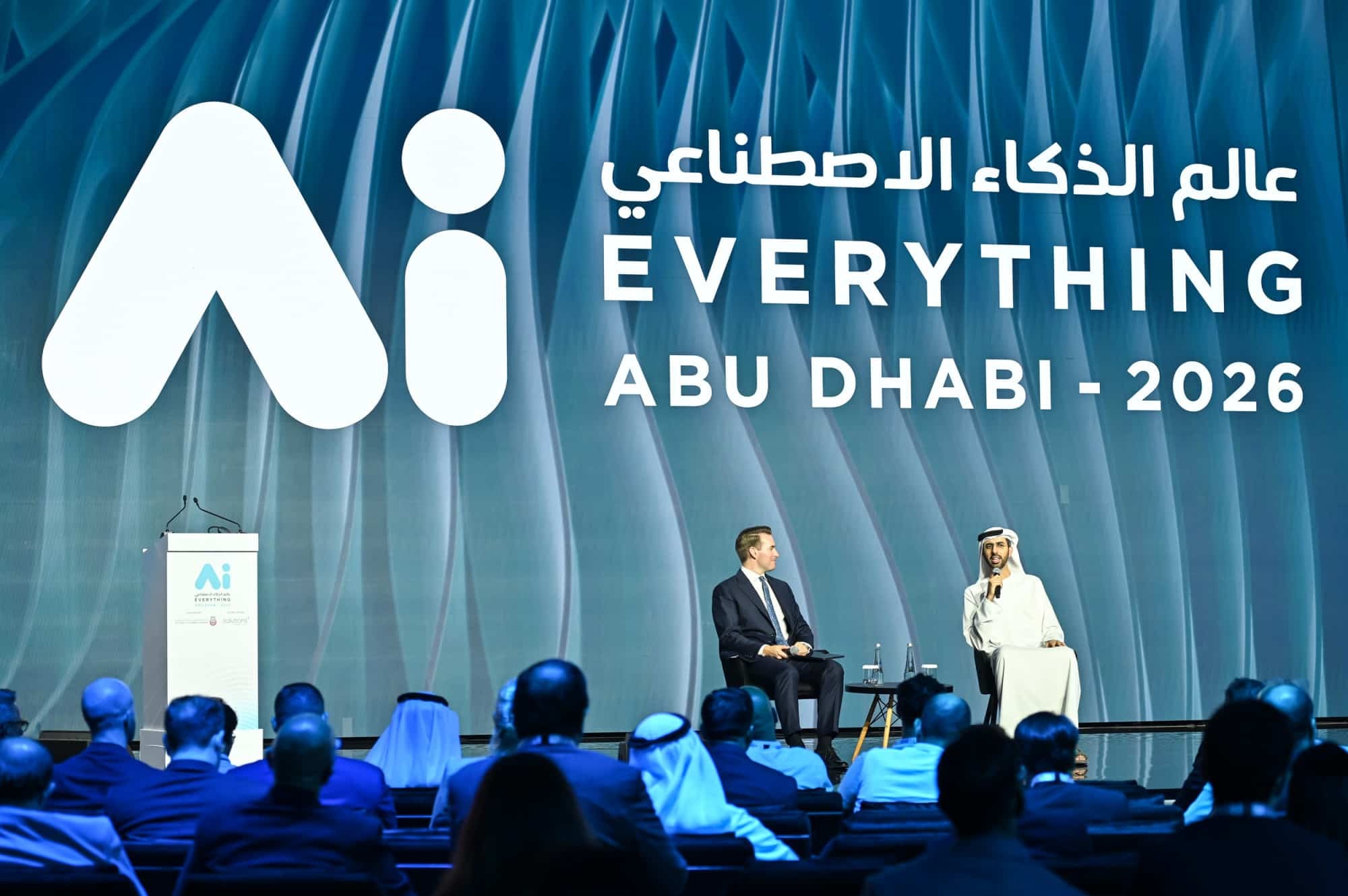
The United Arab Emirates has launched an ambitious effort to train around 80,000 government employees in artificial intelligence as the country pushes to strengthen its position as a global leader in AI adoption.
The announcement was made by Omar Sultan Al Olama, the UAE Minister of State for Artificial Intelligence, during the opening of Ai Everything Abu Dhabi, a major technology event focused on the future of artificial intelligence and digital innovation.
Speaking during a discussion on the future of government and emerging technologies, Al Olama said the UAE is investing heavily in workforce development to ensure public sector employees can effectively use AI tools in their daily work.
According to the minister, the goal is not simply to teach basic AI concepts but to create advanced users who can build AI agents, work with large language models and apply artificial intelligence across government services.
He described the initiative as part of a broader national strategy designed to help citizens and institutions adapt to a rapidly changing technological environment.
“Our playbook is simple,” Al Olama said, explaining that individuals must understand, use and benefit from artificial intelligence if they want to succeed in the next phase of digital transformation.
The large-scale training program reflects the UAE’s growing focus on AI as a key driver of economic growth, public service improvement and global competitiveness.
The announcement came during the Ai Everything Abu Dhabi summit, a two-day event that brought together technology companies, investors, policymakers and researchers from around the world.
Organizers described the gathering as one of the largest AI-focused events globally. More than 400 exhibitors participated, alongside over 180 speakers and more than 200 investors overseeing approximately $100 billion in assets.
Visitors from more than 70 countries attended the event, highlighting the increasing international interest in AI development and deployment.
During the discussion, Al Olama shared his vision for the future of business in an AI-powered world.
He predicted that artificial intelligence could enable individuals to build highly successful companies with minimal staff. According to the minister, AI agents may allow single entrepreneurs to create businesses capable of reaching multimillion-dollar or even billion-dollar valuations.
For a nation with a relatively small population, he said, such technology can dramatically expand economic opportunities and increase productivity.
The minister argued that AI can help countries compete on a much larger scale by multiplying the capabilities of workers and organizations.
He also addressed the challenge of balancing innovation with regulation.
Many governments struggle because innovators and regulators often operate separately, he said. This can slow progress and create misunderstandings between those developing technology and those responsible for overseeing it.
Al Olama explained that the UAE has adopted a different approach by encouraging greater interaction between innovators and regulators. In some cases, innovators are involved in regulatory discussions, while regulators are encouraged to think more creatively about future technologies.
He suggested that this exchange of ideas has helped the UAE move more quickly in adopting emerging technologies.
When asked how success in artificial intelligence should be measured, the minister emphasized social impact rather than financial returns.
He said the country’s goal is to improve the lives of as many people as possible through the use of AI. According to Al Olama, the true measure of success is the positive effect technology has on society.
The minister also argued that the greatest value in artificial intelligence may come from implementation rather than invention alone.
He said the UAE aims to become one of the fastest countries in the world to deploy AI solutions that improve quality of life, government services and economic performance.
The summit also featured remarks from Ahmed Tamim Hisham Al Kuttab, chairman of Abu Dhabi’s Department of Government Enablement.
He outlined Abu Dhabi’s goal of becoming the world’s first AI-native government by 2027, a target that reflects the emirate’s broader digital transformation strategy.
The UAE Government AI Training initiative is expected to play a central role in achieving that vision. By preparing tens of thousands of public employees to work with advanced AI systems, the country hopes to accelerate innovation, improve government performance and strengthen its position in the global technology landscape.

