


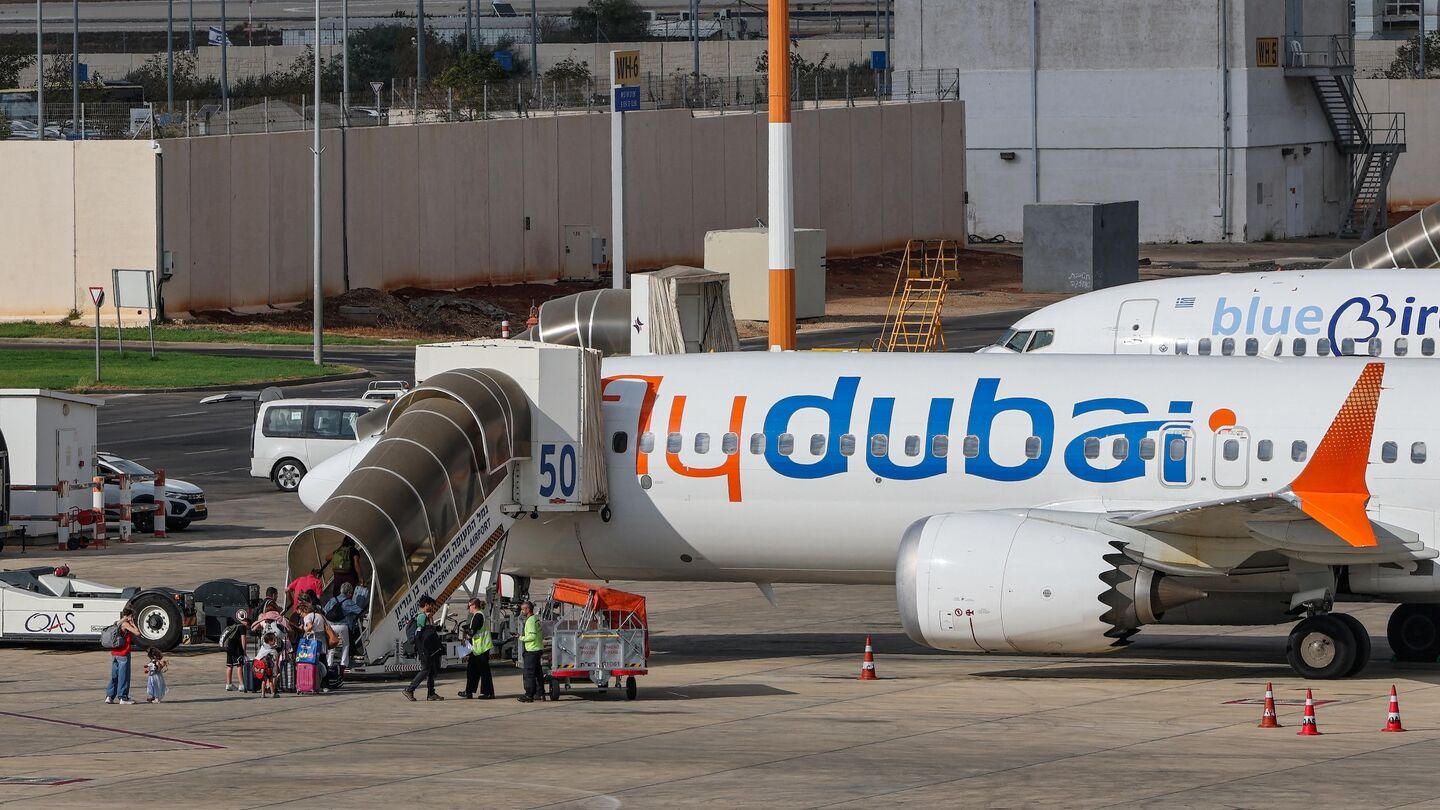
Israeli authorities have widened a security review following the September 30 FlyDubai incident, as investigators examine how a suspected threat aboard a passenger flight was not detected before departure.
The investigation focuses on security procedures used by foreign airlines operating flights to Israel and whether current screening measures are strong enough to identify potential risks involving flight crew members.
The case centers on a FlyDubai flight traveling from Dubai to Tel Aviv with 174 passengers on board. Authorities suspect that the aircraft’s Omani copilot, Humam al-Hamami, attempted to bring down the plane during the journey.
According to officials, the suspected attack was prevented by the actions of the pilot and passengers. The aircraft did not reach its intended destination and instead landed safely in Saudi Arabia.
Saudi authorities later transferred al-Hamami to the United Arab Emirates, where further investigations are continuing.
The incident has prompted major security concerns because it involved a member of the flight crew rather than an external threat.
Israeli officials are now reviewing whether existing procedures for foreign carriers provided sufficient protection against such risks.
The National Security Council has launched an investigation into airline security protocols used by international carriers flying into Israel. The review is expected to examine background checks, crew screening procedures and coordination between aviation security agencies.
Officials want to determine whether warning signs were missed before the flight and whether changes are needed to strengthen existing safeguards.
At the same time, Israeli police have opened a separate investigation involving two senior officials from the Transportation Ministry.
According to reports, the officials are suspected of providing private services to aviation companies. Authorities are examining whether those activities created conflicts of interest or affected regulatory oversight.
The police investigation remains ongoing, and no final conclusions have been announced.
The dual investigations reflect the seriousness with which Israeli authorities are treating the incident.
Security experts note that airline safety systems are typically designed to protect against threats from passengers or external actors. Cases involving flight crew members are far less common and can present unique challenges for aviation security agencies.
The incident has therefore triggered questions about whether existing systems are adequately prepared to identify insider threats.
Reports indicate that Israeli intelligence agencies are also involved in the inquiry.
According to information broadcast by Channel 13, a team including representatives from Mossad and Shin Bet traveled to the United Arab Emirates to assist with the investigation.
The visit highlights the level of cooperation between Israeli and Emirati authorities as they seek to establish exactly what occurred aboard the flight.
Officials have not publicly disclosed details regarding evidence collected so far, and many aspects of the investigation remain confidential.
Authorities are expected to examine communications, cockpit records and other aviation data as part of the inquiry.
The case has attracted international attention because it involves a commercial flight carrying nearly two hundred passengers and touches on aviation security across multiple countries.
Industry observers say the outcome could influence future security procedures for international airlines operating in sensitive regions.
Aviation specialists note that modern airline security relies heavily on background screening, continuous monitoring and coordination between intelligence and transportation agencies.
Any findings suggesting weaknesses in those systems could lead to policy changes and additional safeguards.
The incident also comes at a time of heightened security concerns across the Middle East, where airlines continue to operate in a complex regional environment.
Governments and aviation regulators regularly review security procedures to respond to emerging threats and maintain passenger safety.
For now, investigators in Israel and the United Arab Emirates are focused on determining how the suspected threat developed and whether existing controls were sufficient.
The National Security Council’s review and the police investigation are expected to continue in the coming weeks as officials gather evidence and assess potential security gaps.
While many questions remain unanswered, the incident has already prompted a broader discussion about airline security, regulatory oversight and the challenges of identifying threats from within a flight crew.
The findings of the investigations could shape future aviation security measures and influence how foreign carriers are screened when operating flights to Israel and other high-security destinations.

