


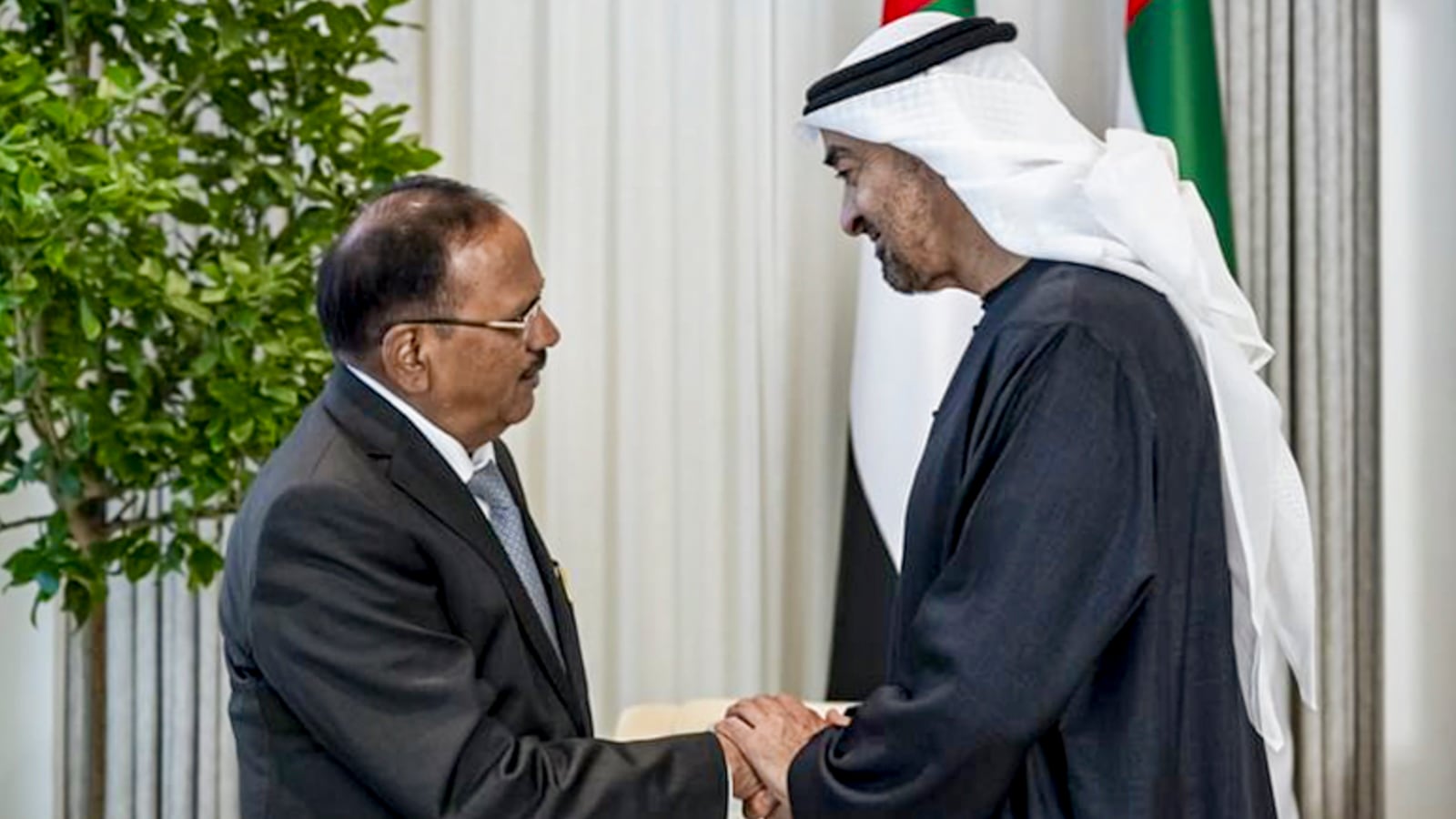
India has stepped up its diplomatic effort in the Gulf as tensions rise in West Asia. A key moment in this push was the Doval UAE strategic meeting held in Abu Dhabi on Saturday. National Security Adviser Ajit Doval met UAE President Sheikh Mohamed bin Zayed Al Nahyan. The meeting came soon after his visit to Saudi Arabia. It shows India’s active engagement with key Gulf partners during a sensitive regional phase.
The Doval UAE strategic meeting took place at a time when the region is dealing with conflict and a fragile ceasefire. The situation in West Asia has created concerns over trade routes and energy supply. India depends heavily on the Gulf for energy and trade. This has made the region a top focus of New Delhi’s foreign policy.
One major concern is the Strait of Hormuz. It is a vital route for global oil and trade flows. Disruptions in this waterway over the past two months have hit movement of ships. Reports indicate that only a small number of Indian ships have been able to pass during this period. This has created pressure on energy security and shipping costs for India.
Against this backdrop, the Doval UAE strategic meeting focused on stability and cooperation. Both sides discussed ways to strengthen their Comprehensive Strategic Partnership. Energy security was a key topic. Officials also looked at how to deal with changing conditions in the region.
During the meeting, Ajit Doval conveyed greetings from Prime Minister Narendra Modi to the UAE leadership. He also shared India’s interest in deeper cooperation across key sectors. The talks included regional security, counter-terrorism efforts, and long-term strategic ties.
The UAE leadership also exchanged greetings for India’s leadership. Both sides expressed support for stronger bilateral relations. They also highlighted the importance of continued growth and stability for both countries.
The Indian side said the discussions covered regional developments in West Asia. Leaders reviewed how ongoing tensions could affect global energy markets and international security. The focus remained on keeping communication open and ensuring stability.
The Doval UAE strategic meeting also included senior UAE officials. The Crown Prince of Abu Dhabi was present, along with the Secretary-General of the Supreme Council for National Security. Their presence showed the high level of importance given to the talks.
This is the second high-level engagement between India and the UAE in just one month. Earlier, India’s External Affairs Minister met the UAE President during a two-nation visit. That meeting also focused on strengthening ties and maintaining steady dialogue despite regional uncertainty.
India’s External Affairs Minister has previously noted that relations between India and the UAE remain strong. He stressed that both sides continue regular communication even during complex global conditions. This reflects a stable and growing partnership.
The Doval UAE strategic meeting also highlights Ajit Doval’s role in security cooperation. He has been closely involved in India’s counter-terrorism coordination with Gulf partners. His discussions often focus on strategic stability and shared security concerns.
India’s wider Gulf outreach includes frequent talks at the highest political levels. Prime Minister Narendra Modi has spoken with leaders from the UAE, Saudi Arabia, and other Gulf nations multiple times in recent months. These contacts aim to reduce risks from regional instability and protect economic interests.
Energy security remains a central issue. India imports a large share of its oil and gas from the Gulf. Any disruption in supply routes directly affects prices and economic stability. This makes cooperation with Gulf countries essential for long-term planning.
The Doval UAE strategic meeting reflects India’s effort to keep strong ties with key partners. It also shows the importance of dialogue during uncertain times in West Asia. Both countries continue to build on their long-standing partnership, focusing on stability, trade, and shared security goals.

