


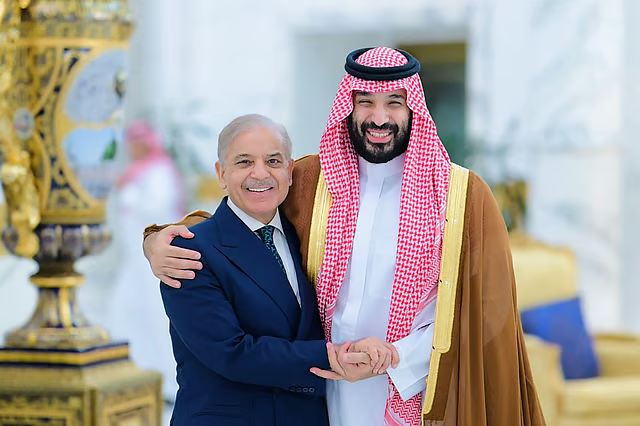
Pakistan has launched a concerted diplomatic and military offensive across the Middle East to ease escalating regional tensions. Prime Minister Shehbaz Sharif’s four-day tour of Saudi Arabia, Qatar, and Türkiye, alongside Army Chief General Asim Munir’s high-level talks in Iran, showcases Islamabad’s dual-pronged strategy. This effort positions Pakistan as a pivotal facilitator of dialogue and stability in a region fraught with concerns over energy security, trade disruptions, and broader geopolitical risks. The parallel engagements underscore a strategic pivot by Pakistan to act as a constructive force amidst ongoing hostilities involving Iran, Israel, and the United States, which have raised global alarms.
Prime Minister Sharif’s diplomatic itinerary saw him meeting key leaders, including Saudi Crown Prince Mohammed bin Salman and Qatar’s Emir Sheikh Tamim bin Hamad Al Thani. Discussions focused intently on strengthening bilateral cooperation and fostering regional peace and security. In Doha, Sharif and the Emir stressed the imperative of de-escalation, dialogue, and close international coordination, with Qatar’s leader expressing deep appreciation for Pakistan’s “pivotal role” in supporting these efforts. Sharif also condemned recent attacks in the region, reaffirming solidarity with Qatar, while both leaders acknowledged the vital importance of secure energy supply chains against global market vulnerabilities.
Simultaneously, the military leadership’s engagement in Tehran added significant weight to Pakistan’s diplomatic messaging. General Asim Munir met with senior Iranian officials, including parliamentary speaker Mohammad Bagher Ghalibaf, a figure previously involved in US-Iran dialogue efforts. These discussions reportedly centered on regional stability and the urgent need to prevent further escalation in the Gulf. This coordinated civilian and military outreach reflects Pakistan’s strategic attempt to maintain a delicate balance in its relationships, which are both economically vital and politically sensitive, especially concerning critical energy corridors like the Strait of Hormuz, crucial for global markets.
Pakistan has previously played a role in facilitating diplomatic contacts between Tehran and Washington, hosting exploratory discussions that contributed to earlier ceasefire frameworks. Foreign ministry spokesperson Tahir Andrabi confirmed that these mediation efforts remain active, signaling Islamabad’s commitment to ongoing backchannel diplomacy. Analysts interpret Pakistan’s current outreach as a blend of geopolitical necessity and strategic positioning, aiming to champion “dialogue over confrontation” and “collective security over unilateral escalation.” The outcome remains to be seen, but the emerging tone from regional capitals suggests a cautious openness to de-escalation, reinforcing Sharif’s assertion that regional stability is “not optional but essential for global economic and energy security.”

