


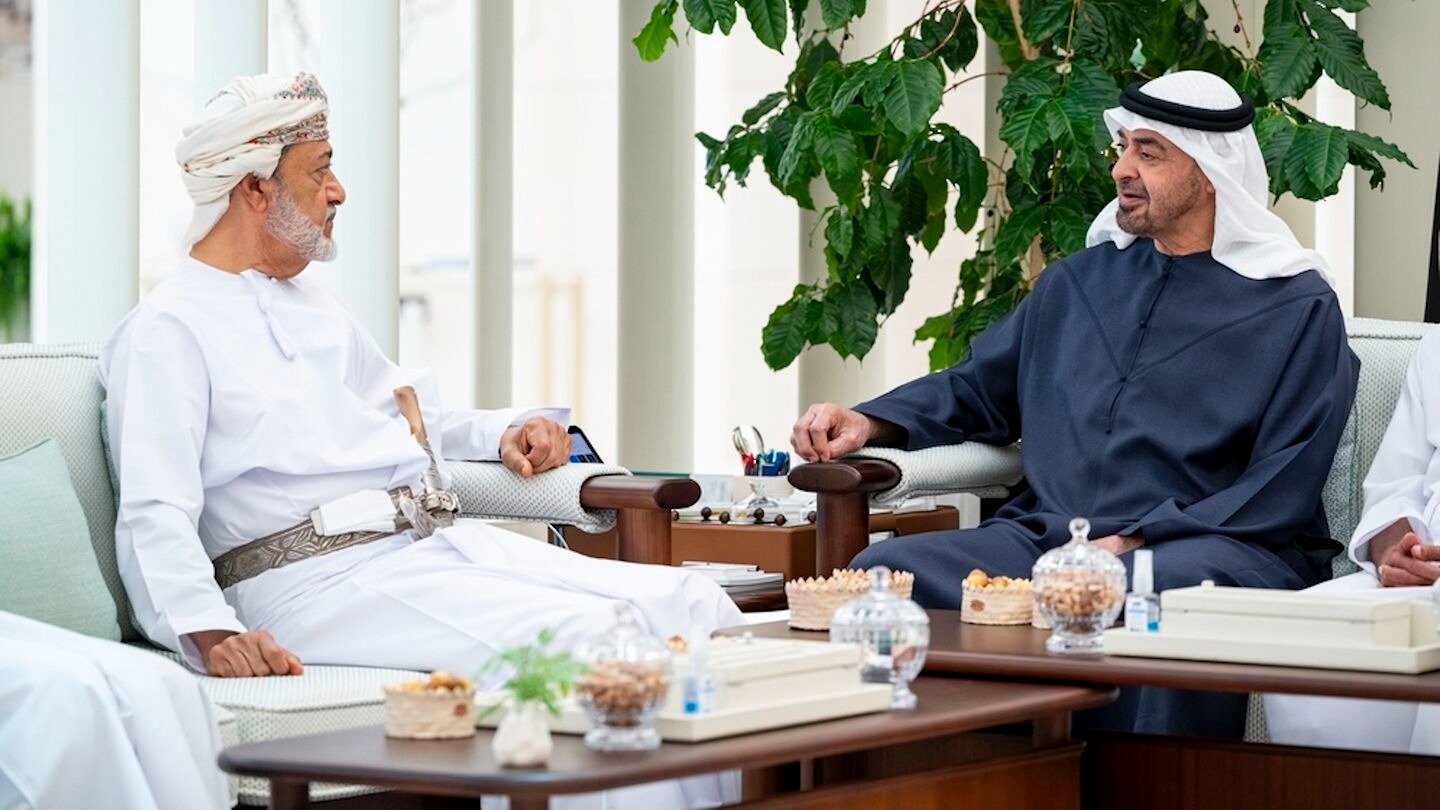
Oman leader Sultan Haitham bin Tariq met UAE President Mohamed bin Zayed Al Nahyan in Abu Dhabi on Monday. The two regional leaders discussed strong economic ties and urgent security developments. The visit comes as Muscat manages complex diplomatic efforts in the Middle East. Oman is currently leading major negotiations regarding key maritime transport routes.
Senior officials from both nations attended the high-level meeting. Omani representatives included top defense and regional leaders. UAE ministers and financial directors also joined the talks. Official reports confirmed that both sides focused heavily on mutual growth. They pledged to boost cross-border trade and joint development projects.
Economic ties between the two nations remain very strong. Trade values have grown rapidly over the last few years. Recent pacts highlight massive joint investments in clean energy, green steel, and digital infrastructure. A major multi-billion-dollar rail network is also underway to connect the two neighbors.
While financial cooperation remains tight, diplomatic paths sometimes differ. The UAE often takes a firm stance on regional security matters. Meanwhile, Oman maintains open communication channels with all neighboring states. Muscat frequently acts as a neutral bridge between Western powers and regional leaders.
This bridge role is critical right now. Oman is actively guiding negotiations to protect vital sea shipping lanes. Iranian officials confirmed that talks have produced initial route maps. Both nations are working to finalize a formal transit agreement soon.
The main goal of the agreement is to restore smooth commercial transit. Ongoing regional conflicts have disrupted standard shipping routes. Early framework talks aimed to establish clear maritime rules. Under international laws, nations cannot charge tolls for standard passage through international waters. However, legal fees for specialized navigation services remain standard practice.
Diplomatic efforts face heavy pressure from international actors. Washington has expressed clear frustration with current regional negotiations. Officials have warned Oman against taking steps that conflict with Western goals. Public statements from Washington included threats of direct action if trade negotiations fail to meet key demands.
Recent reports show that Western diplomats view Oman diplomatic strategy with caution. Foreign policy experts note growing demands on Muscat to distance itself from neighbor states. These foreign policy demands create a difficult balancing act for Omani leaders.
Despite outside pressure, Oman continues to pursue peaceful resolution channels. The country aims to secure safe passage for international supply ships. Smooth commercial shipping through key waterways is vital for global fuel supplies and local economies.
The meeting in Abu Dhabi signals unity between the neighboring states on economic stability. Both leaders emphasized the need for peace and steady financial growth across the region. Regional partners hope these diplomatic channels will lower current military tensions.
Looking ahead, Muscat plans to continue hosting regional talks. Oman aims to finalize maritime safety protocols while keeping open dialogue with all major trade partners. World markets are watching the situation closely as shipping companies demand safe sea routes. Future talks in Abu Dhabi and Muscat will determine the next steps for regional safety and global economic stability.

