


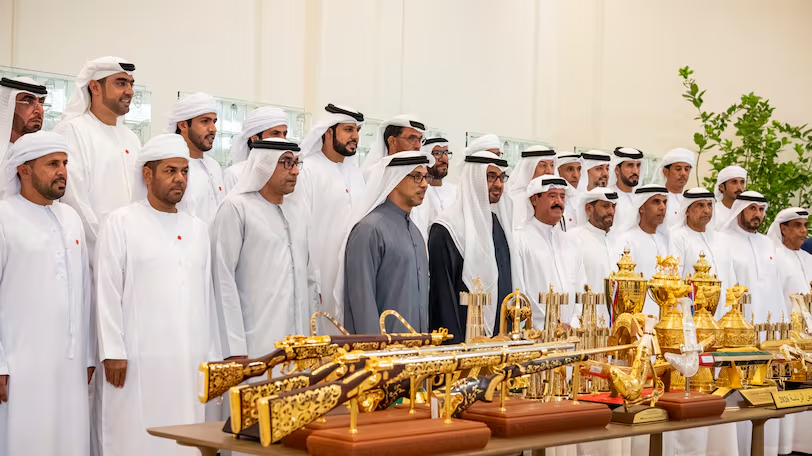
President Sheikh Mohamed has met the Presidential Camel Racing Team in Abu Dhabi, recognizing their strong performance across the 2025 to 2026 racing season. The meeting highlighted the importance of camel racing as both a sport and a cultural tradition in the United Arab Emirates.
The visit took place on Tuesday, with Sheikh Mansour bin Zayed, Vice President, Deputy Prime Minister, and Chairman of the Presidential Court, also present. During the meeting, Sheikh Mohamed reviewed the team’s achievements across major regional and international competitions held throughout the season.
The team delivered a series of notable victories in several high-profile events. These included wins at the King Abdulaziz Camel Festival in Saudi Arabia, Oman’s Al Etihad Festival, and the Al Bashayer Festival. The team also secured success at the Kuwait International Camel Racing Championship, along with strong performances in the season-ending events at Al Marmoom in Dubai and Al Shahaniya in Qatar.
These results reflect the UAE’s continued investment in camel racing, a sport deeply connected to the country’s desert heritage. Camel racing remains one of the oldest traditional sports in the Gulf region and continues to attract strong participation and national support. Modern training methods, advanced breeding programs, and organized competitions have helped raise its profile in recent years.
During the meeting, Sheikh Mohamed congratulated the team on their achievements and praised their dedication throughout the season. He emphasized that camel racing is not only a competitive sport but also an important part of the nation’s identity. According to him, it reflects the UAE’s long-standing connection to desert life, tradition, and cultural values.
The presence of Sheikh Mansour bin Zayed underscored the importance of the event at the highest levels of government. The Presidential Camel Racing Team is considered a key representative of the UAE in regional and international competitions, often competing against top teams from across the Gulf.
Camel racing in the UAE has evolved significantly over the past decades. Once a traditional activity tied to Bedouin life, it has developed into a structured sport with official festivals, regulated tracks, and advanced technology used for training and race monitoring. Despite these changes, it continues to preserve its cultural roots.
Major events such as the King Abdulaziz Camel Festival and Al Marmoom competitions attract wide participation and large audiences. These festivals also serve as cultural gatherings, bringing together competitors and visitors from across the region.
The UAE leadership has consistently supported camel racing as part of its broader efforts to preserve national heritage. Investments in breeding programs and racing infrastructure have helped maintain the sport’s relevance while also improving competitiveness at international levels.
The team’s success in the 2025 to 2026 season is seen as a reflection of that ongoing support. It also highlights the UAE’s strong presence in regional camel racing circuits, where competition between Gulf countries remains highly active.
As the new season approaches, expectations remain high for continued success. The combination of tradition, state support, and modern training methods is expected to keep UAE camel racing teams among the strongest in the region.
Camel racing remains more than a sport in the UAE. It is a symbol of heritage, identity, and national pride that continues to be celebrated at the highest levels of leadership.

