


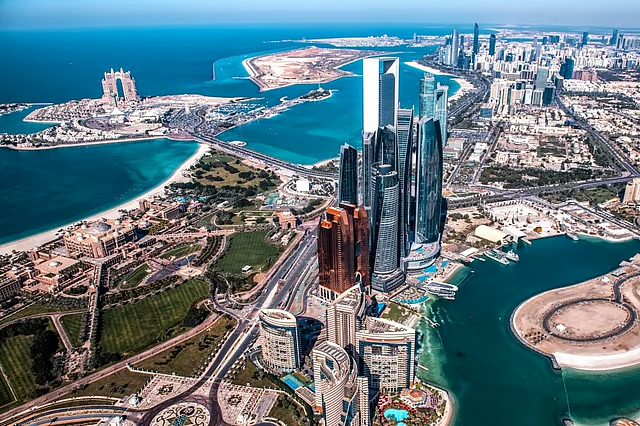
Abu Dhabi has unveiled one of its largest infrastructure expansion programs to date. The Abu Dhabi Projects and Infrastructure Centre is overseeing a capital investment portfolio worth more than Dh200 billion, equal to about $54.5 billion. The program includes over 600 active projects across the emirate.
The projects cover key sectors such as housing, transport, healthcare, education, tourism, and community services. The aim is to support long term economic growth and improve daily life for residents. It also supports Abu Dhabi’s goal of becoming a global hub for business, tourism, and innovation.
Officials say the program reflects a long term strategy to reduce dependence on oil revenue. Instead, Abu Dhabi is focusing on building a diversified economy. Infrastructure development is seen as a key driver of this transformation. It helps attract investment, create jobs, and support population growth.
The Abu Dhabi Projects and Infrastructure Centre coordinates planning and delivery of major public works. It ensures that projects align with national development goals. The center also manages project timing, quality, and integration across different sectors. This helps improve efficiency and reduce delays in large scale development.
The current portfolio includes residential communities, road networks, hospitals, schools, cultural sites, and public facilities. These projects are designed to support a growing population and improve urban living standards. They are also intended to strengthen connectivity across Abu Dhabi, Al Ain, and Al Dhafra.
A major part of the strategy focuses on transport and mobility. New roads, bridges, tunnels, and traffic systems are being developed to improve movement across the emirate. Healthcare and education infrastructure are also expanding to meet rising demand. These investments aim to build a more balanced and accessible urban environment.
Abu Dhabi is also preparing a major expansion phase through public private partnerships. A Dh55 billion program will finance 24 new projects between 2026 and 2027. This includes transport, water management, and social infrastructure projects.
Transport and road development will receive the largest share of funding, about Dh35 billion. These projects include more than 300 kilometers of new and upgraded roads, along with bridges, tunnels, and intersections. The goal is to improve connectivity between new residential zones and economic areas.
Another Dh11 billion will go into water and flood protection systems. This includes dams, drainage networks, and water storage facilities. These projects are designed to improve climate resilience and protect urban areas from extreme weather conditions.
Around Dh9 billion will be used for social infrastructure. This includes schools, universities, hospitals, sports facilities, and community centers. These developments are expected to support population growth and improve public services across the emirate.
Beyond physical construction, Abu Dhabi is focusing on smart and sustainable infrastructure. Artificial intelligence and digital systems are being integrated into planning and project management. A unified governance framework involving 14 government entities has been introduced to speed up approvals and improve coordination.
This system is expected to reduce costs and improve delivery times for major projects. It also supports better use of government resources and increases efficiency in public spending. Officials say it will help accelerate the rollout of strategic infrastructure across the emirate.
The broader vision is linked to long term development plans such as Vision 2030. The goal is to build smart, sustainable, and connected cities. These cities will support economic diversification and improve quality of life for residents.
Abu Dhabi’s economy is already seeing strong growth in sectors such as real estate, tourism, logistics, and technology. This growth is increasing demand for modern infrastructure. Experts say continued investment in infrastructure will remain a key driver of economic performance.
The emirate is also preparing for a major international discussion on future cities and infrastructure. A global summit will bring together policymakers, investors, and industry leaders to discuss smart cities, clean energy, mobility, and artificial intelligence in urban development. The event highlights the growing focus on sustainable and technology driven urban planning.
With more than Dh200 billion in active projects and a new multi billion dirham pipeline ahead, Abu Dhabi is entering a new phase of expansion. The focus is shifting from basic infrastructure to advanced smart systems that integrate transport, energy, housing, and digital technology. This long term strategy aims to strengthen Abu Dhabi’s position as one of the world’s most competitive and future ready cities.

