


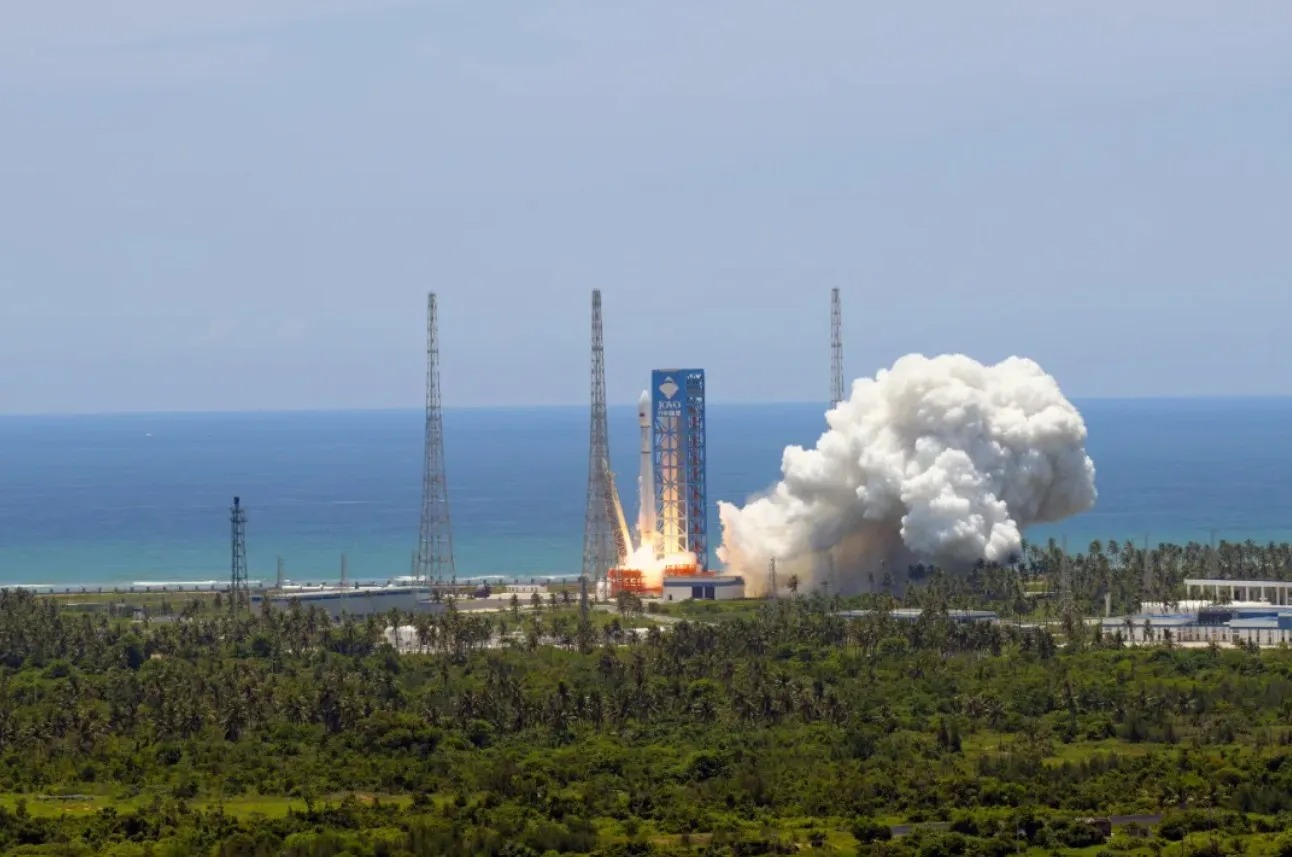
China successfully launched a new group of internet satellites into space over the weekend. The mission carried satellites for the national Guowang internet network. Soon after, another rocket launched a new earth observation satellite for the United Arab Emirates.
These fast launches show that China can recover quickly from space problems. Just one week earlier, a different rocket suffered a major failure during its flight. However, these new flights prove that key rocket engines remain safe and ready for action.
The first launch took place at a new commercial space station on Hainan Island. A Long March 12 rocket lifted off near midnight to deliver the satellites into low Earth orbit. Officials soon confirmed that all satellites reached their target locations smoothly.
This flight represents the twenty-fourth group of operational satellites sent up for the Guowang project. The network now holds nearly two hundred satellites in orbit. China plans to build a huge global internet system in space using around thirteen thousand small satellites.
Engineers prepared the launch site in just two and a half days. This fast work shows how quickly ground crews can load rockets and run operations. The team switched launch structures rapidly to support the new rocket size without delay.
The successful flight also answers questions about rocket engine safety. The previous failure used similar power technology, leading to worries about widespread delays. Because this new flight went well, experts believe the previous failure was an isolated incident. The core engines are working as expected, which keeps future space plans on track.
China followed this mission with a second successful launch on Sunday night. A Long March rocket took off from the northern region of China to carry the UAE space payload. The new spacecraft will support global environmental studies and assist resource management.
Local teams worked alongside international experts to design the satellite software. This new technology helps researchers study land use, monitor nature, and protect regional forests. It also helps local planners build better cities using accurate space data.
China has now completed nearly sixty orbital flights this year. The country aims to set a new record by launching over one hundred rockets before the year ends. Several commercial companies are also preparing reusable rockets for test flights in the coming weeks. Reusable designs can drastically lower space costs and increase flight speed over time.
These rapid missions show how quickly space activities are growing across Asia. New launch sites allow companies to test hardware faster than ever before. With multiple commercial sites now operating, flight schedules can stay on track even when single missions fail.
Building large satellite networks requires steady rocket supplies and safe engine designs. Broadband constellations need constant flights to maintain strong connections worldwide. By fixing launch issues quickly, space programs can keep expanding their constellation networks.
As commercial spaceports expand, launch schedules will become much faster. Fast ground prep time gives engineers more flexibility to send up new satellite hardware. China continues to expand its reach in global launch markets with international partnerships.
The successful weekend flights mark a big step forward for regional space goals. With satellite networks growing fast, more launch attempts will take place in the coming months. Both commercial firms and government teams are working hard to hit their ambitious yearly goals.

